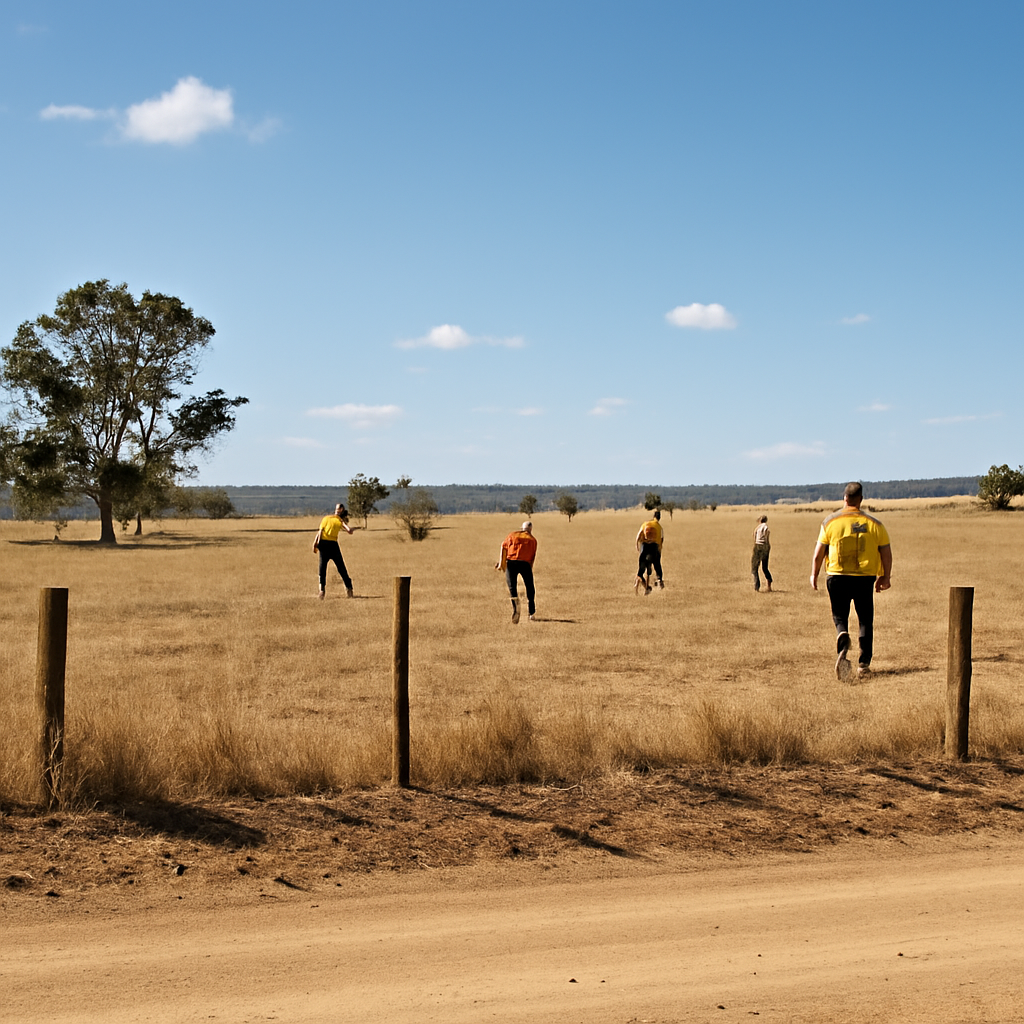
"Backpackers contributed to about 48,000 people to Australia’s net overseas migration in 2025," Immigration Minister Tony Burke said when announcing changes to the working holiday visa rules.
September changes to working holiday visas: fewer guaranteed follow-ups
The government’s September decision tightened the path from seasonal regional work to extended stays. Applicants must still complete regional work to qualify for a second or third working holiday visa, but completing that work now only permits entry to a ballot rather than guaranteeing another year. Second-year places are capped at 45,000 — down from 57,000 in 2025 — while third-year places fall sharply from around 31,000 to just 5,000 nationally. The move reflects a broader push to reduce net overseas migration while keeping some regional labour access.
Far North Queensland employers and farms: an exposed dependency
On the ground in Far North Queensland, the policy shift changes employer calculations. An ABC News investigation reported that Crystalbrook Collection, which operates three five‑star hotels and associated hospitality services in Cairns, employs close to 500 people locally; about 45 percent of those employees — more than 220 workers — are working holiday makers. Agricultural representatives estimate that working holiday makers make up about one‑third of roughly 15,000 farm workers across the region. Those proportions do not evaporate overnight, the source notes, but reducing the certainty of further visa years will make regional work less attractive and alter seasonal staffing patterns.

Audit-ready is a season. It shouldn't be.
Evidence in spreadsheets, controls drifting between audits, frameworks multiplying on flat headcount. Nubivance runs continuous compliance on Rapid7 Cyber GRC - SOC 2, HIPAA, ISO 27001, PCI, CMMC.
End the scrambleDemographics and shortages: fertility, ageing and the Occupation Shortage List
Australia is confronting several structural pressures that intersect with migration policy. The government’s 2025 Population Statement projects the fertility rate to fall to a record low of 1.42 children per woman in 2025–26. The 2026 Intergenerational Report projects the share of Australians aged 65 and over to rise from around 17 percent in 2022–23 to 23 percent by 2062–63. At the same time, the 2025 Occupation Shortage List found 29 percent of assessed occupations remained in shortage, including nearly half of trade roles. These trends underline that national headcounts alone do not reveal where skills and workforce capacity will be lacking.
Existing geographic tools — and why they may not be enough
The migration system already contains geographic levers: regional visas, Designated Area Migration Agreements and working holiday maker specified‑work requirements all aim to channel people toward places with distinct labour needs. Successive governments have identified northern Australia as central to defence posture, critical minerals, energy, food production, supply chains and engagement with the Indo‑Pacific — but the source stresses that infrastructure and investment do not create capability by themselves; people do. A national net overseas migration figure cannot indicate whether strategically important regions have the skills they need or whether people are settling where capability matters most.
What this means for regional communities, employers, and policymakers
- Regional communities: Local leaders will face the twin tasks of attracting people and giving them reasons to stay — housing, services and career pathways were all cited as essential to retention.
- Employers in tourism, hospitality and agriculture: Businesses such as Crystalbrook Collection and regional farms will need to reassess staffing models as the certainty of multi‑year working holiday visas falls, potentially increasing recruitment costs or shifting reliance toward other visa categories or local labour.
- Policymakers and advocates: The Regional Australia Institute has called for a national regional population and settlement strategy that links migration to skills, ageing, housing, infrastructure and geography. The source frames that call not as an argument for higher migration but for better connection between migration settings and settlement needs.
The debate in Canberra has gravitated to an aggregate target for net overseas migration, and public sentiment is mixed: the 2026 Lowy Poll found 55 percent of Australians believed the number of migrants was too high. Yet the policy choices behind the working holiday visa changes expose a deeper question about national planning. If Australia wants stronger regional communities and a capable north, the planning task is not only numerical: it is about who is needed, where they are needed, and what will make them stay.