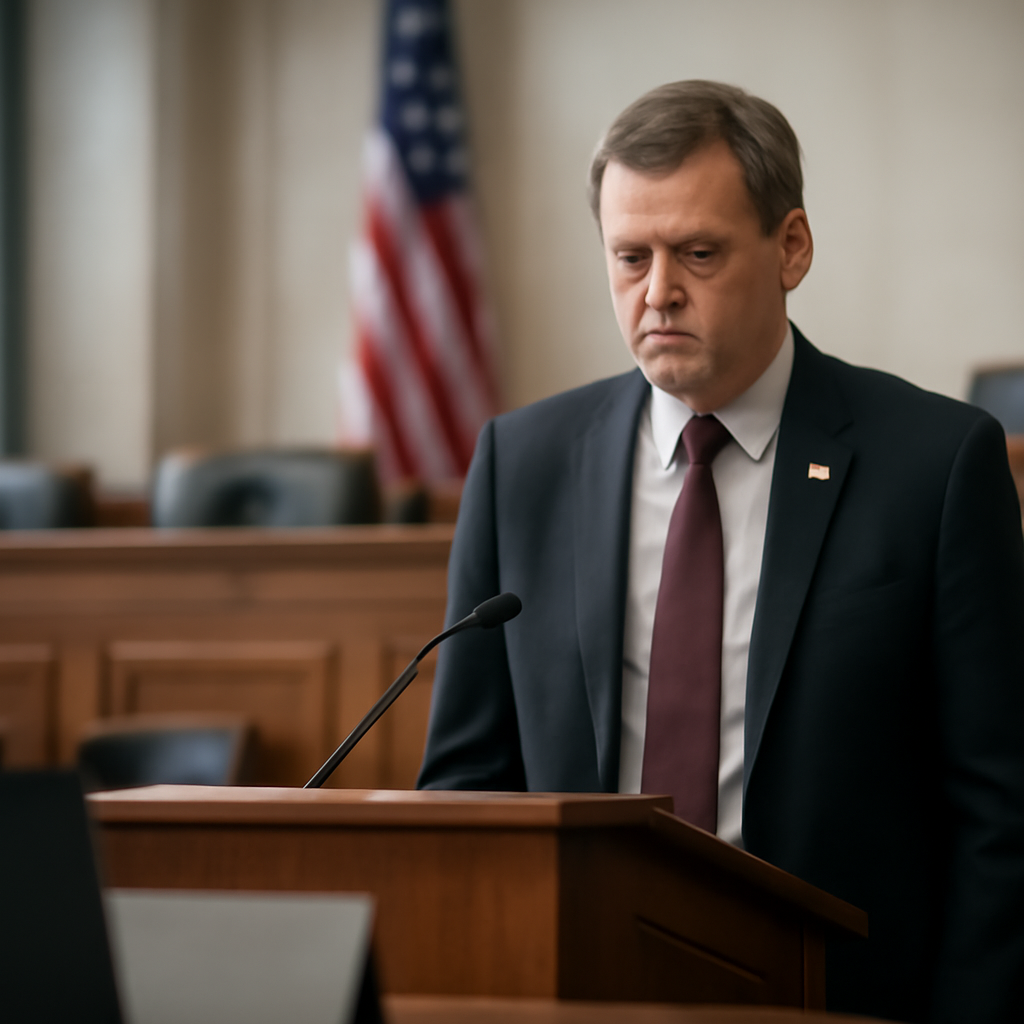
The future of U.S. military aid to Ukraine — and how quickly that aid reaches Kyiv — is already being cast as a post‑midterm issue, with timing and process tied to which party controls the House of Representatives.
Rep. Jim Himes' pledge at the Warsaw Security Forum
Speaking at the Warsaw Security Forum in Poland, Rep. Jim Himes, D‑Conn., told European audiences that Democrats would act swiftly to resume military assistance if they regain control of the House. Himes promised “a much faster process for getting assistance to Kyiv,” framing the midterms as directly determinative of Washington’s ability to deliver renewed aid, and delivered a message to partners that was, in the source’s words, explicit: “If Democrats gain control on Capitol Hill, renewed Ukraine aid will be a priority.”
Aaron Mehta’s caution on translating promises into action
Those promises, however, face political and procedural hurdles. In an episode of the Congressional Roundup, Breaking Defense Editor‑in‑Chief Aaron Mehta explained why turning Himes’s pledge into actual, timely shipments and approvals “could take longer than Democrats hope.” Mehta’s assessment — presented on the Congressional Roundup — places emphasis not on political intent but on the institutional realities that follow any election.

Your town's IT department is one person. Maybe.
Ransomware crews target small municipalities because nobody's watching. Nubivance gives Maine and New Hampshire towns a security program sized to a town budget.
Protect the town officeHow a divided Congress and unfinished spending business complicate timetables
Two constraints stand out in the source material. First, Congress “may be on break,” making immediate action unlikely until lawmakers return and organize after the midterms. Second, a divided Congress and “unfinished spending business” are named as complicating factors that could delay the restart and flow of aid. Together, those constraints mean that even a clear electoral outcome and a publicly stated priority do not guarantee rapid delivery.
What this means for Kyiv, European allies, and Capitol Hill
- Kyiv: The speed and predictability of military assistance to Kyiv are contingent on the post‑midterm congressional configuration; Himes’s pledge signals an intention to prioritize assistance, but the timing remains uncertain.
- European allies: Himes directed his remarks to European audiences at the Warsaw Security Forum, offering reassurance that renewed U.S. aid would be a priority if Democrats control the House — a message intended to shape allied expectations ahead of a potentially protracted congressional process.
- Capitol Hill: Members of Congress and staff will confront procedural realities after the midterms, including managing unfinished appropriations and operating in whatever divided configuration results, factors Aaron Mehta identifies as likely to slow any rapid restart of programs.
Politics, process, and a pointed bargaining point
The story as reported ties together campaign outcomes, public promises, and institutional friction. On one hand, Himes set expectations for allies that a change in House control would produce swift action; on the other, Mehta’s commentary underscores that electoral victory is necessary but not sufficient to guarantee speed. The political promise is clear; the legislative mechanics are not.
The source leaves a tightly focused record: a pledge delivered in Warsaw, a media analysis on the Congressional Roundup, and two named structural constraints — a Congress potentially on break and the reality of unfinished spending business — that could stretch the timeline. Whether those constraints prove decisive will be determined in the weeks after the midterms, when the composition and priorities of the next House become operational facts.
Read the original reporting at Breaking Defense: https://breakingdefense.com/2026/10/why-the-midterms-could-matter-for-ukraine-aid/