[SPONSOREDNUBIVANCE]
Know a small business winging it on security?
No IT department, no security budget, real exposure. Nubivance builds right-sized security foundations for small companies. Send them this.
Send it alongCybersecurity intelligence, threat analysis, and national security reporting.
AUKUS is a game-changing strategy that's not just about acquiring submarines, but about empowering Australia to dominate the undersea landscape in a rapidly shifting Indo-Pacific. By building undersea power, Australia will gain the capacity to understand, monitor, protect, and defend its underwater interests like never before.

In a shocking display of election meddling, a network of hyperlocal websites sprouted up across 14 states, spreading influence and propaganda in a remarkably coordinated effort. These sites, registered in a matter of minutes, seemed designed to sound local but were actually part of a large-scale operation to sway US voters.

As the US and South Korea consider a historic transition of wartime control, a critical decision looms for the two commanders-in-chief: what level of support will the US provide if South Korea takes the lead in deterring North Korea? The 2026 US National Defense Strategy hints at a limited but crucial role for the US in this new era.

Stay one step ahead of scammers with Google's latest Android defense: AI-powered analysis that scrutinizes suspicious conversations and flags potential fraud, all while keeping your private chats safe. Google Messages now offers Gemini-backed cloud protection that helps shield you from sophisticated messaging scams.

Ransomware groups like Qilin and Settra are sneaking into organizations by exploiting a VPN vulnerability, disguising their malicious activity as legitimate remote work. This allows them to steal credentials, move laterally, and deploy ransomware undetected until it's too late.

Meet the sneaky hackers who've been secretly hijacking devices worldwide to build a massive proxy network, making a profit by reselling innocent victims' internet bandwidth. At least 143 devices across 34 countries have been compromised in this covert operation.

Malicious actors have struck the Arch Linux community by uploading trojanised packages to the Arch User Repository, cleverly disguising them as legitimate AUR helpers like yay and paru. The fake packages, including a malicious yyay package, used identical source code and URLs to blend in with the real deal.

Meet Silent Lynx, a stealthy cyber threat actor wreaking havoc in Central Asia and beyond, exploiting a WinRAR flaw to launch targeted attacks on government agencies and embassies across nine countries in the CIS region. Their campaign, tracked from January 2025 to May 2026, has left a trail of breaches in its wake.
No IT department, no security budget, real exposure. Nubivance builds right-sized security foundations for small companies. Send them this.
Send it along
Meet the sneaky spyware that can infect your device with just a single online ad - no clicks required. Citizen Lab researchers uncovered a cunning ad-delivery chain used by Discover-Tech to spread zero-click spyware, infecting targets with alarming precision.

Healthcare organizations are being hit with a staggering 3.33 ransomware attacks per day, making them a treasure trove for hackers seeking sensitive information and massive payouts. This surge in attacks highlights the sector's alarming vulnerability to cyber threats.

Critical security flaws in Next.js have been patched in an out-of-band update, fixing two remote-code-execution bugs and one denial-of-service vulnerability that left applications open to attacks. The severe flaws, rated 9.5 on the CVSS scale, affected React Server Components and SVG processing.
NGINX just dropped a critical update to squash five vulnerabilities, including a long-standing flaw dating back to May 2005 that could lead to code execution or crashes in certain configurations. The patches fix memory bugs, a TLS session-ticket weakness, and an HTTP/3 parser issue that could put your system at risk.

Infoblox has uncovered a tech support scam network run by Help TDS, which tricks users into calling centers where scammers use social engineering to get them to install remote desktop tools. This scam has been linked to a Russian affiliate program called Hotejka, which may be a rebrand of the traffic monetization operation ROI777.

A security breach at CenterPoint Energy has put the personal data of around 1 million Texans at risk, with hackers gaining unauthorized access to customer information through an externally facing system. The incident was discovered after hackers claimed to have stolen a dataset, prompting an investigation that confirmed the breach.

Meet Discover-Tech, an Israeli adtech firm with a shady secret: its Controlium platform has been caught exploiting online ads to spy on users across over 70,000 mobile apps and 120,000 websites.

Bank of America is ramping up its tech squad by hiring 1,000 contractors to tackle a surge in security work sparked by AI-discovered vulnerabilities. The move comes as the bank faces a hefty remediation bill of over a couple of hundred million dollars to address the issues flagged by Anthropic's Mythos model.
Evidence in spreadsheets, controls drifting between audits, frameworks multiplying on flat headcount. Nubivance runs continuous compliance on Rapid7 Cyber GRC - SOC 2, HIPAA, ISO 27001, PCI, CMMC.
End the scramble
A massive 71% of internet-exposed Danfoss StoreView control panels in France vanished within just three days following a cyber-attack that crippled hundreds of supermarkets, suggesting a frantic effort to pull systems offline rather than fix them. This sudden disappearance was tracked by Censys researchers, who monitored the dramatic decline from 1,825 exposed hosts on October 11 to just 537 by October 14.

Meet Daniel Thatcher, a seasoned security research engineer with 12 years of pentesting experience, who's shaking up the game with Intruder's AI-powered pentester that's giving human skills a run for their money in vulnerability detection. He shares his insights on what works - and what doesn't - in the world of AI-driven pentesting.

Microsoft just announced that Windows Server 2022 has reached the end of its mainstream support phase, transitioning to extended support as of October 13, 2026. This means the October 2026 security update will be the last major update for this version.

In a major move to safeguard the US midterm elections, X has proactively removed over 13,000 accounts linked to foreign influence operations from Iran, Russia, and China. These accounts were using fake identities to spread and amplify divisive political content targeting candidates and public figures.

Stolen AI coding assistant credentials can be a goldmine for attackers, allowing them to resell or rack up usage charges on the victim's account, and even gain a foothold into the developer's broader environment. The Aoki infostealer has evolved to target these valuable credentials, expanding its reach beyond browser data and cryptocurrency wallets.
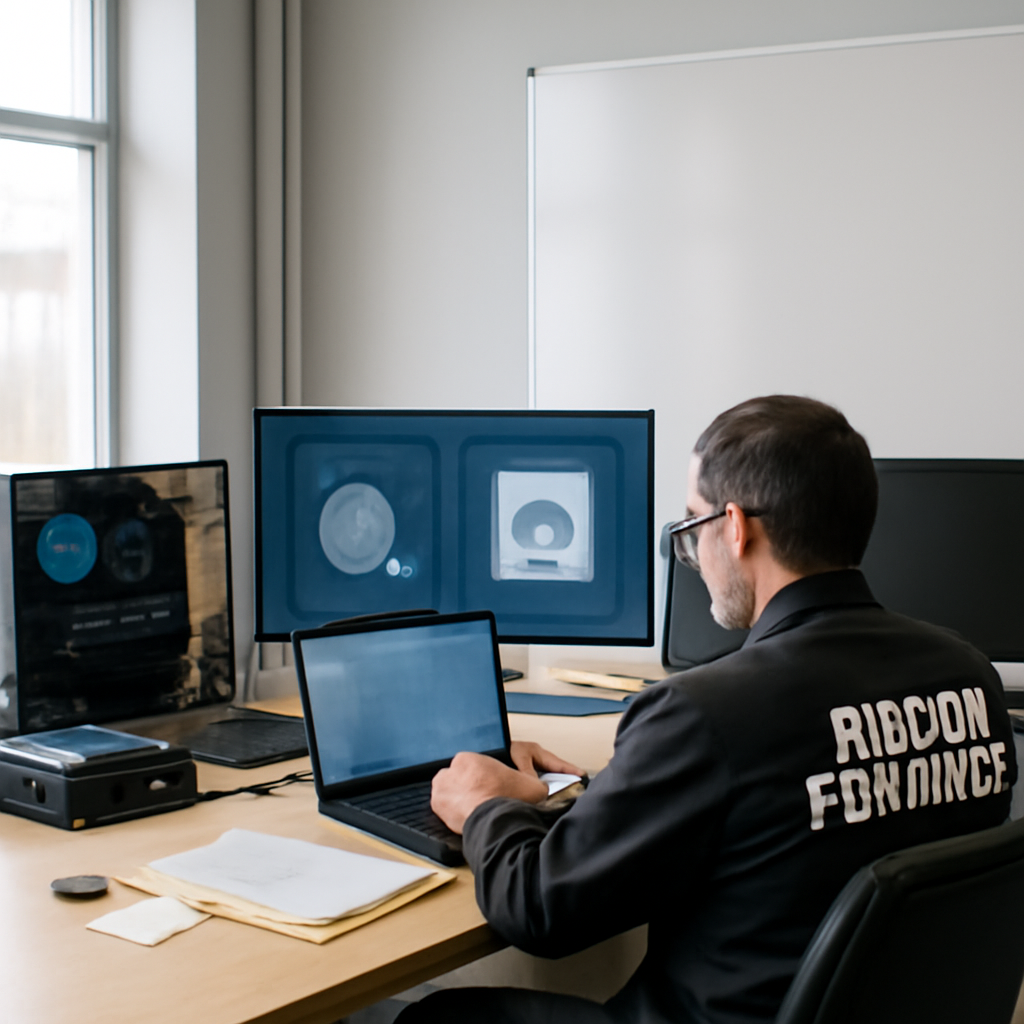
When it comes to AI-driven investigative work, human examiners must remain in the driver's seat, verifying and validating every finding to ensure digital forensics integrity. Without transparent reasoning and a clear source file, even the most confident AI output is only as reliable as the examiner's ability to confirm it.

US companies are under attack by fake AI campaigns that impersonate trusted brands like Claude, ChatGPT, and Copilot, spreading malware and stealing sensitive data. Attackers are using clever tactics, such as sponsored search results and fake download websites, to trick victims into compromising their business accounts.

A critical remote code execution flaw in Drupal's core Field UI module, tracked as CVE-2026-108097, has been patched, but the fix only helps sites that don't rely on contributed modules or custom code to stay safe. Over 151,000 Drupal sites are still vulnerable, highlighting the urgent need for an upgrade.