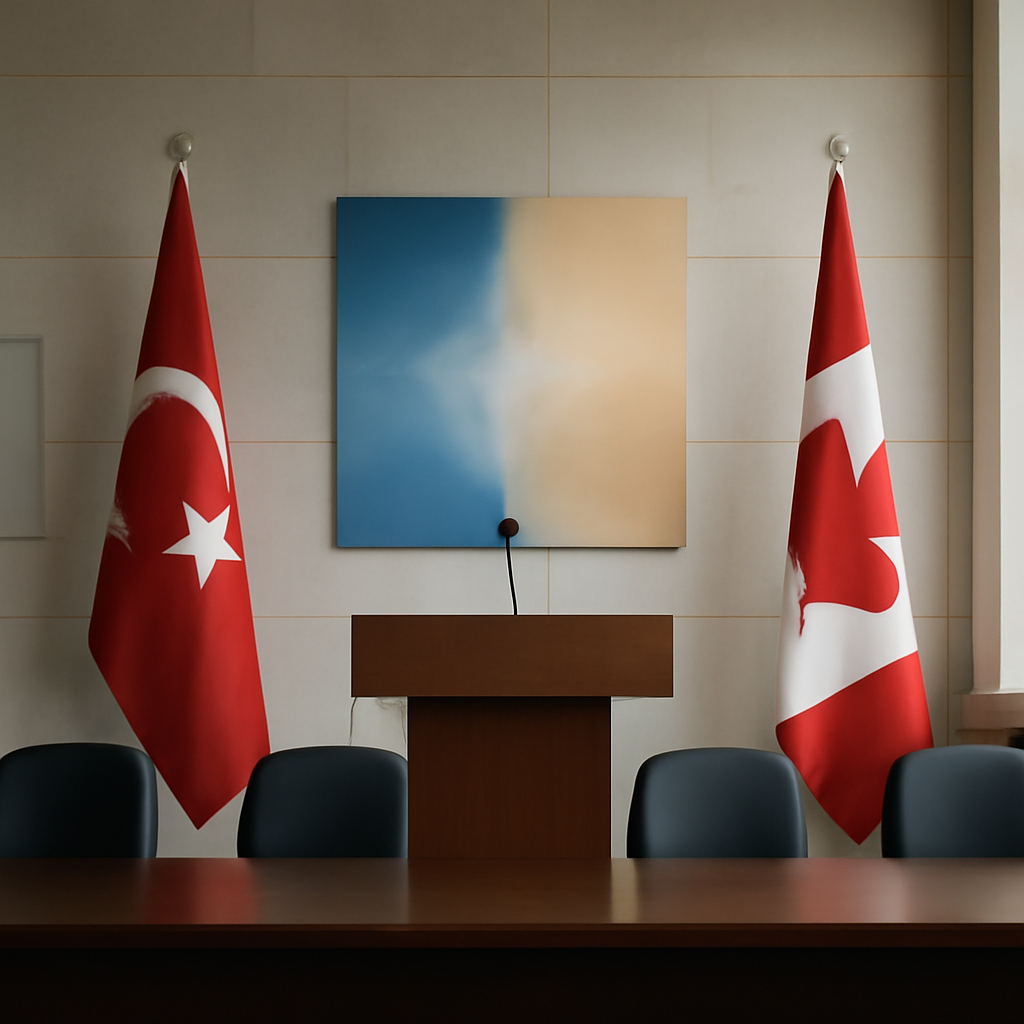
“Türkiye has informed Canada that it will join the new Defence, Security and Resilience Bank (DSRB) as a founding member,” a Turkish official told Reuters on 13 July 2026 — a move that reverses a decision announced only days earlier and marks the third stance Ankara has taken on the bank since it was unveiled the previous week.
Türkiye notifies Canada of a renewed commitment
On 13 July 2026, Türkiye told Ottawa it will participate as a founding member of the Canada‑led Defence, Security and Resilience Bank. The notification, disclosed to Reuters by a Turkish official, undid a brief decision by Ankara to withhold its commitment and represented the third public position Türkiye has adopted since the DSRB was revealed at the NATO Summit in Ankara on 7 July. The Turkish official did not explain what prompted the change.
What the Defence, Security and Resilience Bank is designed to do
The DSRB was launched at the 2026 NATO Summit in Ankara with a joint declaration from nine leaders — Canada, Albania, Belgium, Greece, Latvia, Luxembourg, Romania, Türkiye and Ukraine — announcing their shared intention to establish the institution and to mobilize public and private capital at scale. The bank is designed to provide long‑term, low‑cost financing for defence, security and resilience initiatives across supply chains. By drawing on a strong credit foundation, the institution aims to expand access to capital, reduce financing costs and support the expansion of industrial capacity across member countries, with a particular focus on helping small‑ and medium‑sized enterprises and member governments address critical financing gaps.

Audit-ready is a season. It shouldn't be.
Evidence in spreadsheets, controls drifting between audits, frameworks multiplying on flat headcount. Nubivance runs continuous compliance on Rapid7 Cyber GRC - SOC 2, HIPAA, ISO 27001, PCI, CMMC.
End the scrambleHow the DSRB was developed and who shaped it
The concept was first proposed in 2025 by Rob Murray, who previously led creation of NATO’s Defence Innovation Accelerator for the North Atlantic and the NATO Innovation Fund. The design borrows from established multilateral lenders: a shared capital base and a high credit rating intended to allow the bank to raise financing on favourable terms for members. The effort drew early backing from financial institutions including JPMorgan Chase, Deutsche Bank, ING and Commerzbank.
In‑person negotiations among representatives from eighteen countries began in Montréal in March 2026 and concluded in April with agreement on the DSRB’s founding Articles of Agreement. Participating states unanimously selected Canada to host the bank’s future headquarters. Isabelle Hudon, president and chief executive of the Business Development Bank of Canada, is Canada’s lead negotiator for the institution. Ottawa has invited partners to undertake their respective domestic treaty processes, and the founding members have committed to advancing the bank with the aim of commencing operations as early as 2027.
Türkiye’s participation: scale as a defence producer and summit host
Türkiye’s confirmation carries symbolic and practical weight. The source notes Türkiye’s scale as a defence producer and its role as summit host, and says that keeping Ankara among the founding group ensures it remains part of the cohort entrusted with defining the bank’s initial policies and directives. Canada has positioned the DSRB as complementary — not duplicative — to existing national and multilateral instruments that support defence production.
What this means for Canada, Türkiye, and defence SMEs
- Canada: Ottawa has positioned the bank as a central instrument in a broader defence‑industrial agenda. Canada — which the report notes reached NATO’s two per cent of GDP spending target this fiscal year and is on a pathway toward the alliance’s five per cent pledge by 2035 — is hosting the bank’s headquarters and has a lead negotiator in Isabelle Hudon. Ottawa is asking partners to begin domestic treaty processes so the bank can aim to begin operations as early as 2027.
- Türkiye: Rejoining as a founding member keeps Ankara in the room where the bank’s initial policies and directives will be set. Given the source’s emphasis on Türkiye’s scale as a defence producer and its role as summit host, that seat influences how the bank’s priorities and financing windows are likely to be shaped for regional supply chains.
- Defence small‑ and medium‑sized enterprises (SMEs): The DSRB is explicitly framed to help SMEs address financing gaps by expanding access to long‑term, lower‑cost capital and supporting industrial capacity expansion across member countries — a core justification for mobilizing both public and private capital at scale.
The DSRB’s next concrete steps are now procedural: founding members must complete their domestic treaty processes, and the institution aims to begin operations as early as 2027. Ankara’s late‑breaking reversal — communicated to Ottawa without explanation — leaves one immediate question: what changed in the days after the bank’s unveiling to prompt Türkiye’s third publicly recorded stance on the matter? The answer will help determine how unified the founding cohort is as it shifts from design to deployment.