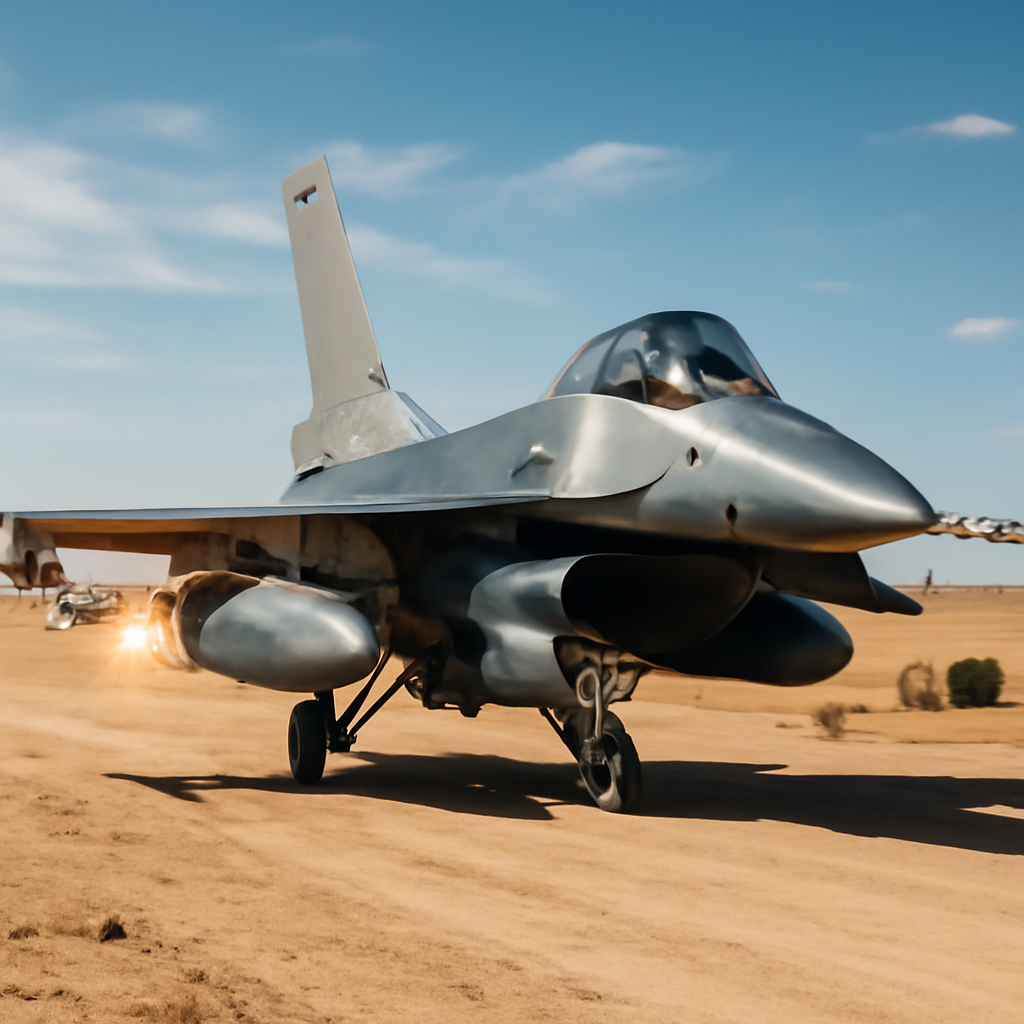
Operation Epic Fury, which ran from 28 February to 5 May 2026, consumed the United States’ guided munitions stockpile faster than its industry could replace them.
Operation Epic Fury: high tempo, rapid depletion
The short, intensive campaign from 28 February to 5 May 2026 strained U.S. guided-munitions inventories, according to the source, outpacing the ability of industry to resupply. During the same period, Iran “fully activated its vast inventories of loitering munitions and ballistic missiles” to press the air-defence systems of the United States and its Gulf partners. That simultaneous surge — offensive fires from Tehran and high-tempo strike operations from Washington and partners — exposed limits in technical sustainment and tested the patience and confidence of allied capitals in Saudi Arabia, Qatar, the United Arab Emirates, Oman, Bahrain, and Kuwait.
CENTCOM’s sea‑drone strike at Bandar Abbas
On 12 July 2026, US Central Command (CENTCOM) announced it had employed three Saronic Corsair unmanned surface vessels (USV) against a submarine and ship maintenance facility at the Bandar Abbas naval base in Iran. CENTCOM characterized the strike as part of a wave aimed at degrading Tehran’s ability to attack commercial shipping through the Strait of Hormuz, and said it marked the first time the U.S. used sea drones in combat. CENTCOM also noted two other combat debuts in this conflict: the Low-Cost Uncrewed Combat Attack System (LUCAS) and the Precision Strike Missile (PrSM).

Audit-ready is a season. It shouldn't be.
Evidence in spreadsheets, controls drifting between audits, frameworks multiplying on flat headcount. Nubivance runs continuous compliance on Rapid7 Cyber GRC - SOC 2, HIPAA, ISO 27001, PCI, CMMC.
End the scrambleConvergence on ‘affordable mass’ weapon types
The source describes a clear shift in U.S. force planning and procurement toward the same categories of systems that have defined other recent conflicts. Between unmanned surface vessels, loitering munitions analogous to Iran’s Shahed and Geran via LUCAS, and PrSM guided conventional ballistic missiles, the U.S. has begun emulating Iran’s tactics on the surface. More broadly, the U.S. is converging on piston- and jet-powered loitering munitions, conventional tactical ballistic missiles, and low-cost cruise missiles — all aimed at creating scalable, precision-strike capacity that can be produced and replenished rapidly.
Doctrine: cost asymmetry, modularity, and accepted attrition
“Affordable mass,” as described in the source, is less about stockpiling and more about enabling high-tempo strike operations by trading cost asymmetry and rapid replenishment. The logic is explicit: use relatively cheap weapons — the source gives a concrete example of a $50,000 loitering munition — to neutralize high-value, multi‑million‑dollar targets and to stress enemy air-defence interceptors until they are depleted. The industrial emphasis is on low-cost inputs that are easy to build at scale, standardization, modularization, iterative improvements, and a tolerance for attrition; these weapons are designed to be expended in operations and replaced quickly.
What this means for the US defense industry, Gulf capitals, and CENTCOM
- US defense industry: The industry is being tuned to support an “affordable mass” doctrine — prioritizing rapid production, low unit cost, and iterative design changes over large, long-term stockpiles. That shift explains the rise of loitering munitions, low-cost cruise missiles, and tactical ballistic missiles in U.S. inventories.
- Gulf capitals (Saudi Arabia, Qatar, UAE, Oman, Bahrain, Kuwait): The activation of Iran’s loitering munitions and missile inventories has placed stress on regional air-defence systems and eroded, to some degree, confidence and patience in those capitals, per the source.
- CENTCOM and U.S. military planners: The use of sea drones, LUCAS, and PrSM in combat indicates a doctrinal adaptation to rely on distributed, lower-cost strike options to sustain long-haul operations and to impose cost asymmetries on adversaries.
Since the start of the Russia-Ukraine War in 2022, the source argues, multiple states — including Turkiye and Pakistan — have adopted the same lessons: scalable precision fires and rapid, cost-effective replenishment are operationally decisive. It remains unknown whether there will be a second, larger campaign on the scale of Operation Epic Fury. What is clear from the account is that Washington has begun matching Tehran’s tactics with a tuned industrial posture that privileges affordable, rapidly replaceable strike systems — a posture explicitly designed to wear an adversary out through quantity, cost asymmetry, and sustained pressure.



