"Two commercial vessels were redirected and one was kinetically disabled in the first 24 hours," CENTCOM said, underscoring how rapidly the reinstated U.S. blockade of Iran moved from announcement to action.
CENTCOM and NAVCENT define the blockade's geographic and legal reach
U.S. Central Command (CENTCOM) and U.S. Naval Forces Central Command (NAVCENT) have described the reinstated blockade as expansive and specific. CENTCOM said forces "will enforce the blockade against vessels transiting to or from Iranian ports and coastal areas," while NAVCENT's formal notice to commercial mariners stated that "The blockade encompasses the entirety of the Iranian coastline to include but not limited to Iranian ports and oil terminals." The NAVCENT notice adds that the blockade "applies to all traffic, regardless of flag," but it also stated that the measures "will not impede neutral transit passage through the Strait of Hormuz to or from non-Iranian destinations."
Two carrier strike groups and escorts form the backbone of naval presence
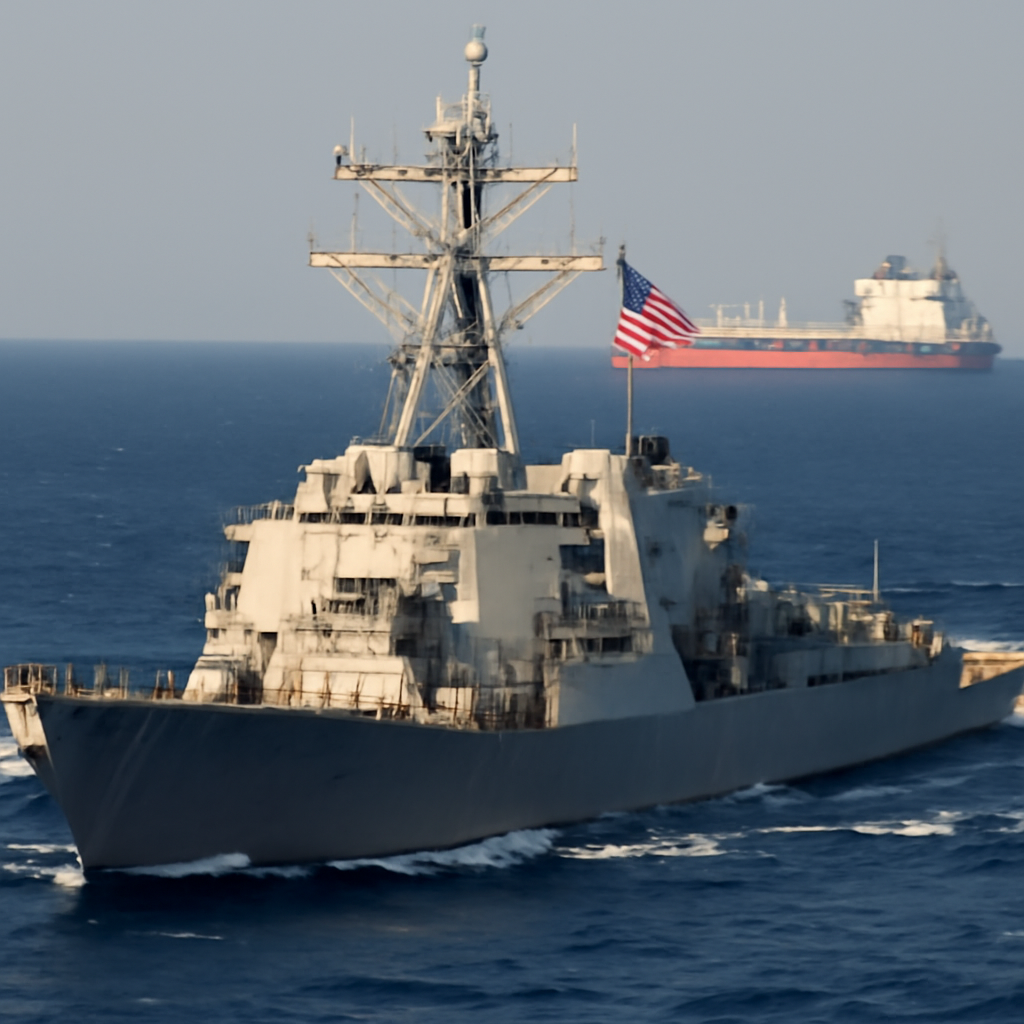
The U.S. naval presence in the Arabian Sea and Indian Ocean centers on two carrier strike groups (CSGs) that "have been operating in the northern Arabian Sea for months." Those carriers — USS Abraham Lincoln and USS George H.W. Bush — are each escorted by up to three guided-missile destroyers, with one destroyer serving as the Integrated Air and Missile Defense (IAMD) Commander. The deployed surface forces also include an additional seven destroyers from surrounding combatant commands, the guided-missile cruiser USS Princeton, the littoral combat ship USS Tulsa, and the expeditionary sea base USS Miguel Keith. CENTCOM said "more than 20 U.S. warships" operate in the Arabian Sea and Indian Ocean alongside "hundreds of aircraft dispersed across various bases, vessels, and forward arming and refueling points in the Middle East."

Audit-ready is a season. It shouldn't be.
Evidence in spreadsheets, controls drifting between audits, frameworks multiplying on flat headcount. Nubivance runs continuous compliance on Rapid7 Cyber GRC - SOC 2, HIPAA, ISO 27001, PCI, CMMC.
End the scrambleAmphibious Ready Groups, expeditionary sea bases, and regional disposition
Two Amphibious Ready Groups (ARGs) with Marine Expeditionary Units (MEUs) embarked are underway in the region. Ships reported as recently sailing into U.S. 5th Fleet in early July include amphibious assault ship USS Boxer, dock landing ship USS Comstock, and amphibious transport dock USS Portland. A Tripoli ARG that had been operating in the CENTCOM area of responsibility moved deeper into the Indian Ocean and entered the U.S. Pacific Command (PACOM) AOR; that group is made up of USS Tripoli, USS New Orleans, and USS Rushmore. Ship-spotting, public AIS, and satellite imagery indicate additional Navy ships operate in adjoining regions — for example, at least one destroyer, USS Gonzalez, is in the Red Sea under U.S. 5th Fleet, and four destroyers are deployed in the Mediterranean (USS Roosevelt, USS Arleigh Burke, USS Paul Ignatius, and USS Thomas Hudner).
Kinetic enforcement and specific incidents already recorded
NAVCENT warned mariners that "Enforcement actions include disabling and destructive fires upon vessels who do not demonstrate immediate compliance with blockading/boarding forces." The U.S. has used a range of kinetic methods during the first blockade and in subsequent enforcement. In April, USS Spruance fired its 5-inch Mk 45 gun into the engine room of the Iranian cargo ship M/V Touska. In May, an F/A-18 Super Hornet launched from USS Abraham Lincoln fired on the rudder of M/T Hasna. In June, U.S. aircraft fired two Hellfire missiles into the engine room of M/T Jalveer as she attempted to transport oil from Iran through the Gulf of Oman. On July 15, CENTCOM reported that U.S. aircraft fired Hellfire missiles into the smokestack of M/T Belma, described in CENTCOM's statement as an "unladen Curacao-flagged oil tanker" attempting to sail toward Kharg Island.
Submarines, force posture, and the Islamabad memorandum
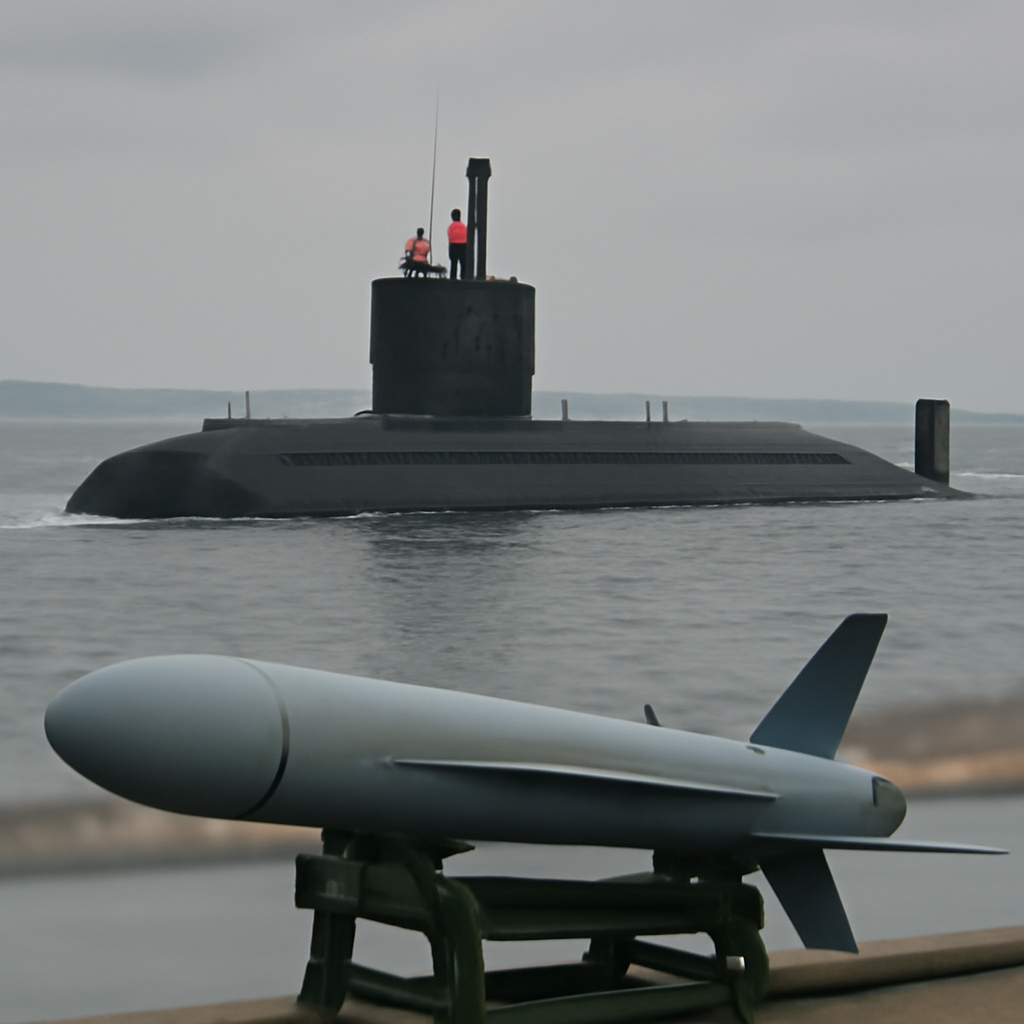
The submarine force is active in the CENTCOM theater though not depicted in the main graphic: "at least two fast-attack submarines are operating with the CSGs," and a guided-missile submarine — which the source notes "can be loaded with 154 Tomahawk cruise missiles and Navy SEALs" — is "also often prowling the region." The report notes that "Blockade 1.0 was lifted when the Islamabad Memorandum of Understanding (MOU) was signed by both parties on June 17, but the blockading forces never left the region, and U.S. naval force posture has been unchanged since." The source adds that, practically speaking, the MOU "is worth little more than the paper it was written on, as both sides have effectively declared it dead."
What this means for commercial mariners, CENTCOM, and ship spotters
- Commercial mariners: NAVCENT furnished a formal notice to mariners stating the blockade covers the entire Iranian coastline and applies to all traffic regardless of flag; mariners will need to account for the explicit warning that enforcement can include disabling or destructive fires if ships fail to comply.
- CENTCOM and U.S. Navy forces: The presence of two CSGs, multiple destroyers, ARGs with MEUs, expeditionary sea bases, and submarines provides layered options for interdiction and force protection across the Arabian Sea and Indian Ocean.
- Ship spotters and open-source analysts: Public AIS, satellite imagery, and on-the-ground ship spotters have supplemented official disclosures, tracking additional units in the Red Sea and Mediterranean and corroborating that many assets "never left the region" after the June 17 Islamabad MOU.
The facts on the water are stark: an extensive surface and subsurface U.S. presence, a written NAVCENT notice that the blockade reaches "the entirety of the Iranian coastline," and multiple kinetic engagements already executed. With the Islamabad MOU effectively disregarded in practice and rules of engagement that explicitly allow disabling fire, the operational picture for vessels bound to or from Iranian ports is active enforcement rather than passive deterrence.