"We found a spot," Zone 5 CEO Thomas Akers told Breaking Defense, summing up why his firm is pitching a larger, modular interceptor even as the counter-drone market narrows around smaller systems.
Zone 5’s Eclipse: dimensions, range, and claim to reusability
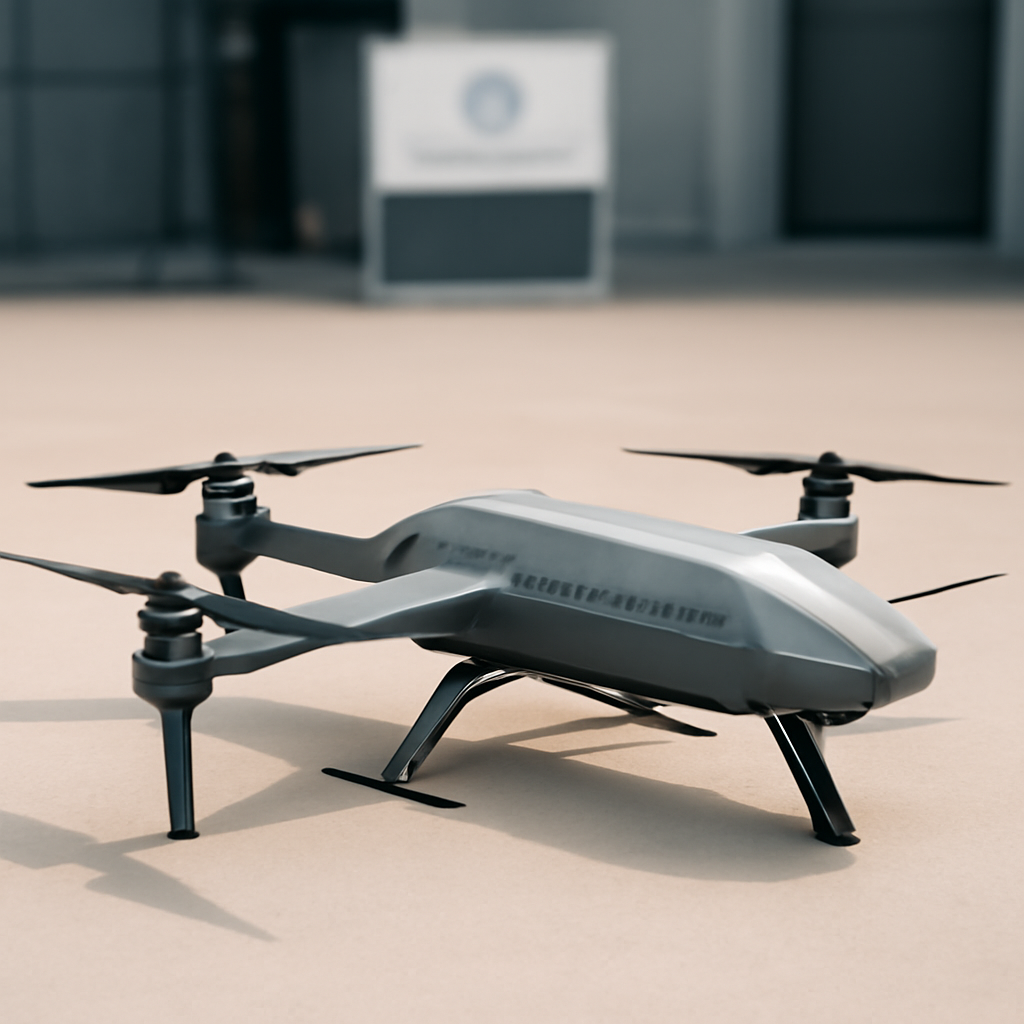
Shown publicly for the first time at the Association of the United States Army conference in Washington, Zone 5’s new interceptor, the Eclipse, is a larger, reusable entry the company says is aimed at high-speed unmanned threats. A company fact sheet displayed with the system — and a model at Zone 5’s booth — lists the platform at 39 inches long and 32 inches wide, capable of taking off and landing vertically, achieving speeds of over 200 knots (230 miles per hour), and reaching more than 30 miles.
Thomas Akers said the Eclipse can be equipped with modular payloads such as a high-powered microwave to disable drone electronics or a kinetic payload to physically knock a drone out of the sky. Akers described the Eclipse as a lower-cost, reusable option to combat more capable drones that are challenging the market’s current small-interceptor focus.
Development timeline, production goals, and market focus
Akers told Breaking Defense he expects Eclipse to be in development for "roughly another six months" before entering production, with an initial focus on the American market. Zone 5 aims to produce "hundreds of copies a month," he said, but declined to provide a price, noting that payload choice will influence final cost.
The Eclipse is presented as one piece of a layered defensive portfolio that Zone 5 is building — sitting alongside other offerings the company is marketing and exporting.

This site is the portfolio.
OSINTSights runs on Cloudflare Workers, D1, R2, and Vectorize, with an AI pipeline on Hetzner ARM. Nubivance designed, built, and operates it. We do the same for clients.
See what we buildKongsberg acquisition: supply chains and global posture
Zone 5 was acquired by the Norwegian defense firm Kongsberg earlier this year. Akers said the acquisition "bring[s] kind of an immediate step change" in Zone 5’s access to international resources. While Zone 5 continues to operate separately in the United States, Akers said the firms "present one unified front under the Kongsberg brand" globally.
He added that Norwegian ownership "gives us access to a larger portfolio of vendors" that can expand supply chains beyond the U.S., enabling iteration on Zone 5 products to improve lethality and survivability.
Where Eclipse fits amid Zone 5’s existing products and deals
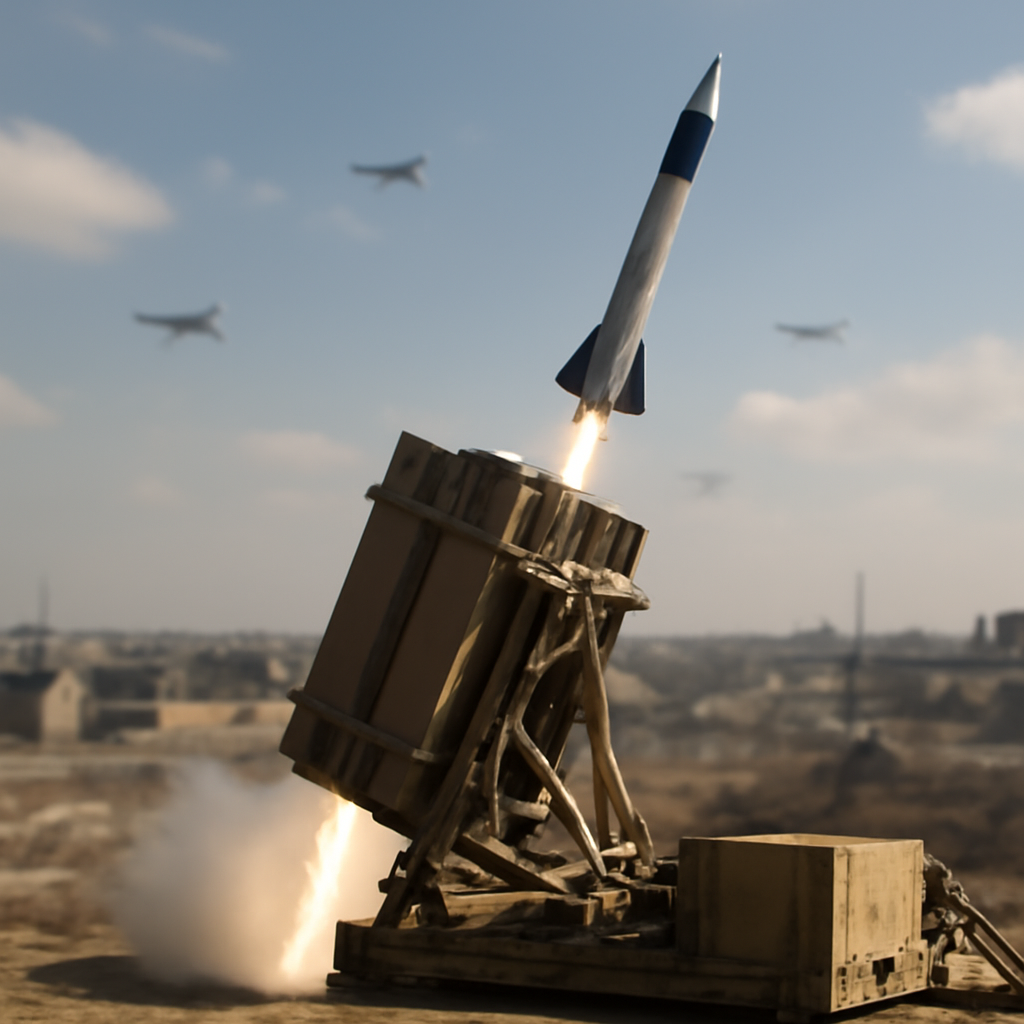
Akers positioned Eclipse as complementing other Zone 5 capabilities: a drone-mounted firearm fielded on the firm’s Paladin system, the White Spike anti-air missile, and a cruise missile dubbed Rusty Dagger, which the company says has been exported to Ukraine and is on order for the Pentagon. Recent work includes agreements tied to a Navy maritime strike program and a Pentagon-wide effort for containerized munitions, the CEO noted.
Zone 5’s ambitions include producing low-cost cruise missiles and technologies to defeat Group 1–4 drones, with a stated goal of producing thousands of missiles annually while leveraging Kongsberg’s resources to iterate faster.
How the Air Force, Pentagon procurement leaders, and Zone 5 are positioned
- Air Force: The service’s Family of Affordable Mass Missiles (FAMM) program looms as a major opportunity. The Air Force plans to acquire tens of thousands of FAMM missiles through multi-year deals, drawing from a vendor pool that includes Zone 5, Anduril, and CoAspire.
- Pentagon procurement leaders: Funding choices are consequential. After using dollars from the One Big Beautiful Bill to jumpstart procurement in fiscal 2026, the Air Force again relied on reconciliation to supply FY27 purchases — a prospect the source describes as dimmed by doubts over another reconciliation bill. Akers warned that if multi-year procurement does not proceed as scheduled, "that sends a clear signal to industry" and will cause a "recoil" felt beyond FAMM.
- Zone 5: The company is positioning Eclipse and its missile portfolio to be ready for high-volume production and international scaling now that it is part of Kongsberg, but its plans are explicitly tied to how multi-year procurement and appropriations unfold in Washington.
Zone 5’s public unveiling of Eclipse frames a conservative engineering bet: a middle-sized, modular interceptor that can carry either electronic-attack or kinetic effects, produced at scale if demand and appropriations align. The next concrete markers to watch in the coming months are the company’s six-month development timetable and whether multi-year buys for programs like FAMM materialize — factors that, according to Akers, will determine whether the firm’s production ambitions meet market realities.