"the old concepts of fighting big tank battles on the European land mass are over," said British prime minister Boris Johnson — a remark Tobias Ellwood cites to underline the speed with which strategic assumptions can collapse.
Tobias Ellwood: voice, career and central warning
Tobias Ellwood, a British politician and former army officer who served two decades as a member of parliament and held junior ministerial roles at the Foreign and Commonwealth Office and the Ministry of Defence, lays out a broad agenda in Ten Steps to Prevent World War Three. He chaired the Defence Select Committee from 2020 to 2023. Ellwood argues the international order forged after World War II "worked for nearly 80 years" but is now in a state of decline — the old order is "dead or dying," the new order has not yet formed, and the world has shifted from complacency to insecurity with a growing risk of multi-domain war.
Multi-domain threats: nuclear, cyber, space, proxy and information warfare
Ellwood warns that the next major conflict would not be confined to a single battlefield. He names conventional warfare, cyber-attacks, satellite warfare, proxy wars and disinformation as likely components. Tactical nuclear weapons have "returned to the fore" as a potential threat. In the information domain, Russia’s use of fake news, trolls, AI bots and synthetic media has created an information space "where nothing feels reliable," illustrating how grey‑zone techniques can reshape strategic outcomes without formal declarations of war.

The cyber insurance questionnaire just landed. Now what?
SOC 2, HIPAA, insurance renewals - someone has to own security strategy. Nubivance provides fractional CISO leadership without the full-time salary.
Get a security leadDrones and the new economics and geometry of fighting
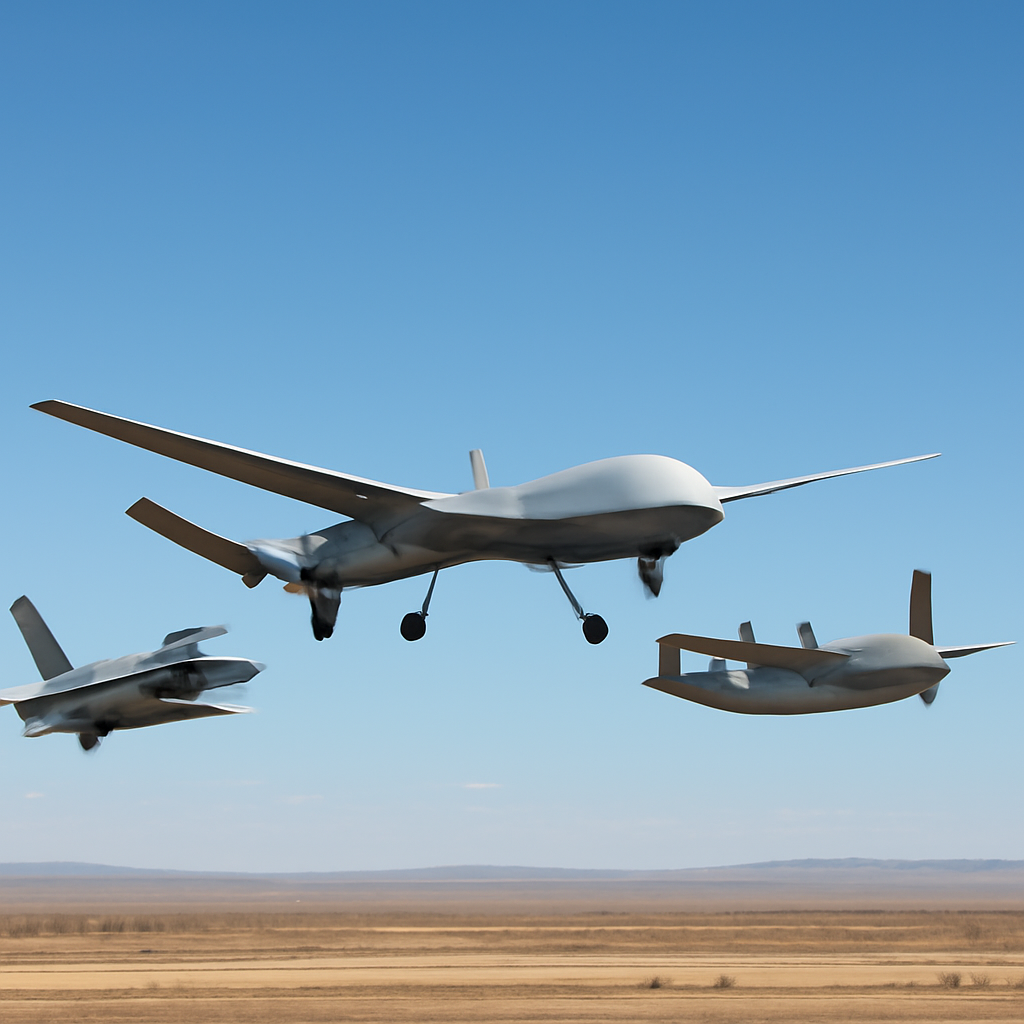
Drones are central to Ellwood’s assessment. Autonomous boats, uncrewed aircraft and other remotely controlled weapons, often produced in small workshops, now cost a few thousand dollars and can threaten tanks costing tens of millions and far more expensive ships. That asymmetry, he says, has "upended the economics of warfare." Many drones can be assembled in days or hours, and the kill chain — finding, identifying, targeting and engaging — has been compressed to minutes or even seconds.
Ellwood highlights specific operational effects: Ukrainian strike drones can penetrate up to 2,500 km into Russian territory, striking military, logistical and oil facilities. Where 20 km once demarcated a relative safety zone for headquarters and logistics, that geometry has been fundamentally altered. Drones have shifted the balance from controlling territory to denying it: early Russian advances in Ukraine were eventually stymied as both sides made airspace effectively inescapable for large-scale rapid ground maneuvers.
Industrial tempo, training and the resilience gap
Ellwood contrasts wartime industrial tempos. During World War II, Britain’s factories produced more than 100 Spitfire fighters in a week and could assemble a Lancaster bomber in less than a month; pilots were trained in about 200 hours. By contrast, modern fighters such as the F-35 or Typhoon can take two years to build, and training front-line pilots can take several years. That change in timelines complicates rapid mobilization and national resilience.
To meet this new reality, Ellwood argues societies must boost economic, energy and military resilience and bring them "as close as possible to a war footing." He points to a whole-of-society approach adopted by several NATO countries, particularly Finland and Sweden, as a model for preparedness.
Boris Johnson’s 2021 tank cuts and the lesson of strategic memory
Ellwood uses a concrete policy example to illustrate forgotten lessons. In 2021, Boris Johnson reduced the British army’s number of tanks to just 148. When questioned in parliament, Johnson replied with the quoted assertion that big tank battles on the European land mass were over. Three months later, Russia invaded Ukraine with more than 1,000 tanks rolling across the border — though the subsequent drone revolution greatly limited the tanks’ effectiveness. Ellwood frames this sequence as evidence that "strategic memory" is a neglected asset and that lessons from recent conflicts are often forgotten or ignored.
What this means for NATO countries, Western militaries, and the general public
- NATO countries: Ellwood urges a "whole-of-society" resilience posture, pointing to Finland and Sweden as models. That approach encompasses economic and energy preparedness as well as military readiness.
- Western militaries: They must adapt doctrine, procurement and staffing to a world where cheap, rapidly produced drones, compressed kill chains, cyber and space threats reshape priorities and budgets.
- The general public: Ellwood maps a plausible scenario in which power, communications and water outages could paralyse the economy and daily life — underscoring the case for societal resilience beyond narrow defence planning.
Ten Steps to Prevent World War Three functions as both a warning and a practical agenda. Ellwood’s prescription is straightforward: learn from recent conflicts, recognise the new battlefields and act urgently to remodel resilience, procurement and strategic memory. The final, pointed question his analysis leaves is not whether war could change form again — it already has — but whether policymakers and publics will adjust fast enough to reduce the risk of a larger conflagration.
https://www.aspistrategist.org.au/bookshelf-an-agenda-for-preventing-the-next-world-war/