"The underneath is far more complex than the upper," President Donald Trump told reporters as he described the enormous construction beneath the former East Wing. The remark captures the central fact: what is being marketed as a White House ballroom also functions as a deep, multi-story hardened facility with explicit military and security roles.
What the president publicly described
At a May 19 presser, President Trump offered granular descriptions of the project beneath the new ballroom. He said the facility is "already down about six stories deep," and repeated that the complex extends six stories downward. He listed specific internal elements: a military hospital, "research facilities," and meeting rooms that "go hand-in-hand" with the military. He characterized the ballroom itself as a "shield" protecting those sensitive areas and said the project is being built "in conjunction with the United States military."
Money, size, and prior investments
The administration has requested new funding for the effort. The White House is seeking roughly $1 billion in new Secret Service funding through congressional appropriations tied to the ballroom; $220 million of that would be directed specifically toward the facility, while other amounts would fund broader security enhancements around the complex. Earlier estimates for the total ballroom project put the cost at about $400 million. Media captions describing the construction have also cited a $250 million figure and a 90,000-square-foot final building footprint.

This site is the portfolio.
OSINTSights runs on Cloudflare Workers, D1, R2, and Vectorize, with an AI pipeline on Hetzner ARM. Nubivance designed, built, and operates it. We do the same for clients.
See what we buildHardened passive and active defenses described
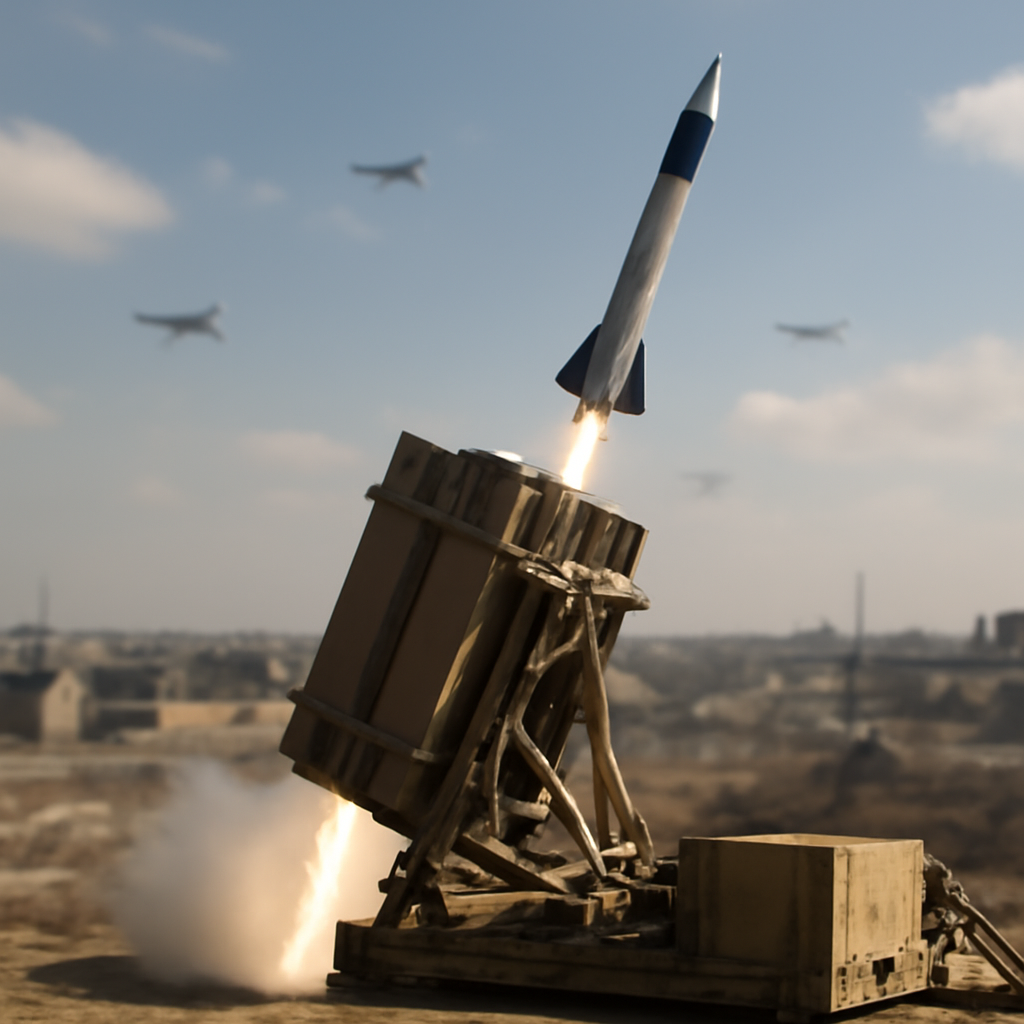
Trump spelled out defensive specifications that mix passive hardening with active defenses. He said the structure will be "drone proof" — "if a drone hits it, it bounces off" — and "missile proof" with "great sniper capacity." He repeatedly emphasized rooftop capabilities: a 360-degree view "for the military" and a "massive drone capacity," calling the roof a "drone port" that could "protect all of Washington." The president added that systems stored below could be moved to the roof to provide "drone and missile capacity."
The article supplying these details treats the rooftop as planned to host a major air-defense node—at least for counter-drone operations—and lists several forms of active defense that may be involved, including interceptor drones, electronic warfare, directed-energy weapons, and surface-to-air missiles. The piece also calls out an existing nearby rooftop Avenger missile turret and the capital region's permanent medium-range NASAMS network as contextual points mentioned within the same reporting.
Underground functions: command, continuity, and medical
Reporting describes the undercroft not as a simple shelter but more like a multi-story underground office building. Beyond the military hospital and research rooms named by the president, the facility is said to contain numerous command-and-control, training, computer, and communications-support spaces tied to military operations and White House defense. The article frames much of this as fitting into "continuity of government" missions historically associated with the Secret Service and the White House Military Office.
What this means for the U.S. Secret Service, the United States military, and Congress
- U.S. Secret Service: The agency is the explicit recipient of the requested security funding and is identified in reporting as deeply involved in the facility's security design; it will be responsible for operating and justifying at least some of the hardened features funded by the requested appropriations.
- United States military: The president said the ballroom is being built "in conjunction with the United States military," and the facility contains military hospital, research, and meeting spaces—indicating sustained military involvement in design and operational planning within the grounds.
- Congress: Lawmakers control appropriations; the article notes that the Senate parliamentarian ruled taxpayer funds in a reconciliation package cannot be used for a $1 billion provision intended to fund ballroom security, underscoring that funding decisions will be a focal point of legislative oversight and debate.
Two practical paradoxes stand out from the factual record: first, the administration portrays a public, ceremonial structure while detailing deep military and security functions beneath it; second, the reporting says military and Secret Service planners were involved early in design, yet the White House is only now seeking substantial taxpayer funds for the security elements. Those tensions—between public purpose, hidden function, and delayed funding—are the clearest questions the documented facts leave in plain view.