"It’s not a capability unless you can manufacture it at scale," a Defence West industry tour participant said during Land Forces 2026 — a blunt formulation that frames the practical problem facing Western Australia’s defence ambitions.
Henderson Defence Precinct: funding, scope and a reserve of promise
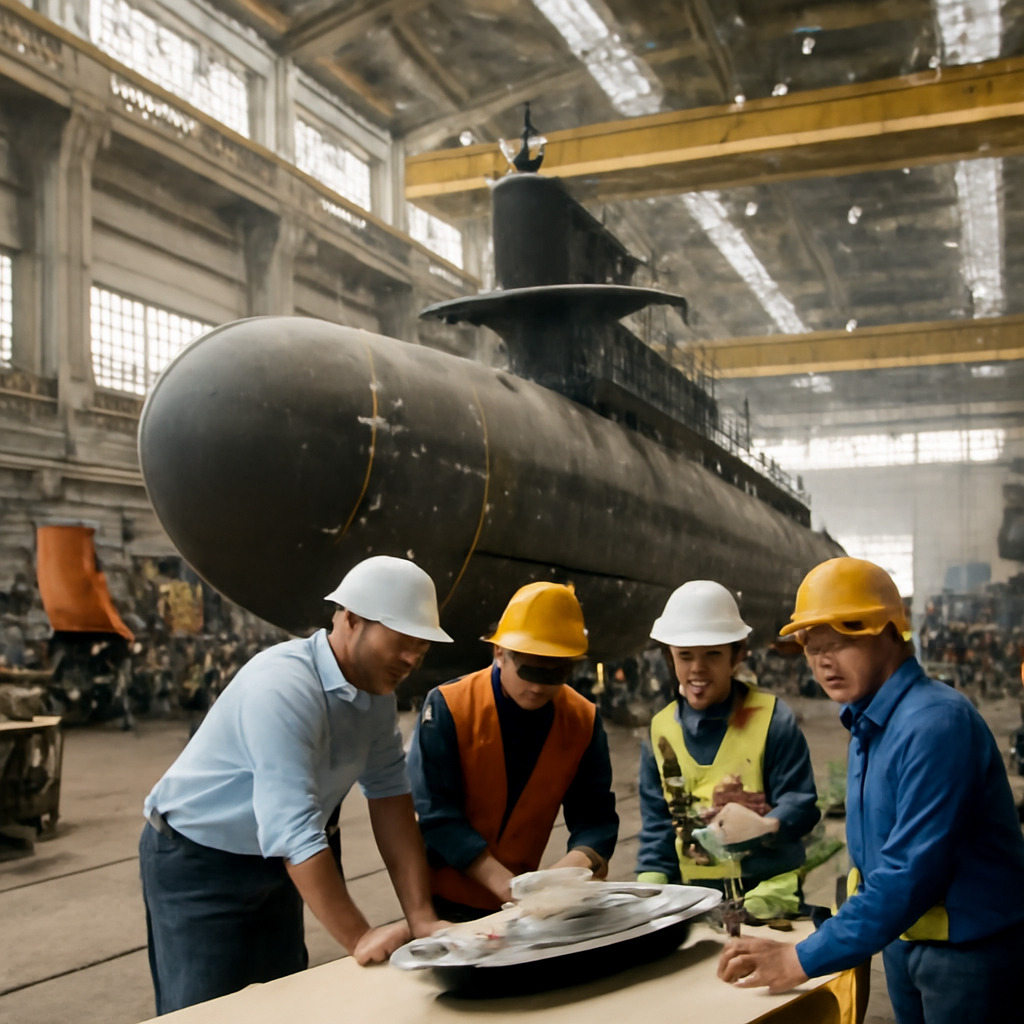
The Henderson Defence Precinct is being positioned as a major national node for continuous naval shipbuilding and sustainment, including maintenance for nuclear-powered submarines. Early works and infrastructure have attracted A$12 billion in initial funding, with total costs for the precinct estimated at around A$25 billion. Those figures signal large-scale commitment; they do not, however, guarantee the operational outcomes Defence seeks.
Planners and proponents must still translate infrastructure into a functioning industrial system that can deliver at scale and on schedule. That conversion depends on a constellation of factors beyond concrete and cranes: workers with the right skills, qualified suppliers, secure and resilient supply chains, dependable utilities and — perhaps most critically — a predictable pipeline of work from Defence so industry can justify long-term investments.
Australian Marine Complex: multi-user infrastructure as a sustaining model
The Australian Marine Complex, within the Henderson precinct, provides an instructive example of how shared facilities can sustain capability across sectors. Its common user facility offers heavy engineering, fabrication and assembly infrastructure, vessel berths, workshops, ship hardstands and a floating dock and ship-transfer system.
That multi-user model lets defence, marine, energy and resources customers access specialised infrastructure without any single customer having to underwrite the full capital cost. The arrangement helps sustain capability by spreading utilisation and cost, but it still relies on sufficient, continuous demand across users to keep skills, suppliers and specialised equipment engaged.

Audit-ready is a season. It shouldn't be.
Evidence in spreadsheets, controls drifting between audits, frameworks multiplying on flat headcount. Nubivance runs continuous compliance on Rapid7 Cyber GRC - SOC 2, HIPAA, ISO 27001, PCI, CMMC.
End the scrambleCivmec, HMAS Pilbara and the tangible limits of one-off successes
Civmec’s fabrication and hardstand facilities illustrated Western Australia’s practical capacity for large-scale naval construction: the future HMAS Pilbara, the third Arafura-class offshore patrol vessel, was launched in October 2025. That launch demonstrates the local ability to deliver complex vessels and components.
Yet the report’s through-line is clear: individual achievements — even significant launches — are not the same as a sustained industrial capability. Delivering one hull or one class of ship does not automatically scale into steady production and long-term sustainment unless the underlying ecosystem grows in step.
Innovearo’s OWL, the HMAS Anzac dismantling and the invisible supply chain
The Defence West tour highlighted a spectrum of capability, from heavy engineering to autonomy. Near Fremantle, participants received a briefing on Innovaero’s One Way Loitering (OWL) family of autonomous munitions, described in the briefing as designed for long-range strike and counter-drone missions. The visit underscored the gap between a promising system and a produced, certifiable capability.
That gap was also visible in the dismantling of the former HMAS Anzac at Henderson in 2024. Recovery of components from the decommissioned frigate required specialist engineering, transport and coordination among local providers. Those extraction and reverse-logistics skills are less glamorous than a new-build yard but are crucial for sustaining fleets: salvaged parts can help maintain vessels still in service, keeping spares and specialist expertise in circulation.
In short, both high technology (OWL) and the routine, technical work of sustainment (Anzac dismantling) show facets of domestic capability — but both demand reliable production lines, testing, certification and the ability to scale up when operational needs change.
What this means for Defence, the Western Australian government, and industry
- Defence: must provide clear requirements, predictable procurement schedules and sustained demand so industry can commit to production capacity, workforce training and supplier development.
- Western Australian government: can leverage funded precincts and the Western Defence Forge announcement to attract anchor tenants and broaden supply-chain participation, but must ensure investment progresses from proposal to operational facilities and sustained production aligned with Defence needs.
- Industry (builders, fabricators, autonomous-systems firms): should focus on scaling repeatable production, securing components, and investing in testing and certification pathways rather than treating facilities as one-off opportunities.
The Defence West tour confirmed that many of the building blocks for a stronger domestic defence industrial base already exist in Western Australia: heavy-industry facilities, engineering expertise, advanced manufacturing sites and autonomous-systems developers. The policy and managerial task is straightforward in description and hard in execution — link new plant and precincts to steady work, certify and secure supply chains, and grow a workforce that can sustain output beyond the ceremonial launch.
Infrastructure matters. So do contracts, components and people. If the precincts and proposals announced at Land Forces 2026 are to become more than capital projects, those elements must be aligned — and soon. Otherwise, a defence factory will remain a plant on a map rather than a defence capability at sea.