In February 2026 the US attacked Iran — and, according to Jack Watling, it was unprepared for the response that followed: localized strikes on US allies in the Gulf and the closure of the Strait of Hormuz, plunging the United States into a protracted conflict and triggering a global energy crisis.
How Watling frames recent strategic failures
Jack Watling, a senior research fellow at the Royal United Services Institute in London, argues in Statecraft that recent strategic failures were not primarily a technology problem but a decision-making one. He lays out step-by-step how “the global rules of power have changed,” citing errors that range from intelligence communication to misplaced operational priorities. In Watling’s account, Russia, Ukraine, the United States and Britain all made critical misjudgements in the run-up to or conduct of recent conflicts.
Ukraine 2022: misread intentions and mixed signals
Watling recounts that when Russia launched its invasion of Ukraine in February 2022 “all major parties got it wrong.” Ukraine expected escalation in the eastern Donbas rather than a full-scale invasion; Russia, by contrast, had overestimated its own capabilities and was poorly prepared for a quick victory. The United States and Britain, he says, possessed the necessary intelligence to predict the invasion but “did not convey it convincingly to Ukraine’s leaders.”

This site is the portfolio.
OSINTSights runs on Cloudflare Workers, D1, R2, and Vectorize, with an AI pipeline on Hetzner ARM. Nubivance designed, built, and operates it. We do the same for clients.
See what we buildTiming as a strategic variable: Syria, Afghanistan and the red line
Statecraft stresses that in modern conflict timing is non‑linear and that actors who wait for inflection points can prevail. Watling cites the Syrian opposition and the Taliban in Afghanistan as examples of groups that succeeded by waiting for the other side to weaken and choosing their moment carefully. He also revisits 2013, when the Syrian government’s use of chemical weapons — an act US president Barack Obama had framed as a “red line” — was followed by sluggish US coalition-building. Russian Foreign Minister Sergei Lavrov’s counter‑proposal, Watling writes, “ultimately deflated the US threat of retaliation.”
Scale, priorities and the contested nature of targets
Watling interrogates questions of scale and prioritisation. He notes that disabling Ukraine’s energy infrastructure would have been a decisive Russian objective given the country’s harsh winters and the strategic value of populated cities; instead, Russia’s missile campaign was “haphazard and dispersed” and never reached the scale necessary to destroy that infrastructure. Statecraft also emphasises prioritisation more broadly: the collapse of Iraqi forces defending Mosul in 2014 drew attention away from Ukraine, and Watling argues that “from a Western perspective” Ukraine was the larger security issue. He further contends that US aggression towards Iran in 2026 has drawn political and public attention away from support for Ukraine.
Perception, platforms and the F‑16 dilemma
Perception, Watling argues, frequently outweighs purely technical considerations. He describes Ukraine’s long push for F‑16 fighters largely as a signal of strong US backing. But Watling points out the technical and logistical realities: F‑16s are “technically complex and logistically demanding,” with flight and maintenance crews requiring lengthy training. From a “purely technical point of view,” he suggests, lower‑maintenance fighters would have been more practical.
Drones, AI, dual‑use satellites and the lone hacker
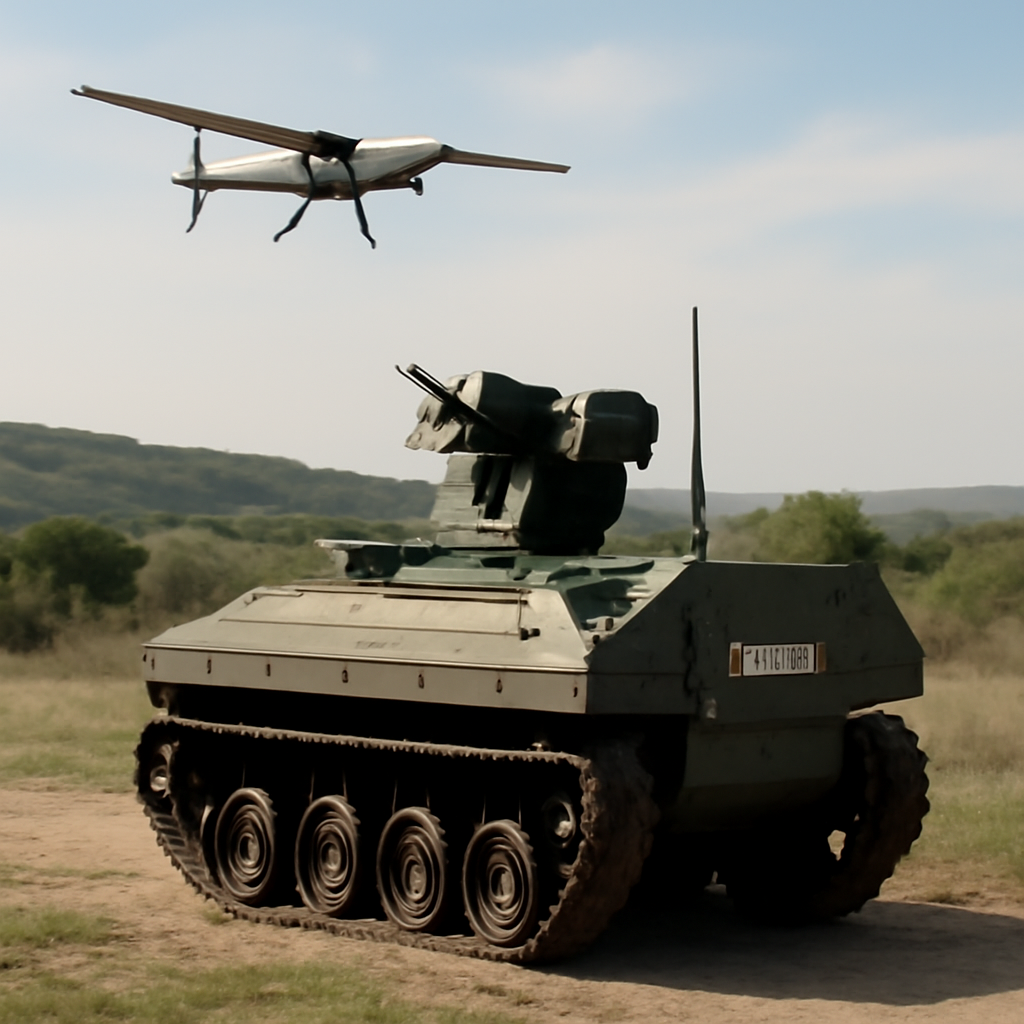
Watling gives substantial attention to how technology is reshaping strategy. He examines the legal and strategic challenges of commercial systems serving military ends, noting satellites can support financial transactions, internet stability and emergency services for one country while simultaneously transmitting military data to another. He writes that drones and AI have “upended the nature of field combat,” moving production from factories into improvised workshops. Watling includes the striking example of a lone Ukrainian hacker who, using a network of microphones and sound‑detection algorithms on a laptop, could identify and track objects on the ground and in the air anywhere in the country.
What this means for the British, Ukrainian and US militaries; policymakers; and technologists
- British, Ukrainian and US militaries: Watling’s account implies they must adapt to non‑linear timing, redefine chokepoints and prioritise decisive objectives (for example, protecting or targeting infrastructure at the required scale).
- Policymakers and national governments: the book suggests they need to manage perception as carefully as capability — fast political signals and coalition clarity matter as much as raw intelligence or weaponry.
- Technologists and manufacturers: the blending of commercial and military systems raises legal and strategic challenges; Watling’s examples show decentralized innovation (drones, basement manufacturing, single‑operator hacks) can be a force multiplier when doctrine and defensive measures lag.
Watling’s central point is a reminder: advanced data and analytics have not removed human judgment from the strategic equation. Whether in Moscow, Kyiv or Washington, errors in timing, prioritisation and perception — not merely the availability of sensors or weapons — have determined outcomes. The practical question his account leaves in view is concrete and urgent: can decision‑makers reform the ways they choose when to act, what to prioritise, and how to signal resolve before the next inflection point arrives?