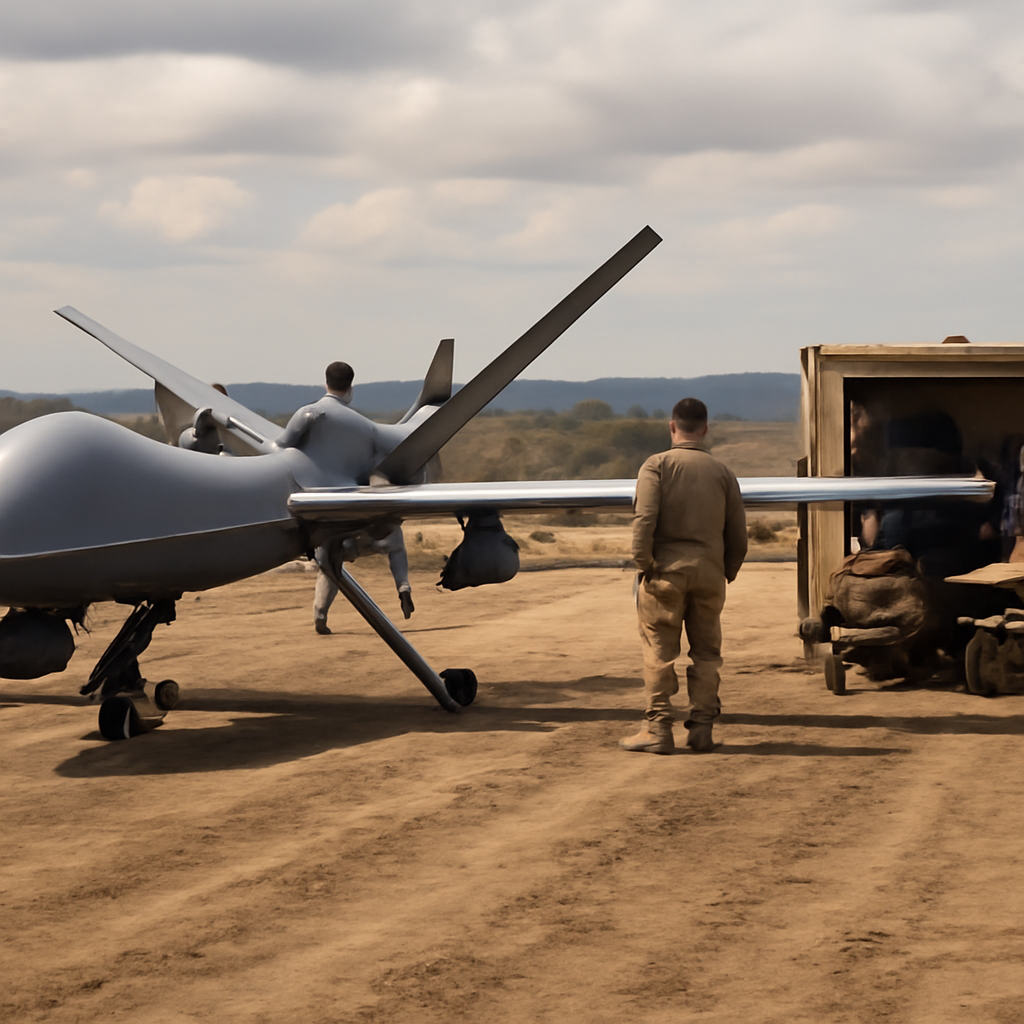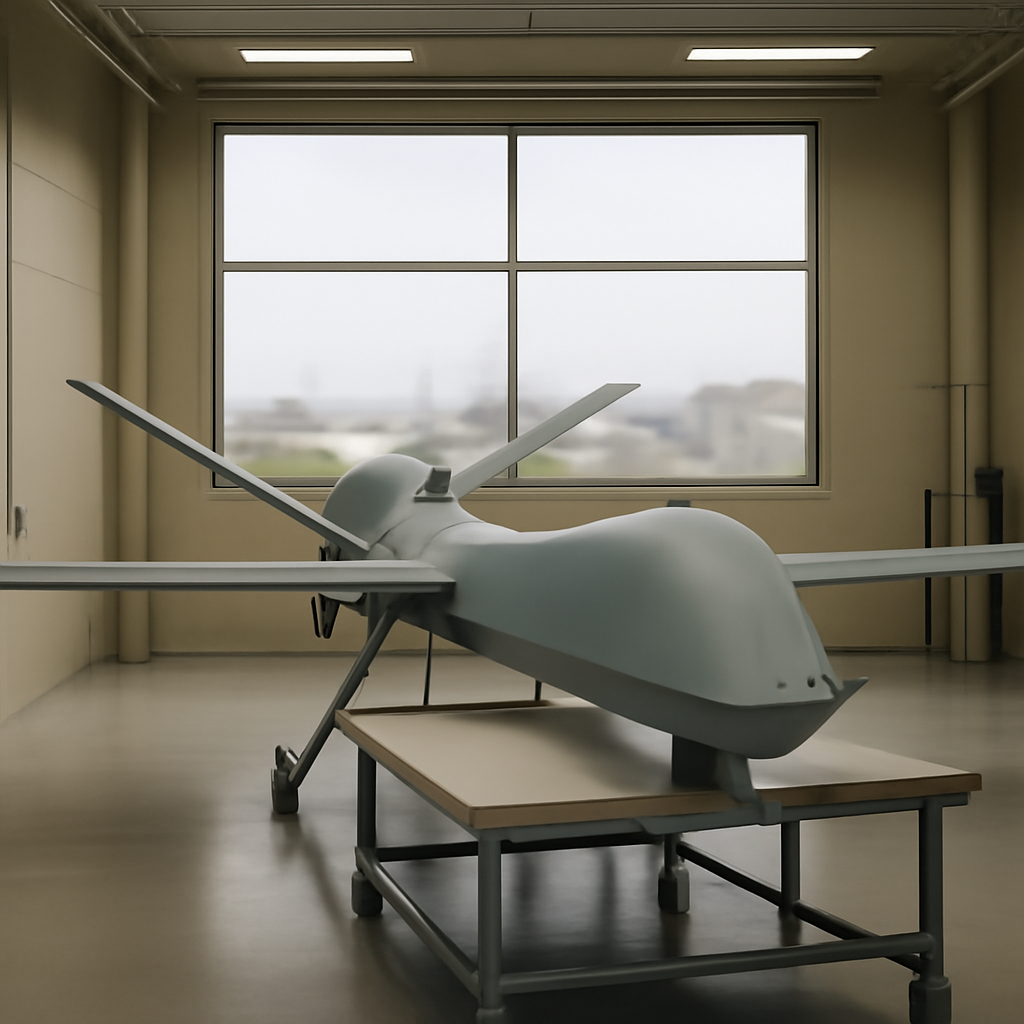
"That thing is a beast, and no one who actually does this for a living and is honestly concerned about America’s warfighting edge can look at it and not want 100 of them as fast as we can make them," General Atomics spokesman C. Mark Brinkley told TWZ about the company's new Wildfire Unmanned Aerial System.
General Atomics' Wildfire UAS: a declared next-generation MALE effort
General Atomics (GA) unveiled plans for the Wildfire, a next-generation medium-altitude, long-endurance (MALE) unmanned aerial system. Brinkley offered limited public details and said the company is not yet providing images, but described Wildfire as a platform that aims to outpace current Pentagon requirements rather than simply meet them. GA submitted a proposal to the Defense Innovation Unit (DIU) Massed Modular Aircraft (MMA) solicitation, Brinkley said, but he also stressed the Wildfire is not dependent on that program and that the company could "deliver Wildfires years earlier than the current schedule."
Technical ambitions spelled out by General Atomics
Brinkley laid out aggressive performance goals GA set for Wildfire: a 10,000‑nautical‑mile ferry range, the ability to carry four AGM‑158C Long Range Anti‑Ship Missiles (LRASMs), and the capacity to "swarm 100 aircraft under semi‑autonomous control." He added an aim to fuse data into a "highly effective common operating picture" and to deliver those capabilities at "scalable, affordable mass." Brinkley also cautioned against treating new designs as "unscratched lottery tickets" and emphasized lessons learned about icing, weather, weapons integration and survivability upgrades for existing platforms.

Audit-ready is a season. It shouldn't be.
Evidence in spreadsheets, controls drifting between audits, frameworks multiplying on flat headcount. Nubivance runs continuous compliance on Rapid7 Cyber GRC - SOC 2, HIPAA, ISO 27001, PCI, CMMC.
End the scrambleDIU's MMA program: specifications and an accelerated timeline
The Pentagon’s Defense Innovation Unit has framed MMA as a response to a changing "math of modern warfare," seeking theater‑range, massed, modular UAS as a "risk‑tolerant option" in contested environments. DIU’s primary requirements include:
- a payload and munition capacity of at least 2,800 pounds;
- an unrefueled combat radius of at least 2,300 nautical miles with payload;
- the ability to self‑deploy one‑way at least 8,000 nautical miles;
- a Modular Open Systems Approach (MOSA) for rapid payload swaps.
Secondary attributes DIU seeks include autonomy for one operator to control multiple aircraft, "resilient and integrated communications – hybrid SATCOM/mesh network connection," local airfield operations under degraded or denied primary C2/SATCOM, at least 200 knots true airspeed, and operation from runways no longer than 6,000 feet. The solicitation closed for submissions on July 23, and DIU requires full‑scale prototype flight testing within 21 months of award with a targeted Initial Operating Capability in FY2031 (20 mission‑ready aircraft delivered to an operational unit).
MQ‑9 Reaper losses and the shrinking fleet
The push for new MALE designs comes amid steep attrition for the MQ‑9 Reaper. Official budget documents cited by TWZ show the Air Force had 165 Reapers in inventory at the start of Fiscal Year 2026, down from 231 at the start of Fiscal Year 2025. The numbers exclude Marine Corps and Central Intelligence Agency aircraft. By May, Lt. Gen. David Tabor testified that the Air Force's total MQ‑9A fleet had shrunk to 135 aircraft.
TWZ cited a Washington Post report that the U.S. military has lost at least 45 MQ‑9 Reaper drones during the war with Iran — roughly 25 percent of its fleet — and noted earlier, heavy losses against the Houthis in Yemen. The Air Force has acknowledged MQ‑9 unit costs between $30 million and $50 million depending on sensors and weapons, and the Washington Post estimated a potential taxpayer cost of recent losses of over $1.3 billion for the weapon system alone; TWZ noted it could not independently verify those figures. The MQ‑9 is out of production and, TWZ reported, "cannot be directly replaced."
What this means for the Pentagon, General Atomics, and the U.S. Air Force
- Pentagon / DIU: DIU is pursuing a modular, lower‑cost, attrition‑accepting approach that demands rapid prototyping and an FY2031 IOC. The agency’s requirements emphasize mass, modularity, and survivability in degraded communications environments.
- General Atomics: GA positions Wildfire as a capability‑driven answer to both near‑term backfill needs and longer‑term MMA objectives, arguing its design is ready to deliver earlier than DIU’s targeted schedule and warning against treating low‑cost disposables as a substitute for robust capability.
- U.S. Air Force: The shrinking MQ‑9 fleet and reported losses have driven short‑term buys to "buy back things immediately" in the fiscal year, according to Lt. Gen. David Tabor’s testimony, while longer timelines for MMA prototypes and IOC leave a gap that companies like GA say they can fill sooner.
Two timelines now sit side by side: DIU’s MMA schedule, which targets prototype flights within 21 months of award and an IOC in FY2031, and General Atomics' assertion that Wildfire could arrive years earlier and at scale. With the MQ‑9 out of production and the fleet already reduced, the central question the facts leave on the table is whether any near‑term backfill — through upgrades, expedited buys, or new platforms like Wildfire — will bridge capability gaps before MMA prototypes and IOC milestones are reached.