"We can hope that whatever caused this problem gets fixed. We can hope that Vulcan, New Glenn and other medium-lift vehicles come online soon, but this is really the same place we have been for the last several years,” Clayton Swope said.
Vulcan failure and the loss of 40 Amazon LEO satellites
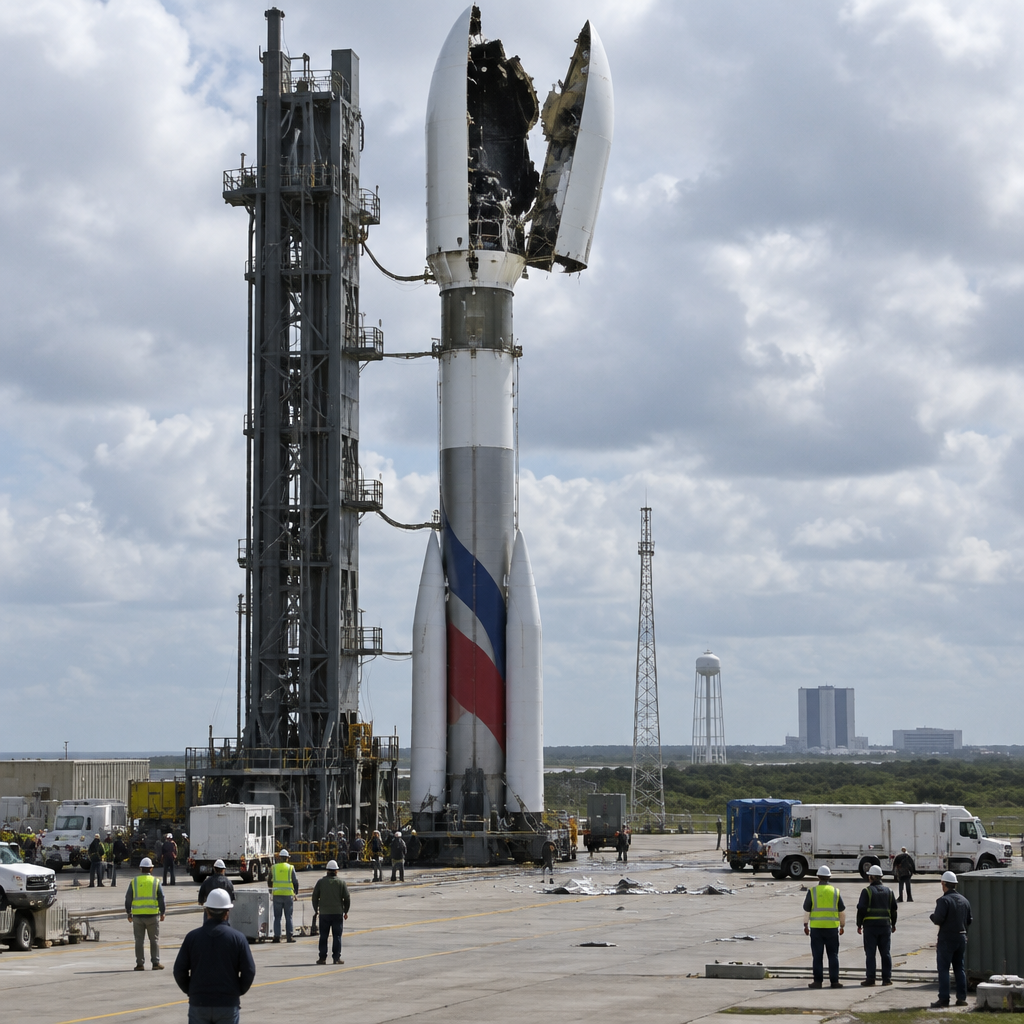
United Launch Alliance’s Vulcan rocket suffered an anomaly about 10 minutes after liftoff on Sunday, preventing the vehicle from reaching orbit and destroying 40 satellites intended for Amazon LEO’s planned broadband network for low-Earth orbit. The mission carried a commercial payload but was also intended as an important step toward returning Vulcan to the Space Force’s National Security Space Launch (NSSL) program. The failure will likely trigger a lengthy investigation that could ground the rocket for months.
Space Force NSSL Phase 3 Lane 2 and launch capacity constraints
The failed flight deepens worries about U.S. launch capacity. Aside from Vulcan, SpaceX’s Falcon 9 and Falcon Heavy are, according to the report, the only rockets currently authorized to carry critical payloads under the Space Force’s NSSL Phase 3 Lane 2 program. Vulcan had been grounded by the Space Force in late February over persistent problems with its solid rocket boosters; by Oct. 1 the service reassigned six NSSL missions previously manifested on Vulcan to SpaceX. The recent loss removes another potential medium‑lift option from the manifest at a moment when demand for U.S. launch services is already under strain.

Audit-ready is a season. It shouldn't be.
Evidence in spreadsheets, controls drifting between audits, frameworks multiplying on flat headcount. Nubivance runs continuous compliance on Rapid7 Cyber GRC - SOC 2, HIPAA, ISO 27001, PCI, CMMC.
End the scrambleBE-4 engines, Blue Origin’s New Glenn, and shared technical risk
Initial public accounts do not identify a confirmed root cause. A report in Ars Technica said the problem appears to have occurred in the booster stage. If Vulcan’s BE-4 engines were involved, that would have implications beyond ULA: Blue Origin’s New Glenn uses the same BE-4 engines and remains grounded after a launch pad explosion in May. Swope flagged the stakes: “If the issue is with the BE-4 that is a particularly thorny problem — for the Pentagon, for NASA, for Amazon and for anyone who needs a ride to space.”
SpaceX dominance, Starship progress, and program timing
The failure further cements SpaceX’s near monopoly on U.S. space launch capability for critical national security payloads. SpaceX made a technical advance on Nov. 14 when its new, fully reusable Starship demonstrated for the first time an ability to capture its massive upper stage. The company plans to shift all of its own launch operations to Starship around 2030 and in September stopped taking commercial orders for Falcon rides post‑2028. SpaceX has also yet to announce plans to offer Starship launches to commercial or military customers — a gap that creates uncertainty about how capacity will be allocated if older vehicles are phased out.
What this means for the Space Force, Amazon LEO, and SpaceX
- Space Force: The service faces constrained options for manifesting critical payloads under NSSL Phase 3 Lane 2. With Vulcan grounded in February for booster issues, six missions reassigned to SpaceX by Oct. 1, and the recent failure likely prompting a months‑long investigation, the Space Force must manage a narrow set of approved launch vehicles.
- Amazon LEO: The company lost 40 satellites destined for its planned broadband constellation. The destroyed hardware represents a direct, immediate setback for its deployment schedule and increases reliance on available launch providers for replacement flights.
- SpaceX: The company’s operational fleet stands to shoulder additional demand. SpaceX’s Starship test success on Nov. 14 and its stated plan to migrate operations to Starship around 2030 position the firm as the principal supplier of U.S. launch capacity — even as it has not committed to offering Starship to outside commercial or government customers.
The technical and programmatic dominoes set in motion by Sunday’s anomaly are concrete: a likely investigation, months of potential grounding, and the reassignment of missions already underway. The shared use of technologies such as the BE-4 ties the fates of multiple launch programs together, and the combination of grounded alternatives and SpaceX’s timetable for replacing Falcon vehicles raises the prospect of sustained pressure on U.S. launch capacity.
Whether Vulcan can be returned to service quickly, whether the investigation implicates BE-4 engines, and whether SpaceX will offer Starship to outside customers are immediate, consequential questions left to be answered as the investigation proceeds.