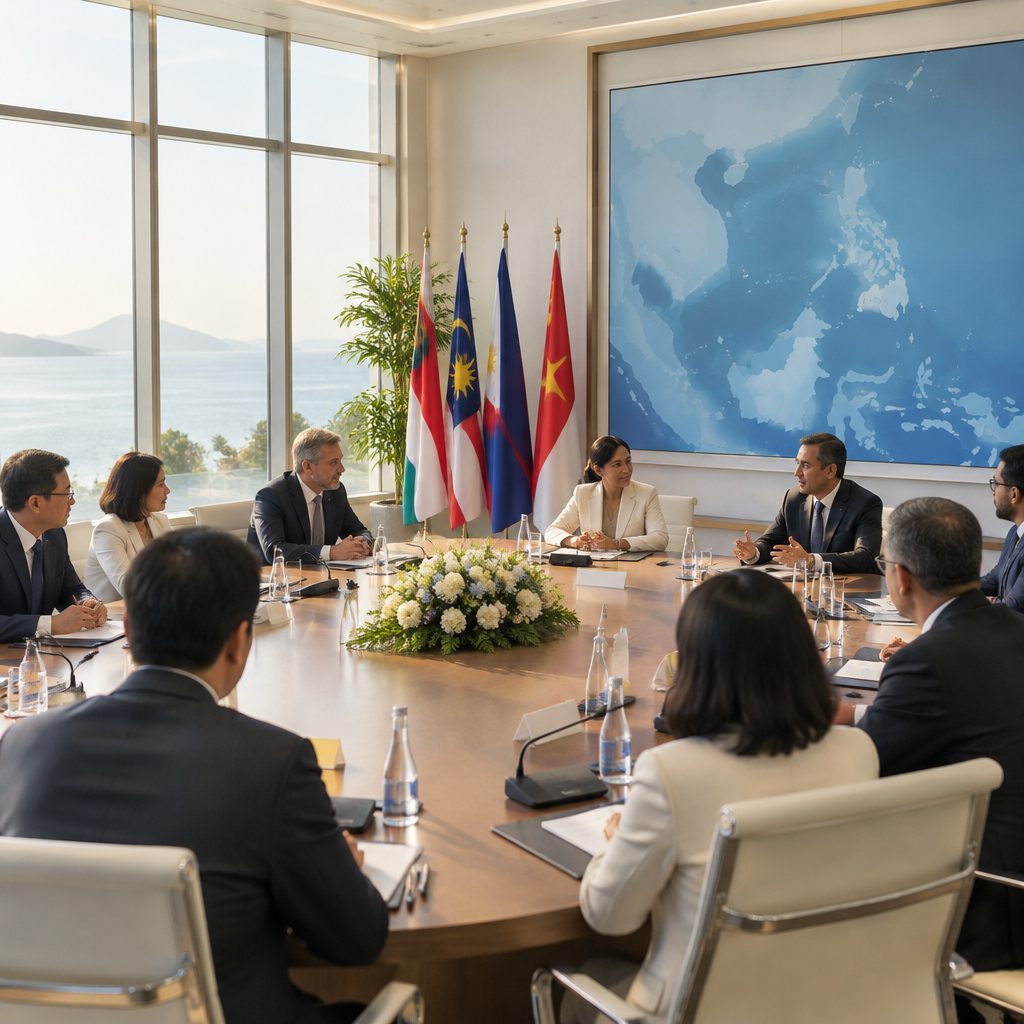
"about 80 percent of the negotiating text had been provisionally agreed, up from 77 percent the previous day," said Philippine Foreign Secretary Theresa Lazaro — a number that proved close but not close enough when ASEAN failed to finalise a South China Sea Code of Conduct at the 49th summit in Manila.
ASEAN and the stalled South China Sea Code of Conduct
The summit, which closed on 17 November, missed the three‑year deadline agreed with China in 2023 to complete a code meant to regulate interactions in the South China Sea. Negotiators reportedly made progress on most of the draft, but the remaining differences were central: whether the code should be legally binding and enforceable; which maritime areas it would cover; what limits should apply to military exercises involving outside powers; and what rules should govern island‑building and militarisation. Those disputes sit atop a deeper split over the role of the UN Convention on the Law of the Sea and China’s rejection of the 2016 arbitral ruling, while divisions among ASEAN members compounded the impasse. The Philippines had pressed hardest for a meaningful outcome during its 2026 chairmanship; Singapore, a non‑claimant that assumes the chair in 2027, now inherits the problem and may set different priorities.
US Forces Korea’s 2nd Combat Aviation Brigade flies to Japan
On 23 November, US Forces Korea announced a detachment of attack and utility helicopters from its 2nd Combat Aviation Brigade had deployed to Japan for aerial live‑fire and expeditionary training. The deployment was described as a historic first for live‑fire, though the brigade’s helicopters have operated in Japan before — notably at Camp Akeno during the Orient Shield exercise in July 2024. The move is part of a broader pattern: USFK elements have increasingly operated beyond the Korean peninsula, driven both by operational needs (an air defence battery deployed to the Middle East from March to November 2025) and doctrinal shifts. The Korea‑based Eighth Army has written the idea of projecting forces from Korea across the western Pacific into its strategy documents, and this year elements rotated into South Korea subsequently participated in exercise Balikatan in the Philippines from April to May. As South Korea builds capabilities to meet conditions for assuming wartime operational control over combined forces, the outward focus of USFK is likely to continue.
[SPONSOREDNUBIVANCE]
This site is the portfolio.
OSINTSights runs on Cloudflare Workers, D1, R2, and Vectorize, with an AI pipeline on Hetzner ARM. Nubivance designed, built, and operates it. We do the same for clients.
Photographs published by JoongAng Ilbo on 16 and 17 November showed a North Korean ship with a white hull and the word "coast guard" painted in large Korean script near the islets of Jangjae and Seok. If confirmed, a dedicated white‑hulled coast guard would be novel for Pyongyang: coast guard functions have long been split among the North Korean navy, the Ministry of Social Security, and local harbour authorities. There has been no official confirmation from Pyongyang, and Seoul’s military says it is monitoring but otherwise offering little comment. Observers note the appearance aligns with security sector reform announced by North Korean leader Kim Jong Un in March, and with recent naval developments — major base projects and multipurpose destroyer construction — that suggest Pyongyang envisions a role for its navy beyond narrow coastal security. The vessel was sighted from Yeonpyeong, about 80 km off Incheon; Jangjae and Seok lie on the North’s side of the Northern Limit Line, which Pyongyang does not recognise. The sighting involved nearby Chinese fishing boats, underlining how a North Korean coast guard could complicate enforcement and jurisdictional friction with both Seoul and Beijing.
Australia and the Philippines formalise contingency consultation
On 15 November, Philippine Defence Secretary Gilberto Teodoro and Australian Ambassador Marc Innes‑Brown signed a Defence Cooperation Arrangement in Manila, witnessed by Prime Minister Anthony Albanese. The following day, Albanese and President Ferdinand Marcos Jr issued a joint statement committing their countries to "consult each other on contingencies that may affect our sovereignty or shared defence and regional security interests" and to consider appropriate responses. The arrangement names maritime domain awareness, littoral operations, logistics, cyber defence, joint planning and defence infrastructure as priorities, building on an expanding program of exercises — including Balikatan and Alon in the Philippines and Talisman Sabre and Pitch Black in Australia — as well as joint maritime patrols in the South China Sea and Australian investments in defence infrastructure on Luzon.
Penrhyn Atoll: seabed minerals, research partnerships, and port cash
Penrhyn Atoll in the Cook Islands sits remote and small — about 200 residents and one airstrip — but adjacent deep‑ocean basins may contain billions of tonnes of nodules rich in cobalt and other critical minerals. The Cook Islands Seabed Minerals Authority is working with China’s Second Institute of Oceanography in a joint research venture in the Penrhyn Basin and nearby areas, mapping the seafloor, collecting samples and using a research submersible. The United States has also conducted seabed research in the Cook Islands, largely via remote sensing. New Zealand and the United States have confirmed US$60 million in funding to upgrade Penrhyn’s port facilities. US Ambassador Jared Novelly has signalled discussions about a possible US military presence — likely coast guard operations to counter "illegal fishing and narco‑terrorism" — and raised the prospect of New Zealand military use of the port. China’s hydrographic work, while described as research, means Beijing has reason to operate in the surrounding waters.
What this means for the Philippines, Australia, and the Cook Islands
- Philippines: The failed ASEAN Code of Conduct complicates Manila’s priority to secure clearer maritime rules, even as it deepens defence consultation with Australia to manage contingencies and protect maritime interests.
- Australia: The Defence Cooperation Arrangement adds political expectation of consultation in crises and formalises cooperation on maritime domain awareness and logistics that already underpins exercises and infrastructure work.
- Cook Islands: Joint Chinese research, US remote sensing, and a US$60 million port upgrade funded by the US and New Zealand position Penrhyn as an economic opportunity and a locus of competing external interests, including discussion of potential coast guard or military use.
The region’s pattern is clear: diplomatic deadlock over rules, military units extending their operating footprints beyond traditional boundaries, and resource‑driven attention to remote atolls. The next decisive moves are likely to be institutional — whether ASEAN under Singapore presses the Code of Conduct forward, whether Korea’s force posture continues to be written into Eighth Army strategy, and whether small Pacific jurisdictions like the Cook Islands balance development with the strategic traffic that follows. Read the original ASPI account here: https://www.aspistrategist.org.au/fault-lines-usfks-reach-asean-deadlock-cook-islands-minerals/
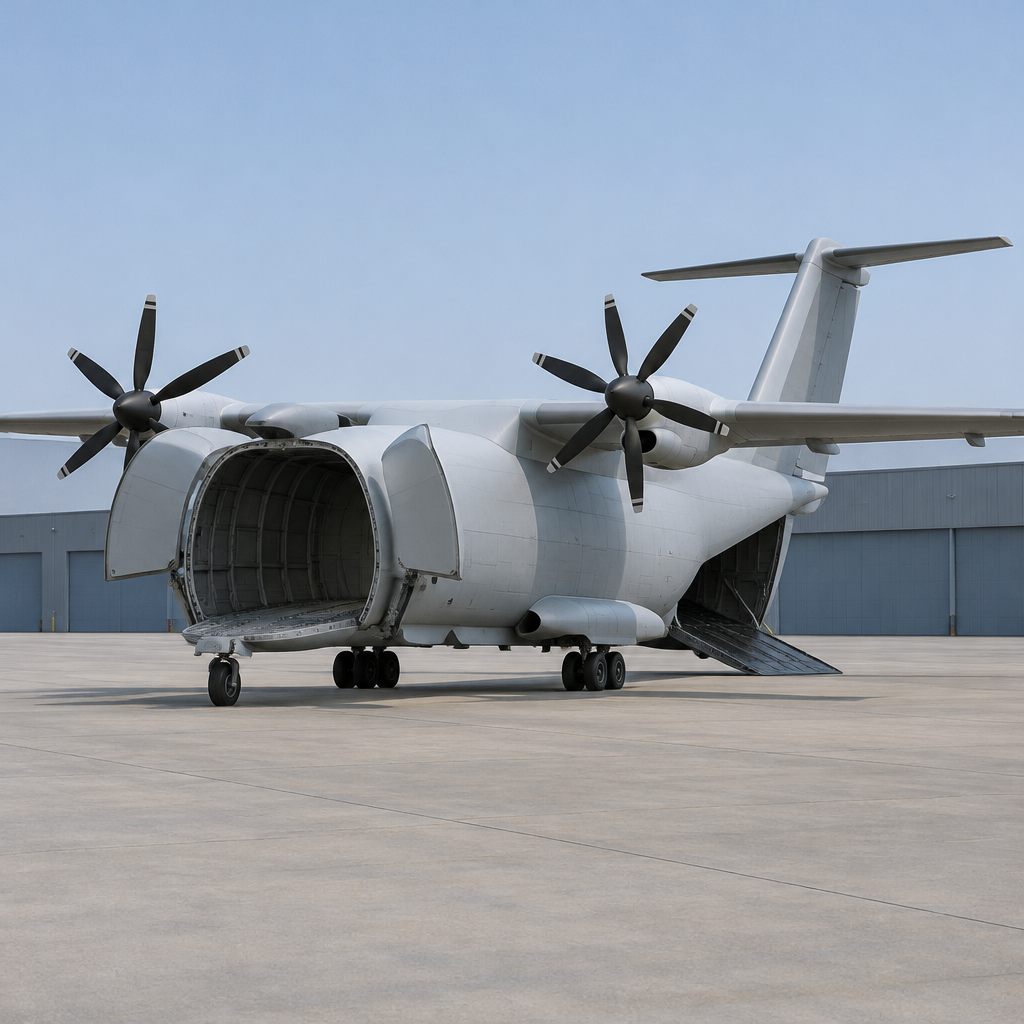
Meet the W8000, a game-changing cargo drone from Air White Whale that can haul an impressive 8 tons (or nearly 18,000 pounds) of cargo, challenging the status quo in freight transport. Unveiled ahead of Airshow China, this twin-turboprop behemoth is set to revolutionize the logistics landscape.
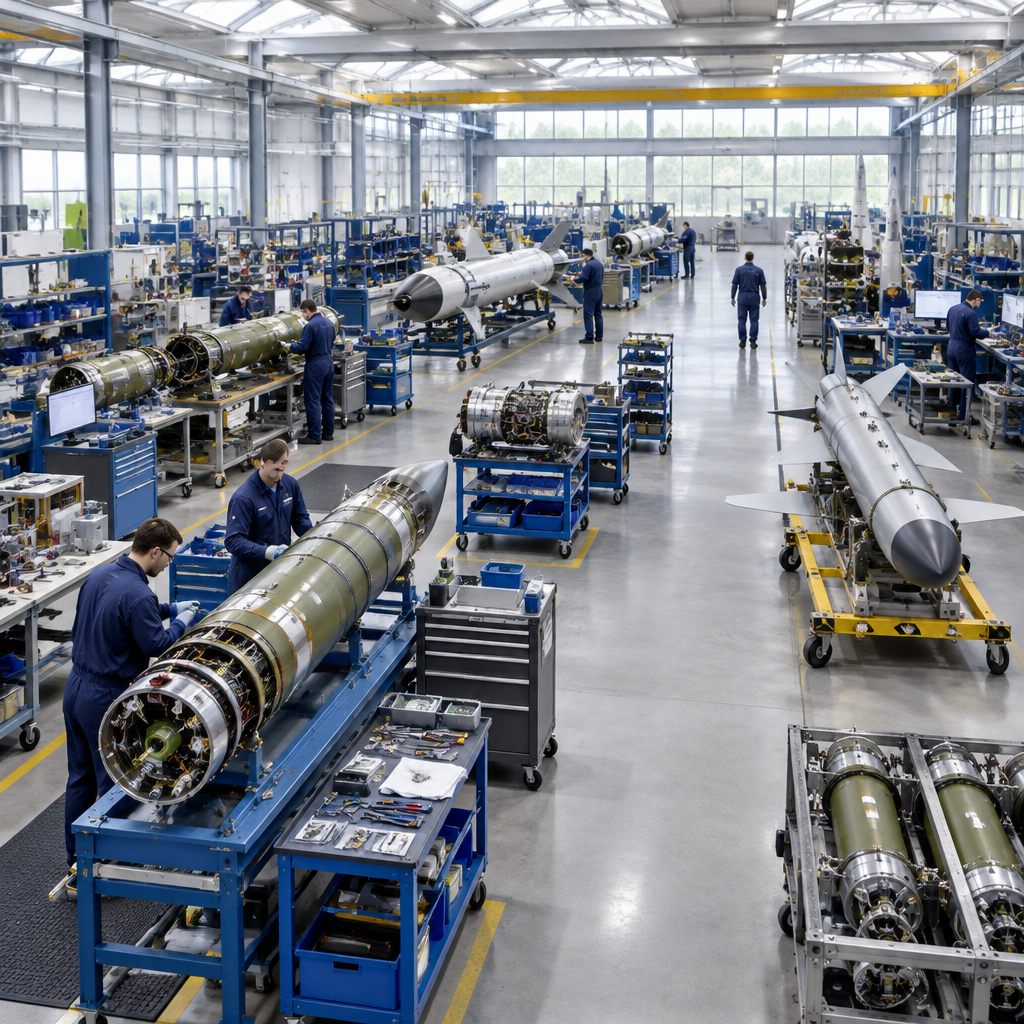
The US is facing a critical challenge: can it ramp up missile production to meet its own defense needs and those of its allies, as global demand for missiles and defenses surges? Production capacity, not doctrine or specs, is the bottleneck holding back the nation's ability to keep up with soaring demand.
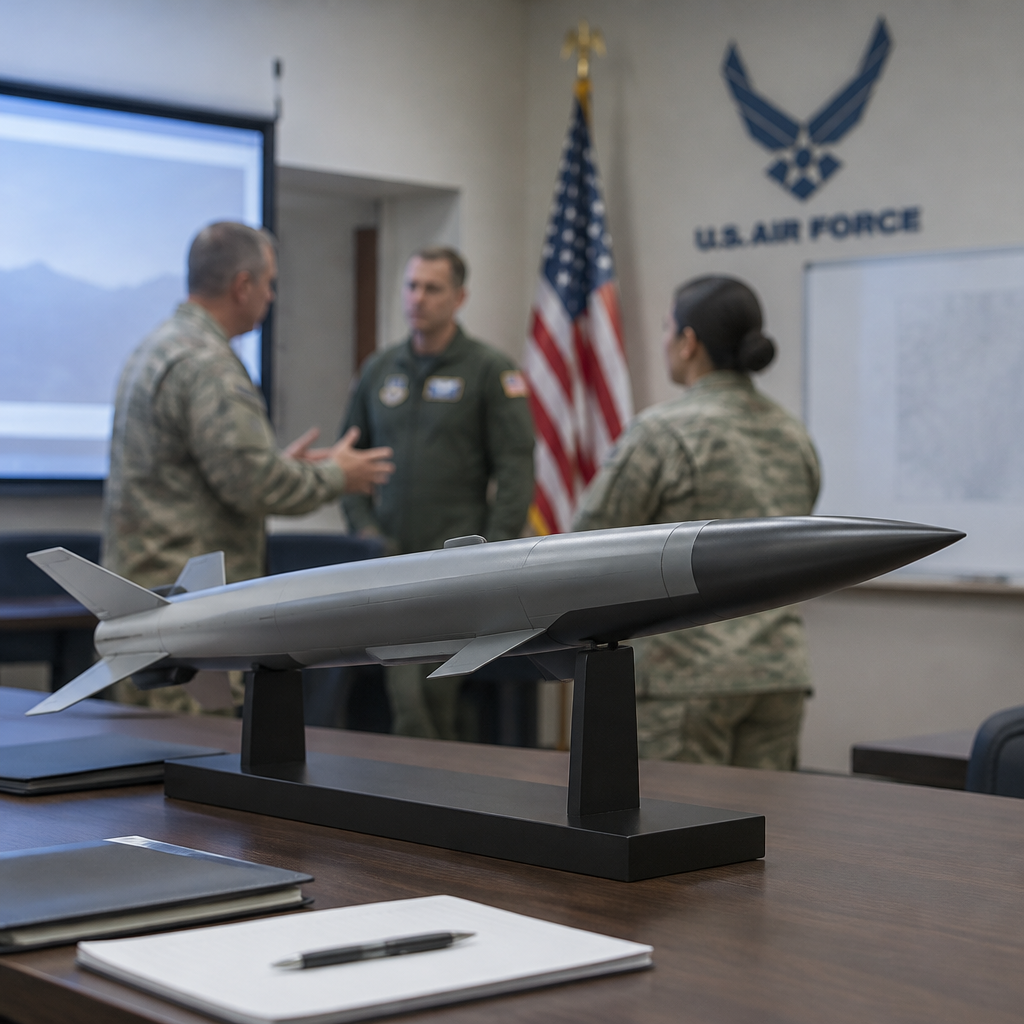
The Senate Appropriations Committee is slashing the US Air Force's funding for the ARRW hypersonic missile upgrade, cutting nearly $260 million from the requested budget, citing the reductions as early to need. This significant reduction could impact the development of this critical defense technology.
Boeing has just scored a major win with the US Air Force, securing a $2.8 billion contract to build 15 additional KC-46 Pegasus refuelers, a deal that wraps up the company's original fixed-price contract. This latest award brings continued trust and confidence in Boeing's capabilities, as the company continues to deliver on its commitment to the Air Force.