"early to need," Senators wrote, describing the reductions in a section of the explanatory statement the Senate Appropriations Committee released with its draft defense spending bill.
Senate Appropriations Committee slashes FY2027 requests
The Senate Appropriations Committee's draft defense bill would give the U.S. Air Force roughly one-quarter of what it requested for two hypersonic-related efforts in Fiscal Year 2027. In its budget proposal earlier this year the Air Force asked for $296.269 million for ARRW Increment 2 and $49.5 million for an air‑launched ballistic missile (ALBM) effort. The committee's draft would reduce those lines by $222.188 million and $37.129 million, respectively — cuts the committee characterized as "early to need." The explanatory statement accompanying the draft did not offer further detail explaining the reductions.
Air Force plans for ARRW Increment 2 and ALBM in FY2027
According to the Air Force's proposed Fiscal Year 2027 budget, the service had planned to award an initial contract for ARRW Increment 2 work in January and a separate contract for the ALBM effort in March. The Air Force described ARRW Increment 2 work as including "integrating pre-planned product improvements, design, trade studies, hardware upgrades, facilitization, affordability initiatives, and testing." For the ALBM line, the service planned to "stand up a new program office and begin ALBM design activities leading to a critical design review" and to "begin development of test assets." How the committee's reductions would affect those schedule milestones was not detailed; the draft bill's cuts leave open whether January and March contract actions can proceed as planned.

Audit-ready is a season. It shouldn't be.
Evidence in spreadsheets, controls drifting between audits, frameworks multiplying on flat headcount. Nubivance runs continuous compliance on Rapid7 Cyber GRC - SOC 2, HIPAA, ISO 27001, PCI, CMMC.
End the scrambleARRW's shifting fortunes and the October production contract
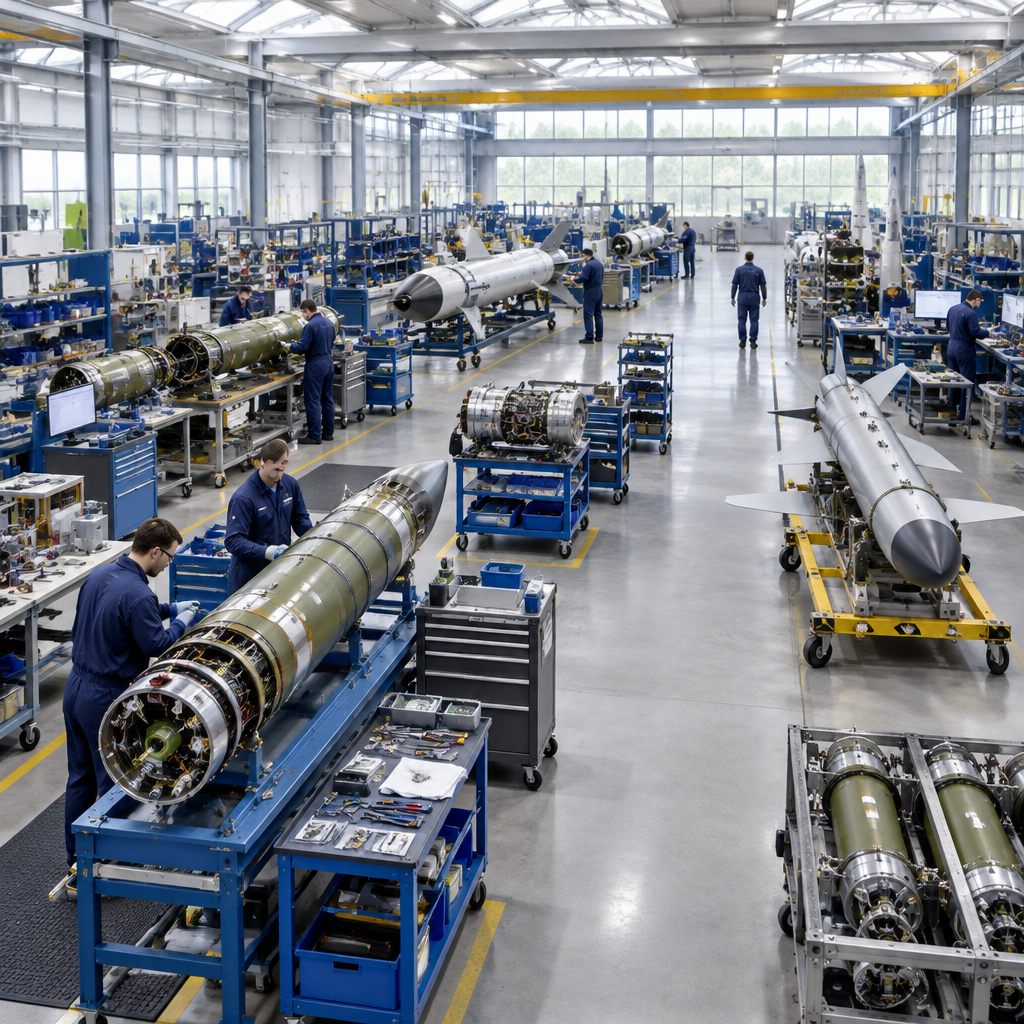
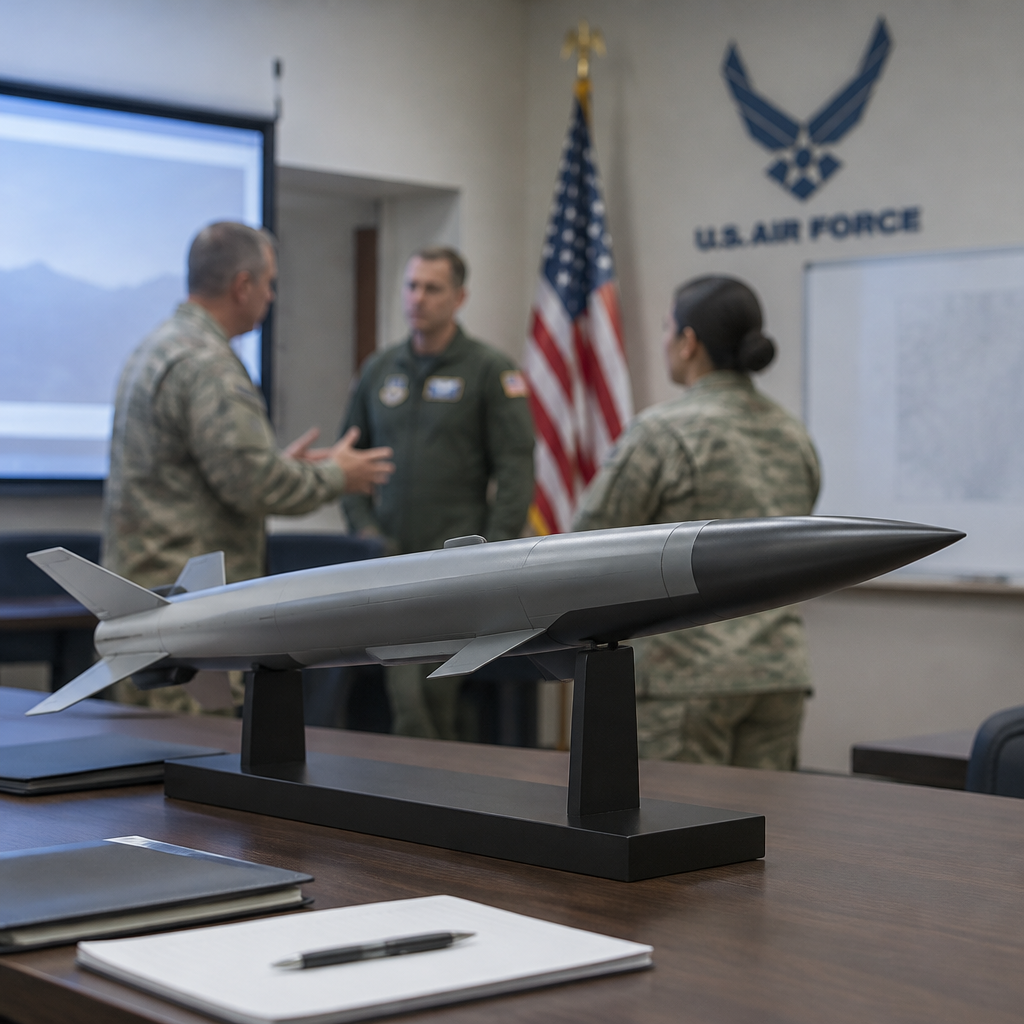
ARRW (AGM-183A) has had a volatile trajectory. The program was publicly set on a path toward cancellation in 2023, when senior Air Force officials moved to shift resources to the Hypersonic Attack Cruise Missile (HACM). Despite that history, the Air Force awarded a $694 million production contract to Lockheed Martin in October to proceed with baseline ARRW production. The contract directs integration of the missile onto B-52 and B-1 bombers, and the Air Force noted other launch platforms could follow. The program also returned to live-fire testing: a 2024 Pacific test was highlighted by U.S. military officials and accompanied by imagery of an ARRW loaded on a B-52 at Andersen Air Force Base.
Technical context: boost-glide ARRW, HACM, and ALBM
The source material contrasts three different approaches to hypersonic and high‑speed strike. ARRW is a boost‑glide weapon: a rocket booster accelerates an unpowered glide vehicle to high speed and altitude, where the vehicle then glides within the atmosphere at hypersonic speed and can maneuver en route to its target. That combination of speed, trajectory and maneuverability complicates detection, tracking and interception, the Air Force has argued. HACM, by contrast, is an air‑breathing hypersonic cruise missile and represents a fundamentally different technical path. ALBMs and other aeroballistic or quasi‑ballistic weapons follow more predictable trajectories than boost‑glide vehicles, though they can still reach very high terminal speeds and include limited maneuvering or terminal re‑entry maneuvers that complicate defense and increase penetration of hardened targets. The Government Accountability Office warned that HACM's rapid prototyping schedule had "effectively zero margin" in July, underscoring schedule pressure across multiple hypersonic efforts.
What this means for the U.S. Air Force, the Senate Appropriations Committee, and Lockheed Martin
- U.S. Air Force: The service had planned near‑term contracting, program office stand‑up and test‑asset development for both ARRW Increment 2 and an ALBM. The committee's steep reductions create uncertainty for those plans; the Air Force's intended January and March contract actions and the start of design and testing work are now at risk of delay or truncation.
- Senate Appropriations Committee: By labeling the requested increases "early to need" and cutting roughly 75% from both lines, the committee signaled a judgment that follow‑on work should be deferred until later. The committee did not provide a public operational or technical rationale beyond that phrase in the accompanying explanatory material.
- Lockheed Martin: The company is the prime contractor on the October production contract for the baseline AGM-183A. That production award carries ARRW into the operational inventory for integration on B-52 and B-1 bombers, even as follow‑on development for Increment 2 faces reduced near‑term funding from the Senate draft.
ARRW is now in production even as Congress debates follow‑on development funding. How deeply the Senate committee's cuts will alter the Air Force's planned January and March contract actions — and whether the reductions will slow development of a seeker capable of striking moving targets such as warships — remains explicitly unanswered in the committee material. With the Air Force already juggling competing hypersonic paths and a recent GAO warning about schedule margins, the coming weeks of budget negotiation will determine whether ARRW's follow‑on evolution proceeds on the Air Force's timeline or waits for a later appropriation.