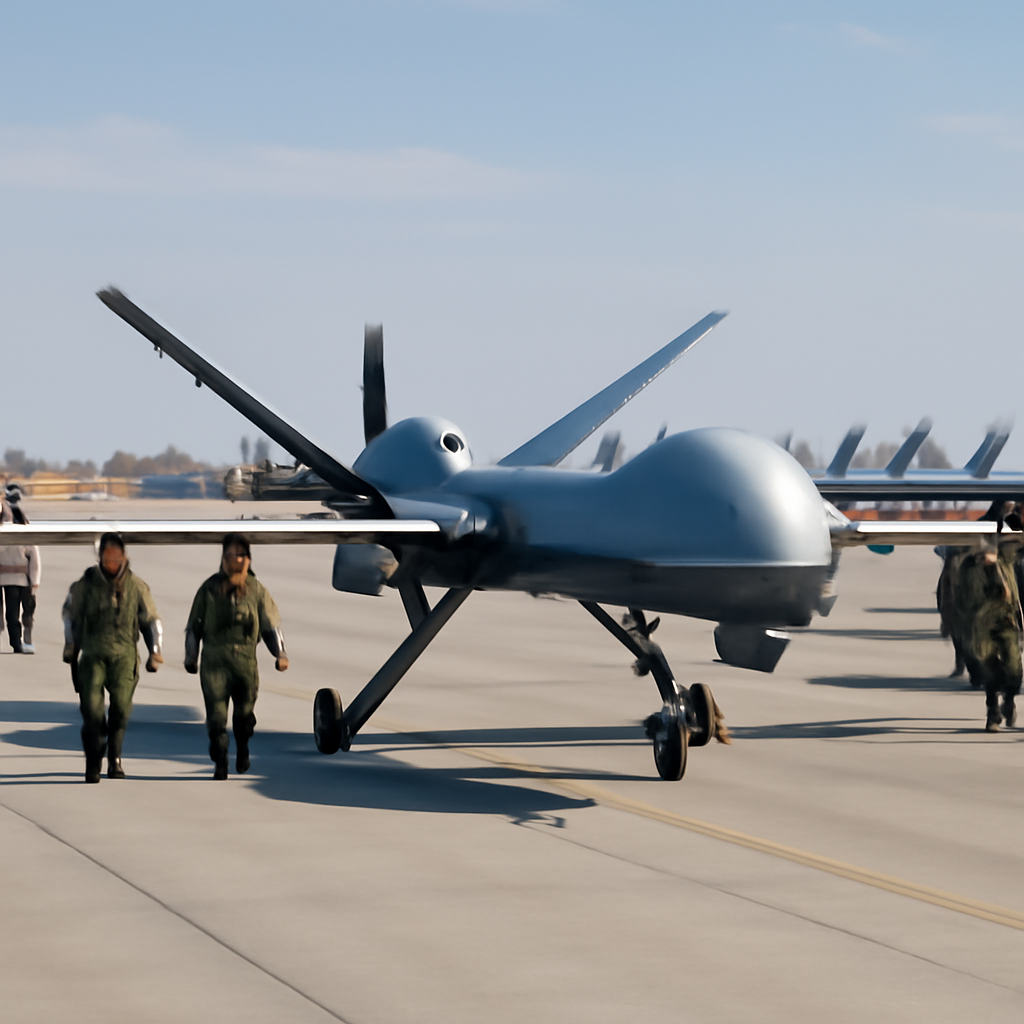
"We have not yet done a LFE with these [CCAs], for real. The first one is going to be Emerald Flag. That’s in December," Lt. Col. Lyndon "OTTO" Bartlett, Director of Operations for the Experimental Operations Unit (EOU) at Nellis Air Force Base, said during a panel at the Air & Space Forces Association’s 2026 conference.
What Lt. Col. Bartlett and the EOU are testing
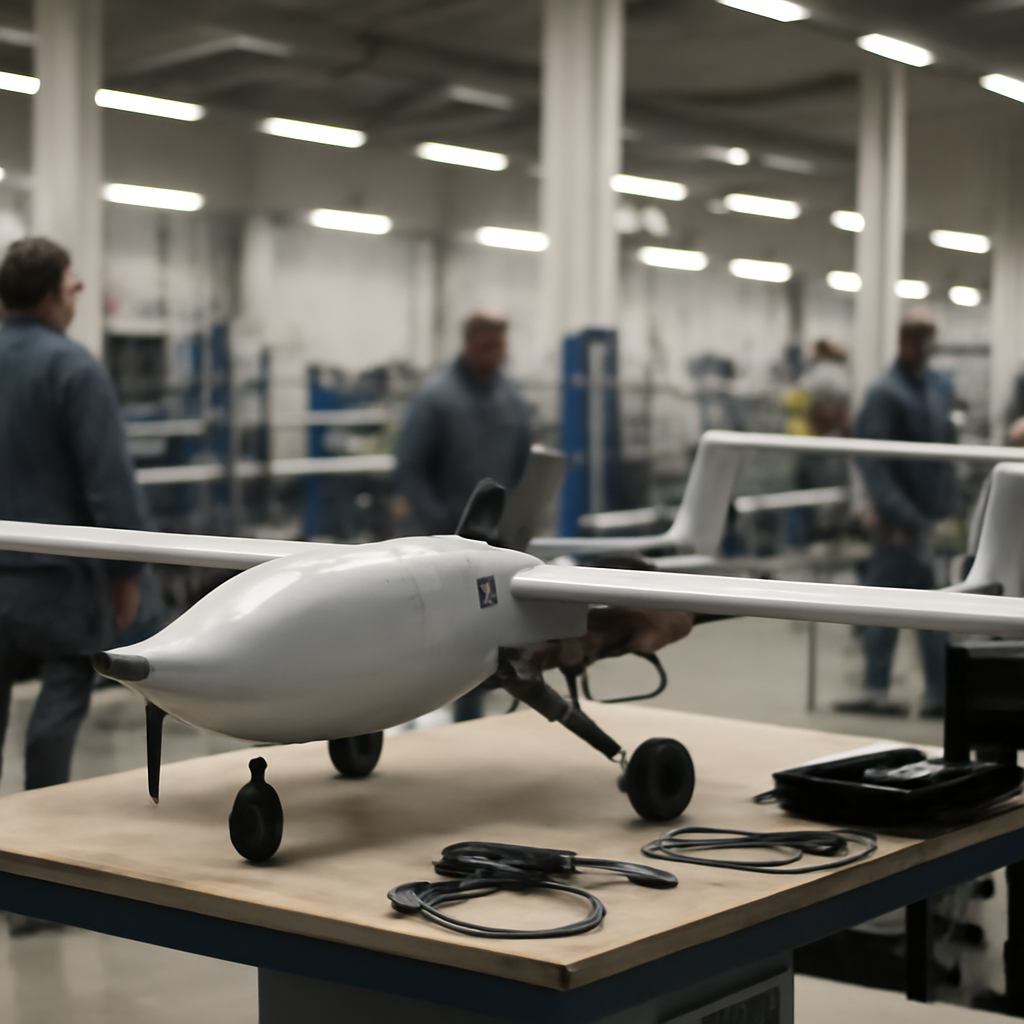
Bartlett described Emerald Flag in December as the first live large-force employment (LFE) integration for Collaborative Combat Aircraft (CCAs). The EOU has been leading groundwork using prototypes of the General Atomics FQ-42A Vengeance and the Anduril FQ-44 Fury and conducting virtual-then-limited real-world testing to validate mission autonomy and other core capabilities. "That’ll be our first tip dip of the toe in an actual force integration," Bartlett said, adding that Emerald Flag will be "the first time that we will ever do some CCA end-to-end chain [demonstration] live."
Platforms, prior exercises, and the test environment
The Air Force announced in June that its initial operational CCA fleet would consist of a mix of FQ-42s and FQ-44s. The 96th Test Wing at Eglin Air Force Base first began hosting Emerald Flag exercises in 2020; the series has emphasized new aerial networking architectures and command-and-control (C2) capabilities—elements Bartlett and others say are especially critical for CCA operations.
Other LFE exercises have already seen CCA-type designs. Boeing’s MQ-28 Ghost Bat, a CCA-type aircraft developed for the Royal Australian Air Force, took part in Valiant Shield 26 earlier this year; the EOU was also involved. The MQ-28, however, "is not officially part of the Air Force’s CCA program at present," the panel noted.

This site is the portfolio.
OSINTSights runs on Cloudflare Workers, D1, R2, and Vectorize, with an AI pipeline on Hetzner ARM. Nubivance designed, built, and operates it. We do the same for clients.
See what we buildAutonomy, FAA rules, and inside-the-ramps logistics
Bartlett framed mission autonomy as the key technical and policy hurdle: "Mission autonomy is going to be the secret sauce that lets these things become decisive or not, and we’ll know that over the next couple years as that develops." He identified two principal problems from the EOU's perspective: FAA integration and the need for new internal Air Force policy and doctrine that are tailored to uncrewed fighters.
On FAA and airspace integration he said the challenge is acute because CCAs "don’t have pilots. They’re not RPAs [remotely-piloted aircraft]. They’re not manned fighters. They have no pilots." The EOU is confronting the reality that current systems and policies "are not set up for that" and that developing workable policy is "extremely hard to navigate through."
Real-world testing is also probing maintenance and deployment concepts. Bartlett reported being "pleasantly surprised" by maintainability: the unit is at a "one-to-one maintainer-to-airplane ratio," and has found CCAs simple enough that "just about any … AFSC can be trained to generate sorties to load weapons." The EOU has run Agile Combat Employment (ACE)-focused tests at Edwards Air Force Base in April and at Creech Air Force Base in July.
Industry voices: collaboration versus independence
Industry panelists drew a range of conclusions about how CCAs might be used. Robert "Otis" Winkler, Vice President for Corporate Development & National Security Programs at Kratos, said the "collaborative part" makes autonomy a more manageable, incremental technical problem and that fully independent employment remains a longer-term "stretch goal." Jason Levin, Senior Vice President for Air Dominance and Strike at Anduril, described CCAs as designed "around increasing both survivability and lethality of current force packages" and responded to questions about the term "fighter" by placing emphasis on collaboration with manned platforms.
What this means for the EOU, industry, and regulators
- EUO and Air Force test units: will use Emerald Flag to validate "end-to-end chain" demonstrations and build operational trust in mission-autonomy agents through live force integration.
- General Atomics, Anduril, Kratos: will iterate software and hardware based on virtualized feedback loops and live sorties; industry sees collaboration as easing the pace of autonomy fielding while weighing longer-term independent roles.
- FAA and policymakers: face policy and integration work required to accommodate aircraft "that have no pilots" and to set doctrine that is not "copy and pastes from old regulations," per Bartlett.
The December Emerald Flag exercise will be a first real-world integration test for the Air Force's prototype CCAs and a measuring stick for whether autonomy, logistics, and airspace policy can be resolved at scale. The Air Force is aiming to begin seeing CCAs enter operational service "around the end of the decade," with a target of at least 500 CCAs by 2032. Bartlett summed up the program's immediate goal plainly: "We’re going to learn a lot over the next couple years."