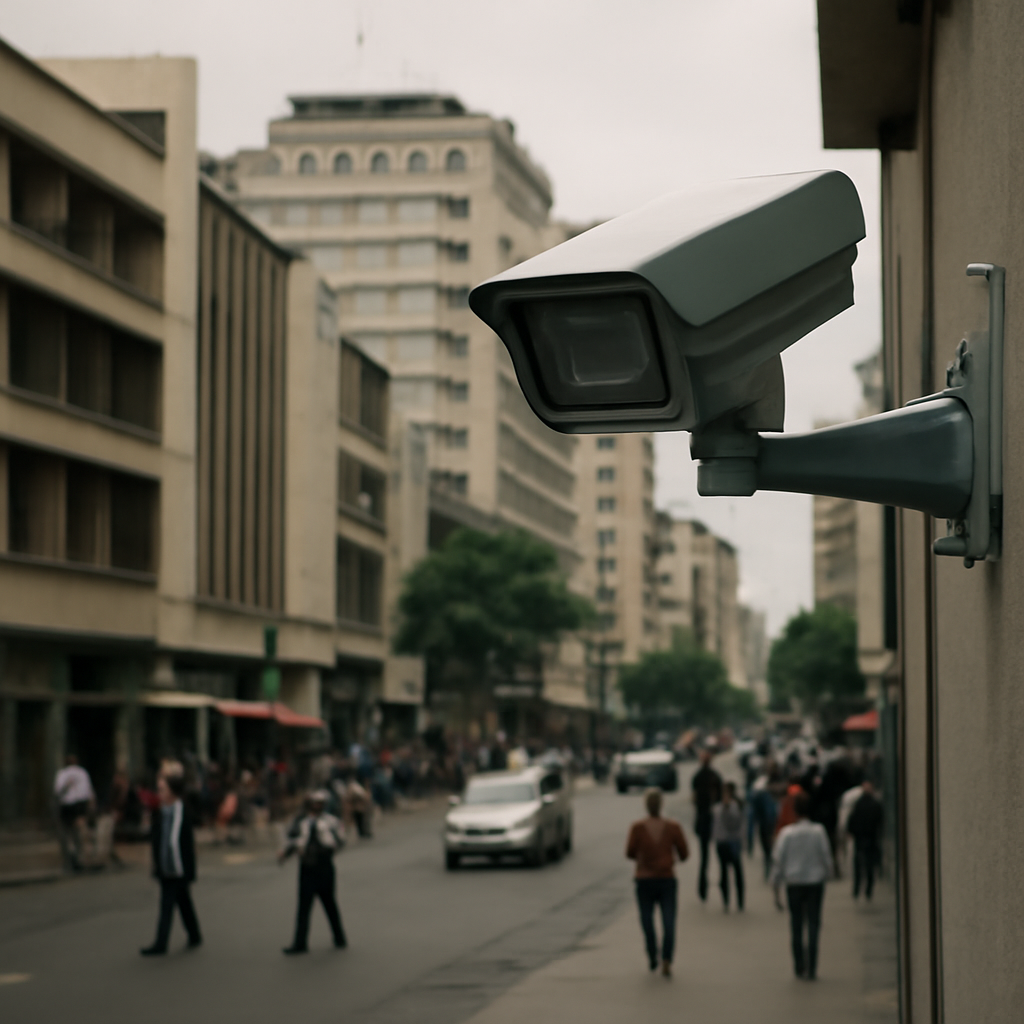
"Venezuela will become one of the first countries outside China to import China’s new generation of LLM-based AI systems for surveillance and control, and the most advanced adopter in the Western Hemisphere,” the Australian Strategic Policy Institute (ASPI) warns in a recent report.
ASPI’s core finding: renewed Chinese AI for an existing surveillance state
ASPI’s report, Warning signals: Venezuela and the risk of Chinese AI-enabled digital authoritarianism, traces a trajectory in which Venezuela’s government — which the document says built a surveillance state a decade ago largely using Chinese technology — is poised to adopt a new generation of Chinese AI systems to enhance those controls. The think tank reports that analysts can find no signs that the country’s newly installed leadership has altered the plan to acquire more Chinese surveillance technology.
Delcy Rodríguez’s 2025 agreement to adopt Chinese-built AI systems
According to ASPI, then-vice-president Delcy Rodríguez led an effort in 2025 that culminated in “an agreement to adopt Chinese-built AI systems … to use Chinese AI to enhance existing state-sponsored surveillance.” The report emphasizes that this initiative aims to fold Chinese large-language-model (LLM) capabilities into Venezuela’s already existing apparatus for managing information and dissent.

Audit-ready is a season. It shouldn't be.
Evidence in spreadsheets, controls drifting between audits, frameworks multiplying on flat headcount. Nubivance runs continuous compliance on Rapid7 Cyber GRC - SOC 2, HIPAA, ISO 27001, PCI, CMMC.
End the scrambleiFlytek’s involvement and a past US ban
ASPI names iFlytek as among the companies involved in the agreement. The report notes that the United States banned iFlytek in 2019 for its role “in helping Beijing to repress the Uyghur Muslim population of China’s Xinjiang region.” ASPI’s account frames that prior sanction as context for concerns about exporting advanced AI surveillance tools beyond China’s borders.
The USA’s January 2026 takeover and a call to action for Secretary of State Marco Rubio
The report situates this technical and political shift against the backdrop that “the USA effectively took over Venezuela in January 2026 and installed Rodríguez as the nation’s leader.” ASPI explicitly calls on US Secretary of State Marco Rubio — whom the report describes as effectively acting “as viceroy of Venezuela” — to dismantle the surveillance apparatus and “enact political change.” ASPI argues that such dismantling would signal that democracies are prepared to counter China’s efforts to export surveillance technologies and, where possible, to remove them in the name of civil liberty.
How Venezuelans, the USA, and Chinese companies are affected
- Venezuelans: ASPI warns Chinese or other AI tools could “strengthen a domestically directed apparatus already used to manage dissent, restrict information and preserve political power,” potentially reinforcing the state mechanisms described as already in place.
- The USA (the de facto governing authority): The report highlights a paradox — Washington is “effectively running a nation that relies on Chinese surveillance tech to maintain power,” and ASPI urges the US Secretary of State to take action to dismantle that technology in Venezuela.
- Chinese companies and Beijing: ASPI states, “Beijing for its part recognizes this opening, and the risk it poses to Chinese companies and China’s political influence there,” and that China appears to be “strengthening oversight of state-owned assets abroad to assist in risk protection and management.”
ASPI’s analysts caution they do not expect Venezuela to recreate “China’s full-stack surveillance apparatus,” but they nonetheless stress the risk that LLM-based and other advanced AI tools could materially enhance an already domestically focused surveillance system.
The report also notes a conspicuous omission: it “does not address whether greater adoption of Chinese surveillance by Venezuela increases the risks the USA faces as it seeks to control the South American country.” That unanswered point underlines a strategic tension ASPI places at the center of its warning: the exporting of powerful surveillance capabilities into a country now under effective US control raises questions the report highlights but does not resolve.
ASPI’s recommendations are blunt: press the new leader to stop the technology transfer, and where possible dismantle the apparatus. Beyond that prescription, the report leaves open how Beijing’s reported tightening of oversight over state-owned assets abroad will interact with any US efforts to limit or remove Chinese surveillance technology from Venezuela — and whether such steps would succeed politically or technically.