“Undoubtedly, the Islamic Republic of Iran will not leave any act of mischief unanswered and will not hesitate in defending the country’s integrity,” the Iranian Foreign Ministry posted on X after U.S. forces struck targets in southern Iran, underscoring how quickly a single exchange can widen the crisis around the Strait of Hormuz.
What U.S. forces say they struck and why
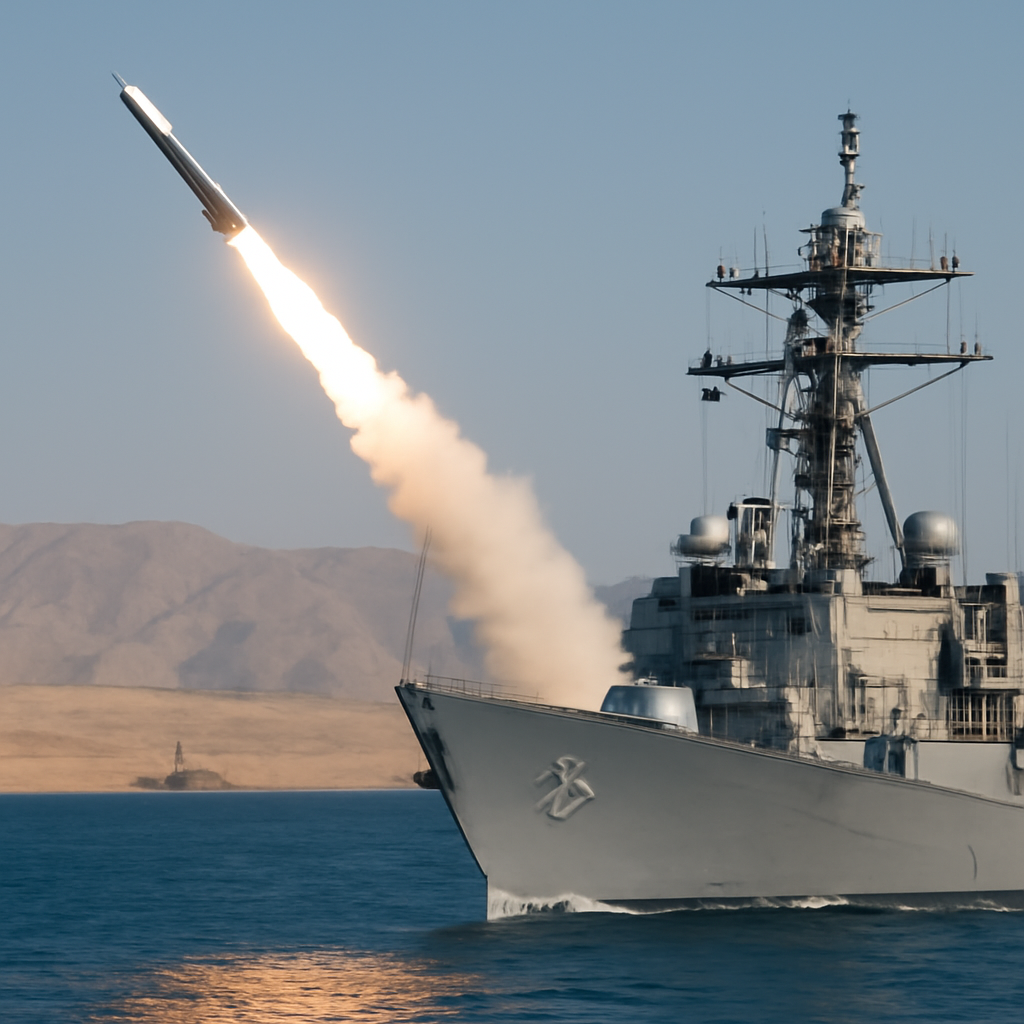
U.S. Central Command (CENTCOM) said Monday that U.S. forces “conducted self-defense strikes in southern Iran… to protect our troops from threats posed by Iranian forces,” Navy Capt. Tim Hawkins, CENTCOM’s chief spokesman, told TWZ. CENTCOM said targets included missile launch sites and “Iranian boats attempting to emplace mines,” and framed the action as defensive and restrained during the ongoing ceasefire.
The New York Times, citing U.S. military officials, reported that CENTCOM took action after Iran deployed mine-laying boats in the Strait of Hormuz and flew attack drones near American ships, saying U.S. forces “observed Iranian forces taking several actions, including launching the drones and activity at missile launch sites.” CENTCOM also publicly denied recent reporting that the U.S. Navy had resumed escorting commercial vessels through the Strait, tweeting: “Project Freedom has not resumed, and U.S. forces are not currently escorting commercial vessels through…”
Iran’s response and regional threats
Tehran vowed retaliation a day after the strikes. The Iranian Foreign Ministry labeled the U.S. action “a gross violation of the ceasefire enacted on April 8” and offered no specifics about what steps it might take. Iran’s Supreme Leader, Ayatollah Mojtaba Khamenei, expanded the rhetoric beyond the U.S. military, warning that “the nations and lands of the region will no longer serve as shields for American bases” and naming Israel, the United Arab Emirates, Saudi Arabia, Bahrain, Jordan, Qatar, Oman and Iraq as countries that house U.S. facilities.
State-linked Fars news agency reported explosions in Bandar Abbas — Iran’s main southern port near the Strait of Hormuz — and said the origin of the explosions remained unclear. Al Arabiya English also relayed reports of similar sounds near the coast.

This site is the portfolio.
OSINTSights runs on Cloudflare Workers, D1, R2, and Vectorize, with an AI pipeline on Hetzner ARM. Nubivance designed, built, and operates it. We do the same for clients.
See what we buildMaritime violence: the Olympic Life and the traffic choke-point
The United Kingdom Maritime Trade Operations (UKMTO) reported that the Olympic Life, a Marshall Islands-registered oil tanker, was attacked 60 nautical miles east of Muscat, Oman on Tuesday. Maritime security firm Ambrey told the source the ship was struck by an unknown projectile, creating an explosion on the vessel’s port side along the waterline and a discharge of bunker fuel. There were no injuries reported; UKMTO and Ambrey did not assign responsibility for the strike.
The incident comes as Iran has kept the Strait of Hormuz largely closed to commercial traffic since the war’s start on Feb. 28, and is now allowing some vessels through under a new fee system that the U.S. “vehemently rejects.” The closure has global economic impacts and is central to the diplomatic negotiations described below.
Diplomacy: talks in Qatar, the memorandum of understanding, and public pronouncements
Prior to the U.S. strikes, both sides had indicated progress on a memorandum of understanding intended to halt the war and restart shipping through the blockaded Strait, while giving negotiators 60 days to resolve more complex issues such as Iran’s nuclear program, ballistic missiles and proxy relationships. U.S. Secretary of State Marco Rubio said he remained hopeful the talks would not be derailed but insisted that “the Straits have to be open” and that Iran’s charging of fees for transits was “unacceptable.” Rubio said he did not know of any country besides Iran that favored a tolling system.
At the same time, U.S. President Donald J. Trump posted on Truth Social urging Arab nations — including Saudi Arabia, Qatar, Türkiye, Egypt, Pakistan and others — to join the Abraham Accords and telling U.S. representatives to pursue that expansion. Trump suggested Tehran could be invited to join if it signed a deal with him. Axios, citing two U.S. officials, reported that several leaders on a Saturday call were “surprised” by the request and that there was a momentary silence on the line.
What this means for U.S. forces, commercial shipping, and regional negotiators
- U.S. forces: CENTCOM says it will continue to defend personnel and “use restraint” during the ceasefire, and it publicly denied resuming Project Freedom or escorting commercial vessels through the Strait.
- Commercial shipping: Vessels remain at risk from attacks such as the strike on the Olympic Life and from Iran’s prior closure and new fee system for transits; operators face uncertainty about whether passage will be safe or accompanied by naval assistance.
- Regional negotiators and governments: Ongoing talks in Qatar and the proposed memorandum of understanding are now operating under a renewed threat of kinetic escalation; public statements from both sides — from CENTCOM to the Iranian Foreign Ministry and the Supreme Leader — have hardened positions even as negotiators attempt to set a 60-day window for broader issues.
The sequence is clear from the available record: U.S. forces struck targets they said threatened personnel; Iran publicly vowed to answer; commercial shipping was hit again; and diplomats continue to haggle over a memorandum that would reopen the Strait and buy time for tougher questions. Whether those talks can proceed while the Strait remains a flashpoint — with attacks, explosive reports in Bandar Abbas, and competing public demands from Washington and Tehran — is the central uncertainty left by these events.