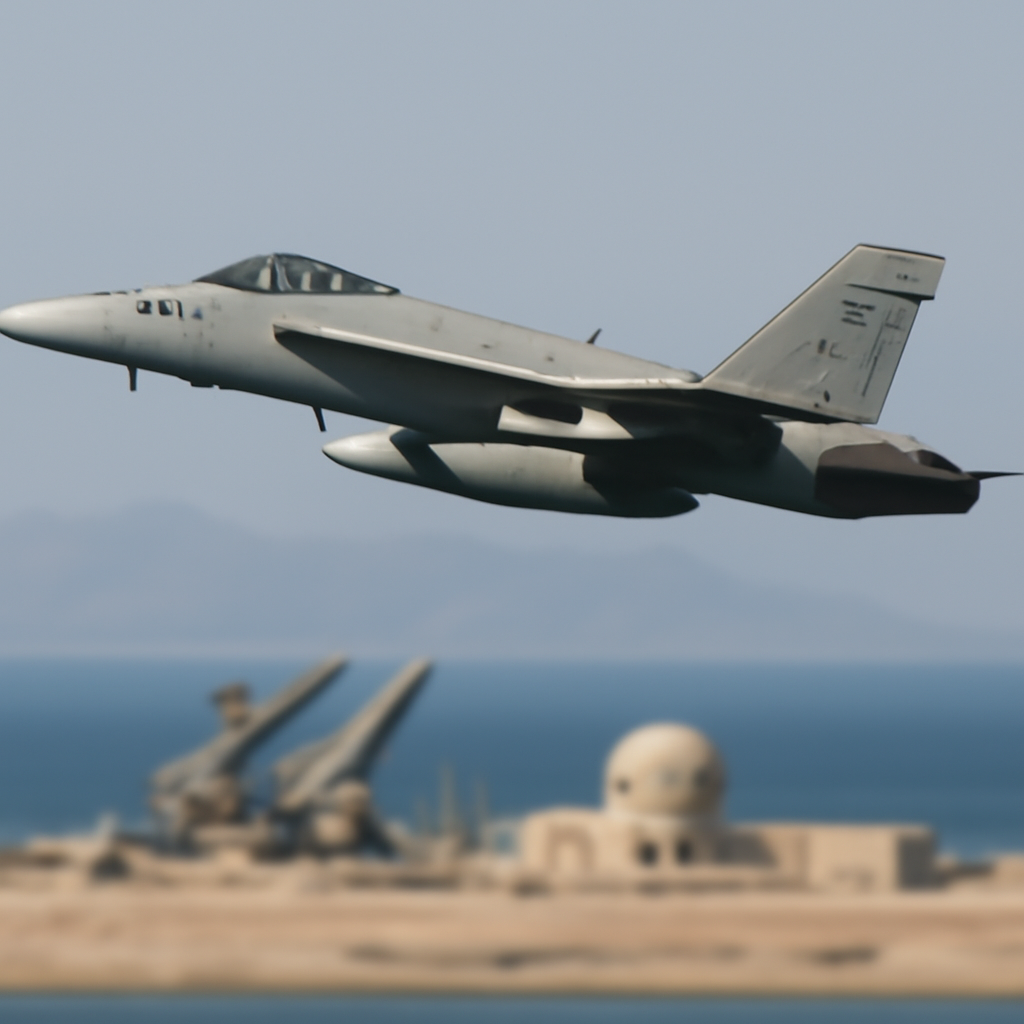
CENTCOM says U.S. aircraft struck Iranian missile, drone storage and coastal radar sites
U.S. Central Command (CENTCOM) reported that on June 26 U.S. aircraft struck Iranian missile and drone storage locations and coastal radar sites in retaliation for an attack the previous day. CENTCOM described the action as “a powerful response to yesterday’s attack on a commercial ship that was transiting the Strait of Hormuz,” and said the operation followed Iran’s use of a one-way attack drone against the M/V Ever Lovely on June 25.
The command framed the strikes as enforcement of the ceasefire and of freedom of navigation, saying the Ever Lovely incident “clearly violated the ceasefire,” and that “Iran’s dangerous behavior undermined freedom of navigation as commerce increasingly flows through the vital international trade corridor.” CENTCOM also said U.S. forces “continue to provide safe passage coordination and support to commercial vessels transiting the strait,” and that the U.S. military “remains present and vigilant to ensure all aspects of the agreement with Iran are adhered to, obeyed, and in full force and effect.”
The Ever Lovely attack and the IMO evacuation pause
The Singapore‑flagged cargo ship M/V Ever Lovely was leaving the Strait of Hormuz along the Omani coast when it was struck on June 25 by what CENTCOM described as a one-way attack drone. That attack prompted the U.N. International Maritime Organization (IMO) to pause a previously announced plan to evacuate hundreds of ships stuck in the Persian Gulf. The IMO Secretary‑General, cited in the source, said: “Seafarer safety remains paramount. To ensure coordinated approach & navigational safety, the IMO evacuation plan will be paused until further clarity.”
The source noted the Persian Gulf had been largely closed since Iran was attacked by the U.S. and Israel, and that the Ever Lovely incident interrupted an already fragile maritime situation in the corridor.

This site is the portfolio.
OSINTSights runs on Cloudflare Workers, D1, R2, and Vectorize, with an AI pipeline on Hetzner ARM. Nubivance designed, built, and operates it. We do the same for clients.
See what we buildIranian media and IRGC statements after the U.S. strikes
Following the U.S. strikes, Iranian state and semi‑official outlets issued stern warnings and claims. The IRIB (Islamic Republic of Iran Broadcasting) account posted that “Iran has repeatedly stated that the situation in the Strait of Hormuz will not return to what it was before the U.S. attack on Iran,” adding that “Any transit through the Strait must follow the routes announced by Iran; otherwise, the security of vessels cannot be guaranteed.”
Press TV reported that the IRGC Navy said it “struck American military targets in the region in retaliation for earlier aggression against Iranian coastal areas,” characterizing the U.S. military as “US terrorist military in the region.” The source also stressed there was no visual proof provided of any IRGC attack, and that CENTCOM declined comment on the Iranian claim.
First U.S. kinetic response since the Memorandum of Understanding and the state of negotiations
The strikes mark the first U.S. kinetic response against Iran since Washington and Tehran signed a Memorandum of Understanding about a peace deal the previous Friday, according to the reporting. The U.S. and Iran were reported to be continuing negotiations over a future peace deal; the source said “many sticking points remain,” specifically citing how the country’s nuclear material will be dealt with and how future nuclear operations will be monitored.
A U.S. official told the reporter there was no immediate military response from Iran after the strikes, and the coverage reiterated uncertainty about the level of command and control the Iranian government exerts over hardline IRGC elements, and whether such attacks might occur independently of government leadership.
What this means for commercial shipping, CENTCOM, and the IRGC
- Commercial shipping and the IMO: Vessel operators and the IMO will watch for further disruptions; the IMO paused its evacuation plan pending greater clarity after the Ever Lovely attack, and Iranian statements insisting that transit follow routes “announced by Iran” raise the prospect of competing navigational directives.
- CENTCOM and U.S. forces: CENTCOM framed the strikes as enforcement of the ceasefire and protection of freedom of navigation, and said U.S. forces will continue to coordinate safe passage for commercial vessels and to ensure the terms of the agreement with Iran are “adhered to, obeyed, and in full force and effect.”
- Iran and the IRGC: Iranian media reiterated that transit conditions will not revert to pre‑attack norms, and the IRGC claimed retaliatory strikes on U.S. targets — a claim for which the reporting found no public visual evidence and which elicited no CENTCOM confirmation.
This remains a developing episode in an already tense maritime environment. The factual record in the source is specific: an Iranian one‑way attack drone struck the Ever Lovely on June 25; CENTCOM said U.S. aircraft struck missile and drone storage sites and coastal radar sites on June 26 in response; Iranian state outlets restated transit conditions and the IRGC claimed retaliation with no public proof; and the action is the first U.S. kinetic response since a Memorandum of Understanding was signed the previous Friday. Whether the claims and counterclaims will stabilize transit protocols in the Strait, or further complicate the ongoing negotiations over nuclear material and monitoring, is left to subsequent reporting.
Original story: https://www.twz.com/news-features/u-s-carries-out-first-strike-on-iran-since-peace-memorandum-signed



