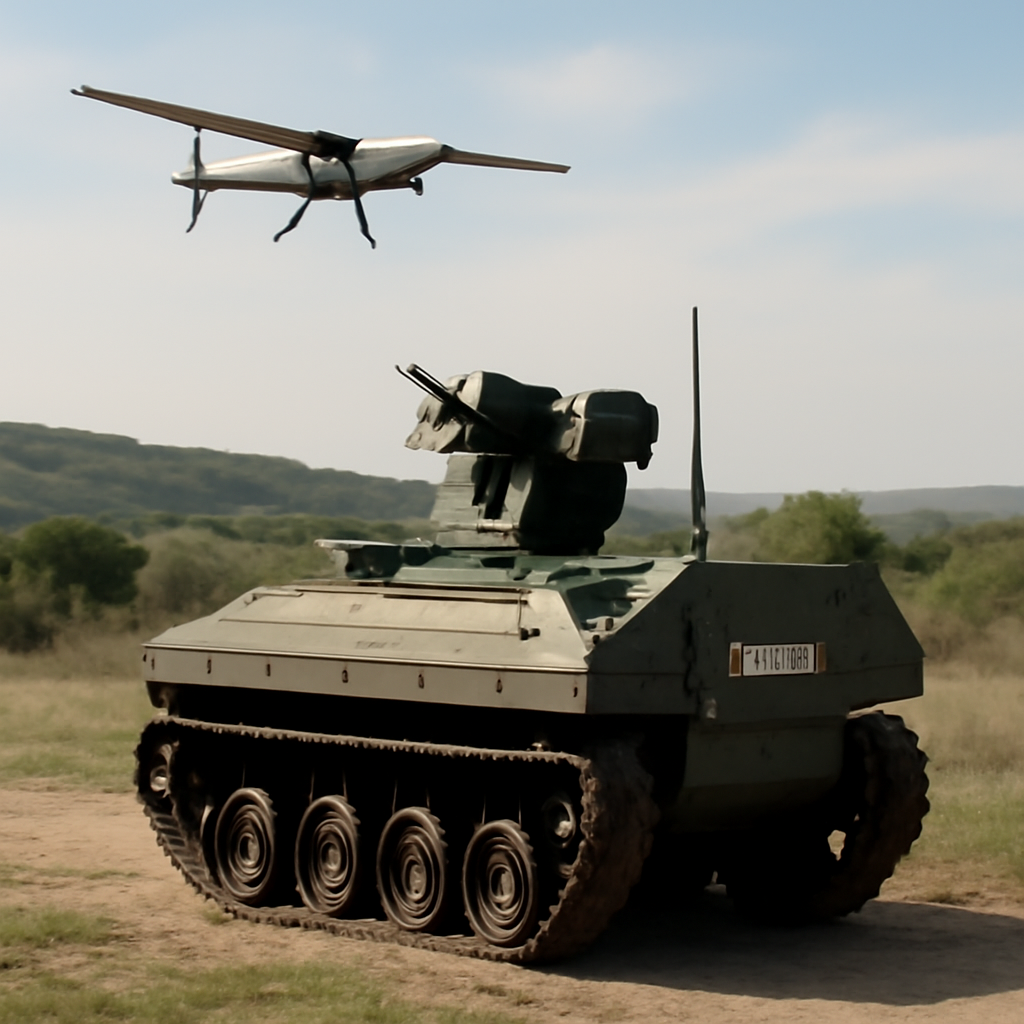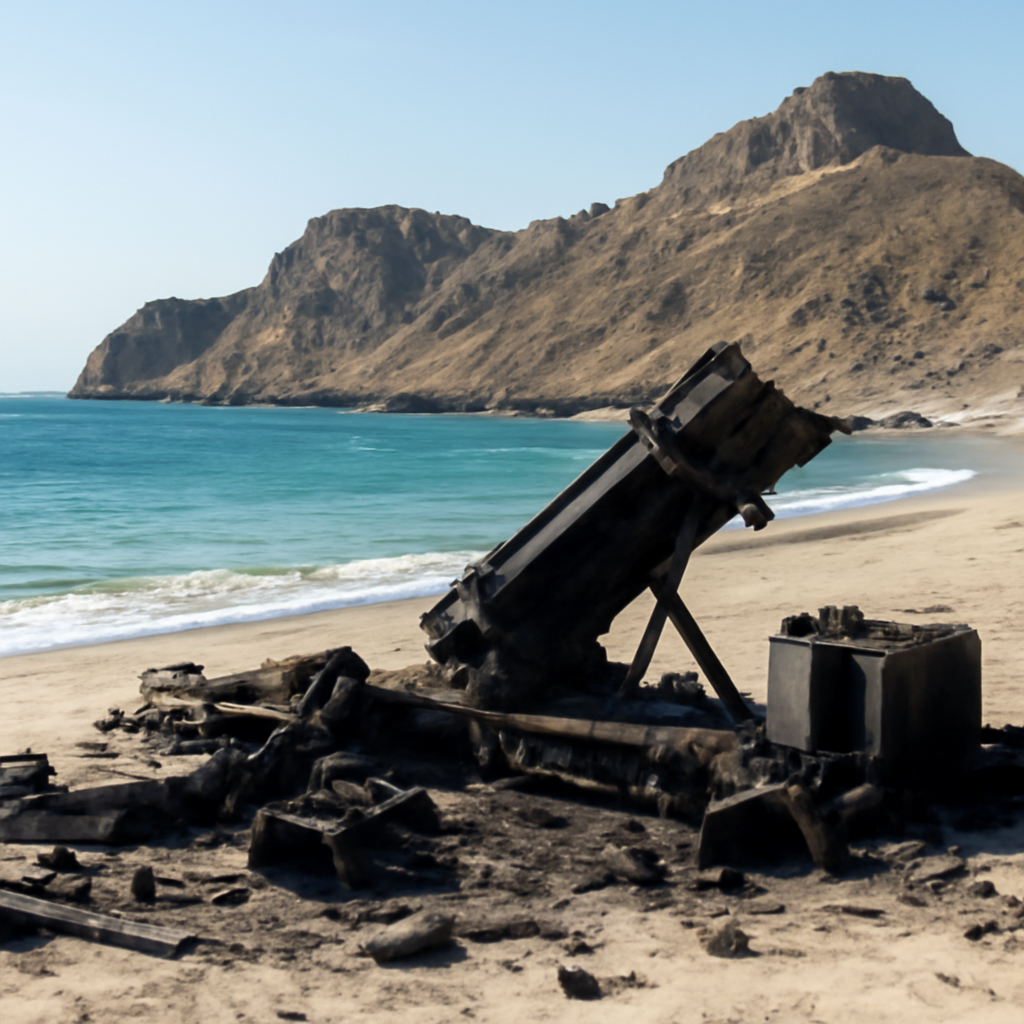
"Islamic Revolutionary Guard Corps forces were observed preparing to launch rockets with sea mines into the Strait of Hormuz," Navy Capt. Tim Hawkins, CENTCOM’s spokesman, told reporters Sunday evening.
CENTCOM strike on Larak Island
U.S. Central Command said it struck two Iranian launchers on Larak Island after observing IRGC personnel preparing to fire rocket-delivered sea mines into the Strait of Hormuz. Hawkins confirmed the strikes but declined to specify the exact type of launcher that was hit or whether CENTCOM had previously seen this system in use.
The Fajr-5 rocket-delivered mine concept
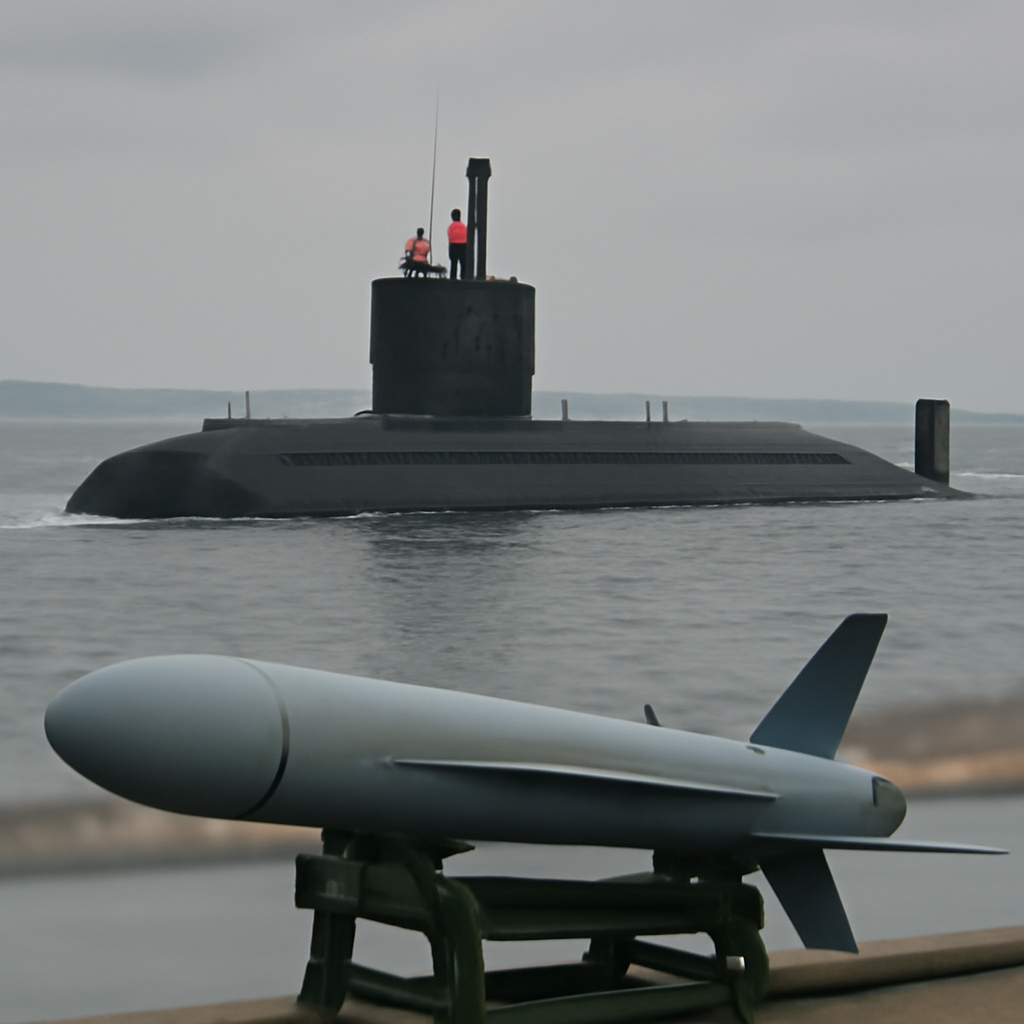
Although CENTCOM would not identify the system it struck, Iran has publicly demonstrated a rocket-to-mine system built around a variant of the Fajr-5 family. A January 24, 2025 clip circulated on social media shows truck-mounted multiple launch rocket systems firing what Iran claims are rockets equipped with sea-mine warheads; the video cuts to nose‑cone shaped objects that appear to float on the surface above spent missile bodies.
Behnam Ben Taleblu of the Foundation for Defense of Democracies described the Fajr-5 as a 333mm-caliber rocket reportedly capable of about 75 km range and carrying an estimated 90 to 170 kg warhead depending on payload. Taleblu and the maritime security firm Ambrey both said they have not seen confirmation that Tehran has previously used MLRS systems to launch sea mines in combat.

Audit-ready is a season. It shouldn't be.
Evidence in spreadsheets, controls drifting between audits, frameworks multiplying on flat headcount. Nubivance runs continuous compliance on Rapid7 Cyber GRC - SOC 2, HIPAA, ISO 27001, PCI, CMMC.
End the scrambleOperational implications cited by analysts and think tanks
Observers quoted in reporting argue that rocket-delivered mines would change the risk calculus in the Strait by enabling rapid, shore‑based minefields without exposing minelaying crews. A Center for International Maritime Security (CIMSEC) analysis noted such delivery “significantly speeds up the deployment process” and increases stand-off for the minelayer. CIMSEC added that while the explosive mass would be light compared with U.S. or Chinese naval mines, the warheads would still be heavier than diver‑delivered limpet mines and could, in sufficient numbers, disable a ship.
The same analysis warned of the psychological effect: even a handful of incidents or credible threat reporting could prompt ship operators and insurers to avoid the Strait, amplifying the strategic impact beyond physical damage.
Maritime traffic, JMIC advisories, and commercial effects
Joint Maritime Information Center (JMIC) advisories and shipping‑trackers indicate continued caution in commercial traffic. JMIC reported that commercial traffic remained at reduced levels with a “modest uptick” but still far below baseline, and that mine danger areas remained active. Kpler reported that on August 25 five vessels crossed the Strait of Hormuz, down 28.6% from seven the day before; all five used Iran’s Unilateral Scheme, with two entering the Middle East Gulf and three exiting. Kpler also noted that four were classified as shadow vessels and one as sanctioned.
Iranian response, regional intercepts, and U.S. rhetoric
Following the U.S. strikes on Larak Island, Iran launched ballistic missiles at a Jordanian air base hosting U.S. troops; Jordanian officials said all eight missiles were intercepted with no casualties or damage. CENTCOM publicly rejected an Iranian claim that a supertanker struck two mines in the southern route, posting on X that the claim was “FALSE” and that “No ships have hit mines in the Strait of Hormuz.”
President Trump was quoted twice in contemporaneous interviews. Speaking with Glenn Beck, Trump said, “We’re taking them in... The mines are gone. You probably saw that, we put it out yesterday, all the mines. We got rid of the mines. But the strait, it’s functioning, it’s a functioning strait.” After the missile intercepts, Trump told Fox News reporter Trey Yingst: “We’re going to hit them hard... There will be a response.”
Axios, citing three U.S. officials, reported that Trump and senior aides have considered limited strikes in the Strait of Hormuz to prevent Iran from reconstituting radar and missile capabilities — described by one official as an effort to “mow the lawn” to reduce risks to tankers, U.S. Navy ships and Air Force aircraft.
What this means for commercial ship crews, U.S. forces, and insurers
- Commercial ship crews and operators: The combination of CENTCOM’s strike and public reporting of an Iranian rocket-to-mine capability increases the prospect that operators will avoid the Strait or use alternate, unilateral routing schemes, consistent with JMIC and Kpler observations of reduced traffic.
- U.S. forces and policymakers: CENTCOM’s action on Larak Island and public denials of mine hits underline an active posture; reporting that senior U.S. officials have considered limited strikes suggests continued kinetic options remain on the table to counter perceived mine threats.
- Insurers and maritime underwriters: Analysts cited by CIMSEC noted the psychological and commercial impact of even limited mining or credible threat reports — a dynamic that could translate into route denials, higher premiums, or additional risk-routing constraints for tankers and other merchant vessels.
The CENTCOM strike on Larak Island, the public record of an Iranian Fajr-5–based mine demonstrator, and the immediate Iranian missile response together crystallize a narrow but potent set of risks: even if the technical efficacy of rocket‑delivered mines is imperfect, the speed, stand‑off and psychological effect of such a capability were enough for U.S. forces to resume strikes. How broadly Iran has developed or deployed this capability, and whether it can be used at scale to disrupt commercial traffic, remain central—and unresolved—questions.