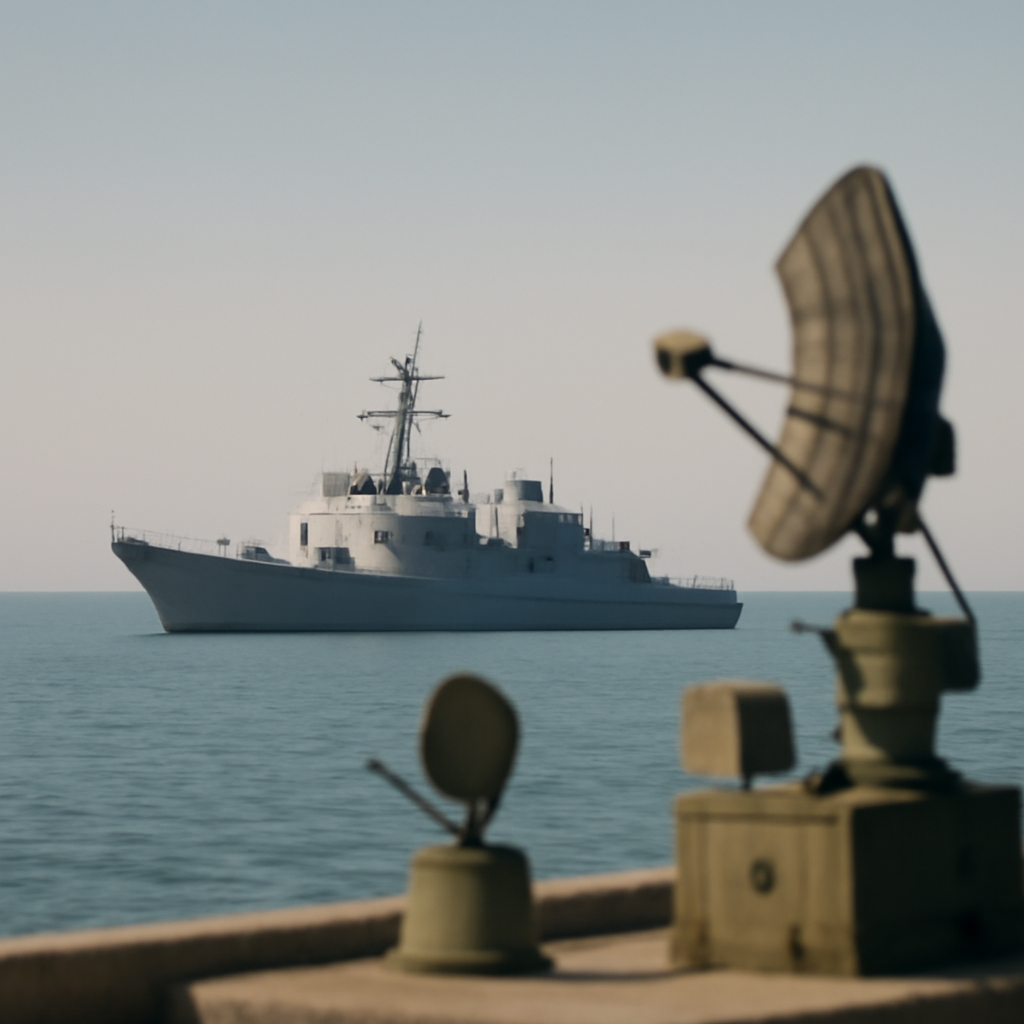
"We now control the Strait of Hormuz. We control it," President Donald Trump declared on Wednesday, a stark assertion that came amid U.S. strikes and Iranian counterattacks that have again made the narrow waterway a flashpoint for kinetic and maritime conflict.
CENTCOM’s Sept. 1 strikes: targets, video, and public messaging
U.S. Central Command (CENTCOM) announced a "wave of strikes" on Sept. 1 that it said hit Islamic Revolutionary Guard Corps (IRGC) air defense sites, radar systems, maritime assets and facilities, mine‑laying capabilities, and communications sites. CENTCOM released a video that appears to show strikes on two separate vessels; one can be seen at about the 39‑second mark and another about 10 seconds later. The command linked the operations to "recent attempted attacks by the IRGC against commercial shipping in the Strait of Hormuz and against American service members."
CENTCOM’s public statement did not explicitly mention oil tankers. A CENTCOM spokesman declined to say whether the ship strikes were carried out under a new policy and referred that question to "policymakers." Navy Capt. Tim Hawkins, a CENTCOM spokesman, said the command "is aware of the reports" that civilians were killed and that it was investigating. Hawkins also asserted, "The U.S. military never targets civilians, unlike the IRGC," and said, "All American personnel are accounted for."
The "tanker‑for‑tanker" policy: intent and execution
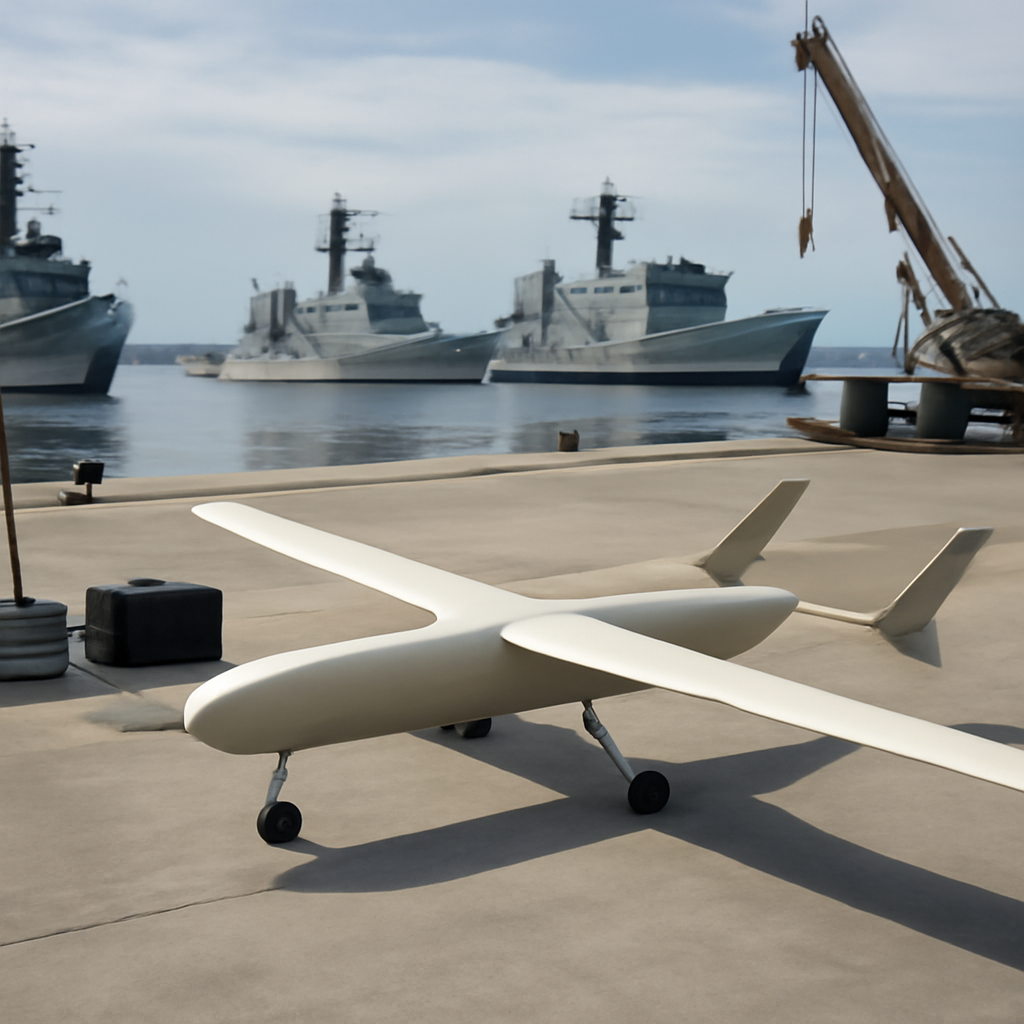
Axios reported a new "tanker‑for‑tanker" targeting policy — approved by President Trump — under which U.S. forces strike Iranian oil transport vessels in retaliation for Tehran’s attacks on ships transiting the Strait of Hormuz. According to anonymous U.S. officials cited by Axios, the recent strikes hit two Iranian government tankers that were anchored off Iran’s coast north of the U.S. naval blockade line; U.S. drones "launched missiles that hit their engine rooms."
Axios described the broader intent: to "further deter Iranian attacks on tankers that move through the strait" and to prevent Iran from rebuilding radar and missile capabilities used to threaten transiting ships. One U.S. official told Axios the strikes degraded Iran’s attack capabilities and "bought at least a month" of lowered threat levels for commercial ships. Another anonymous official used the phrase "mow the lawn" to describe the approach.

Audit-ready is a season. It shouldn't be.
Evidence in spreadsheets, controls drifting between audits, frameworks multiplying on flat headcount. Nubivance runs continuous compliance on Rapid7 Cyber GRC - SOC 2, HIPAA, ISO 27001, PCI, CMMC.
End the scrambleIranian reprisals, casualty claims, and disputed mine reports
Iran responded quickly, claiming several civilians were killed in the U.S. strikes and calling the incident a "war crime." The IRGC followed with missile and drone barrages it said struck U.S. facilities in Bahrain, Iraq, Jordan and Kuwait. Iran also asserted that two ships were struck by mines in the Strait; the IRGC said the vessels came to a halt after catching fire.
Security firms and analysts pushed back on parts of Tehran’s account. Ambrey, a maritime security firm, said there was "no meaningful evidence showing that any vessel has been hit by a ship mine." Ambrey’s assessment described transits through the Strait as "contested and high risk" while noting that daily in‑ and outbound transits continue. Ambrey recommended against using the Transit Separation Scheme (TSS) despite statements that it had been cleared of mines, and described the available alternatives as a northern route coordinated with Iranian authorities and a southern route facilitated by U.S. forces.
Reuters, citing Marisks maritime security firm, reported that two very large crude carriers were struck in the same period: the Saudi‑flagged VLCC Sidr and the Liberian‑flagged VLCC Senegal Prosperity. The Saudi Foreign Ministry condemned the attack on the Sidr and said the incident resulted in fatalities among the tanker’s crew.
Market reaction was immediate: OilPrices.com reported Brent Crude rising to more than $95 per barrel on Wednesday, up from about $87.50 before the U.S. resumed strikes the prior week.
Wider military and cyber context: missiles, partners, and cyberclaims
The exchanges have unfolded alongside reporting on Iran’s missile capabilities and other lines of pressure. USA TODAY reported on Iran’s use of the Kheibar Shekan medium‑range ballistic missile family in strikes against U.S. hubs and bases, and cited some analysts suggesting such missiles were used in prior attacks that killed U.S. service members. The Financial Times reported that Russia has been secretly assisting Iran to develop advanced supersonic cruise missiles under a covert program codenamed C430L, a transfer of strategic military technology that FT said began in 2023.
Cyber operations also featured in accounts: NBC News reported that Iranian hackers have targeted U.S. water systems, telecommunications, energy and other infrastructure in recent weeks, saying the attempts focused on internet‑connected automated systems and have "so far not been successful," according to four people familiar with the threats. A Telegram channel calling itself APT IRAN warned of forthcoming strikes on U.S. energy, water and telecommunications sectors.
Operational fallout included relocations: Adm. Daryl Caudle, the Chief of Naval Operations, said the U.S. evacuated ships and troops from Bahrain and that "We’re not getting back in there anytime soon."
What this means for shipping companies, U.S. forces, and regional states
- Shipping companies: face elevated risk and route choices — Ambrey flagged the northern route coordinated with Iran and a southern U.S.‑facilitated route as the main options, while warning TSS transits remain inadvisable; OFAC guidance on sanctions complicates coordination with Iranian authorities.
- U.S. forces: have conducted strikes that officials say degraded Iranian attack capabilities and "bought at least a month" of lower threat levels, but have also faced missile and drone barrages, cyber probing, and the evacuation of assets from Bahrain.
- Regional states: Jordan reported intercepting missiles (its air defenses engaged 13 ballistic missiles and destroyed 10, the Armed Forces reported); Saudi Arabia condemned the Sidr attack; Kuwait and Bahrain were named by the IRGC as targets of strikes.
President Trump’s claim of control over the Strait — and the reported U.S. goal of degrading Iranian sea‑attack capabilities — now sit alongside Iran’s account of civilian casualties, missile reprisals across multiple countries, and disputed claims about mining. U.S. officials and private analysts depict a temporary reduction in immediate threat, while Ambrey and other observers characterize transits as still "contested and high risk." The central question the facts leave on the table is whether the strikes that reportedly "bought at least a month" of safer transits will be sufficient to prevent Iran from restoring the capabilities U.S. officials say threaten ships and crews in the months ahead.
Source: TWZ — Iranian Oil Tankers In The Cross Hairs Of New U.S. Campaign