"The ship’s 208 uninterrupted days at sea between Guam and Oman, and its 286 consecutive days at sea between departing San Diego and arriving in Thailand, are record‑breaking marks for modern aircraft carriers."
USS Abraham Lincoln returns after a historic ten‑and‑a‑half‑month cruise
On October 8 the USS Abraham Lincoln sailed into Naval Air Station North Island, ending a 321‑day combat deployment that covered more than 93,000 nautical miles and placed the carrier among the longest modern deployments on record. The flagship of Carrier Strike Group 3 and her crew of more than 5,000 Sailors and Marines served “as the tip of the spear” in operations against Iran, according to Navy statements, flying 14,037 sorties — including 4,000 combat missions — that totaled 28,500 flight hours.
A Navy press release and public statements credited Carrier Air Wing (CVW)‑9 with dropping more than 1.37 million pounds of ordnance while employing 1,499 precision weapons. The strike group conducted 72 replenishments‑at‑sea, received more than 20 million gallons of aviation fuel, and — according to social‑media footage and shipboard markings — recorded destruction or defeat of large numbers of enemy systems: 106 one‑way attack drones, 34 Iranian Navy and IRGC ships, 23 inbound cruise missiles and 10 enemy submarines. The strike group recorded 1,463 air‑to‑ground munitions delivered in total, a Sailor in a video said.
USS Theodore Roosevelt docks in Yokosuka ahead of Keen Sword 27
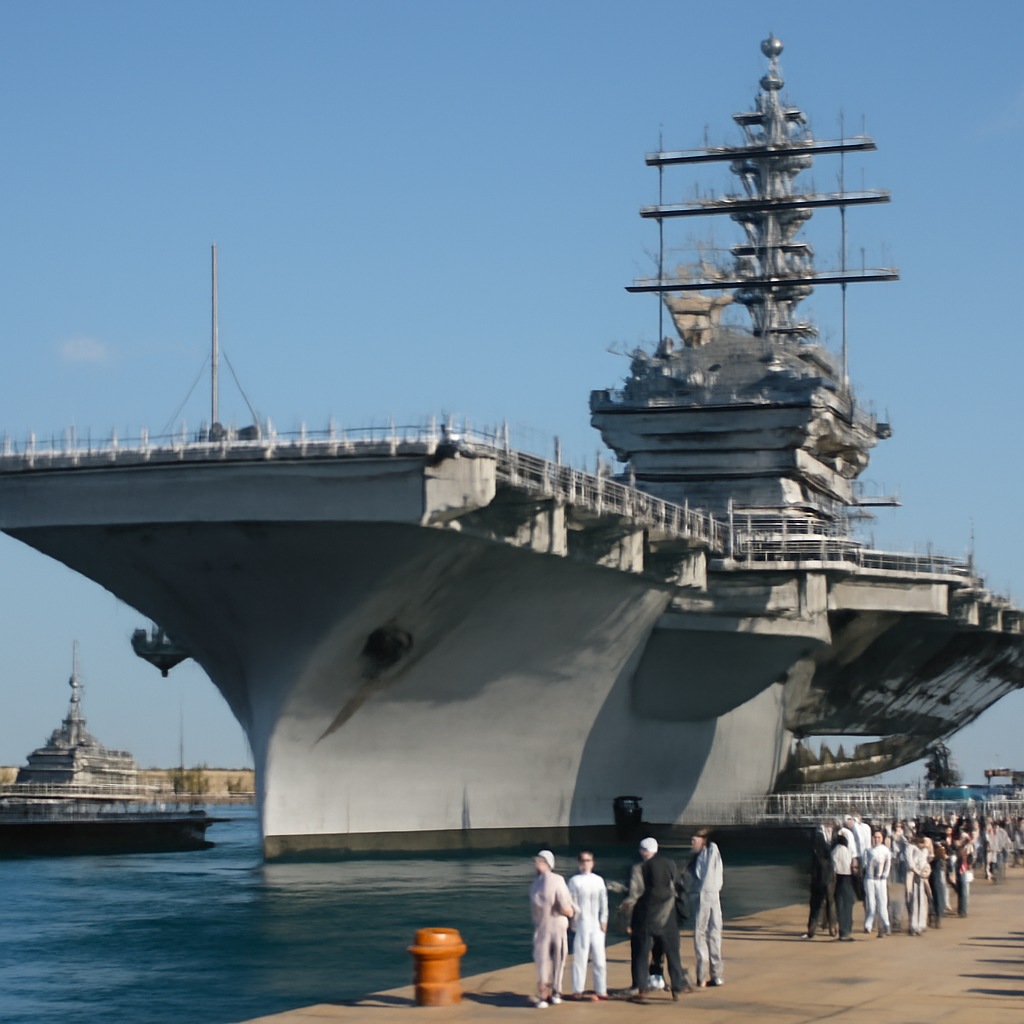
Theodore Roosevelt, flagship of Carrier Strike Group 9, moored at Commander, Fleet Activities Yokosuka on October 16 — the first non‑resident U.S. carrier visit to that port in more than four years. Roosevelt and guided‑missile cruiser USS Chosin chopped into U.S. 7th Fleet and will participate in exercise Keen Sword 27, described by 7th Fleet as a “premier joint‑bilateral field training exercise” with the Japan Self‑Defense Forces.
The visit is a short one to allow maintenance, resupply and liberty. Capt. Will Mathis, commanding officer of Roosevelt, said: “Port visits like this are vital for crew morale and mission readiness, allowing our Sailors to rest, recharge, and prepare to operate seamlessly alongside our allies during exercise Keen Sword.”
CSG‑9 is operating in a disaggregated fashion. Public Automatic Identification System (AIS) data and DVIDS posts show elements departing from San Diego and Hawaii at different times: USS Carl M. Levin left on September 9, USS Paul Hamilton departed San Diego on October 10 after onloading ammunition, and Pearl Harbor‑based USS Decatur linked up en route. Henry J. Kaiser‑class replenishment oiler USNS Tippecanoe supported multiple RAS and later entered the East Sea/Sea of Japan via the Tsugaru Strait before ceasing AIS transmissions.

Audit-ready is a season. It shouldn't be.
Evidence in spreadsheets, controls drifting between audits, frameworks multiplying on flat headcount. Nubivance runs continuous compliance on Rapid7 Cyber GRC - SOC 2, HIPAA, ISO 27001, PCI, CMMC.
End the scrambleMUSV Seahawk, unmanned integration, and mixed signals
Multiple reports indicated a medium unmanned surface vessel (MUSV) Seahawk (2) deployed in association with the Roosevelt strike group — which, if confirmed, would be the first time a drone boat was assigned to a carrier strike group. Seahawk’s publicly available AIS track shows it left Point Loma on October 8, docked in Hawaii for a few days, and resumed westbound transit on October 16. If Seahawk is part of CSG‑9 it is currently disaggregated and its participation in Keen Sword is unknown.
Acting Secretary of the Navy Hung Cao said during an Association of the United States Army panel that “the Teddy Roosevelt carrier strike group just deployed on October 8 with a medium sized unmanned surface vessel. This is the first carrier strike group to ever deploy with a large size unmanned surface vessel.” TWZ reached out to the Secretary’s office for clarification but did not receive a response; a Navy official told TWZ that “Seahawk’s operations represent continued progress in the Navy’s efforts to integrate unmanned systems into Fleet operations.”
USS George H.W. Bush departs Thailand and returns to the U.S. 5th Fleet
USS George H.W. Bush and escort USS Delbert D. Black left Phuket on October 9 after a five‑day port call that followed 187 consecutive days at sea. Imagery posted to DVIDS and AIS tracking show the carrier stopped broadcasting AIS while steaming due south at 10 knots, and later reappeared operating in the U.S. 5th Fleet area of responsibility to “support maritime security and stability,” joining the USS George Washington strike group in that theater.
Destroyer USS Mason — which had been serving as integrated air and missile defense commander for the group — called in Singapore on October 5, departed on October 9, and was tracked northwestbound through the Malacca Strait, likely to rejoin the carrier. USS Ross and USS Donald Cook remained in 5th Fleet during the Thailand visit.
F‑35C testing aboard PCU John F. Kennedy and acquisition implications
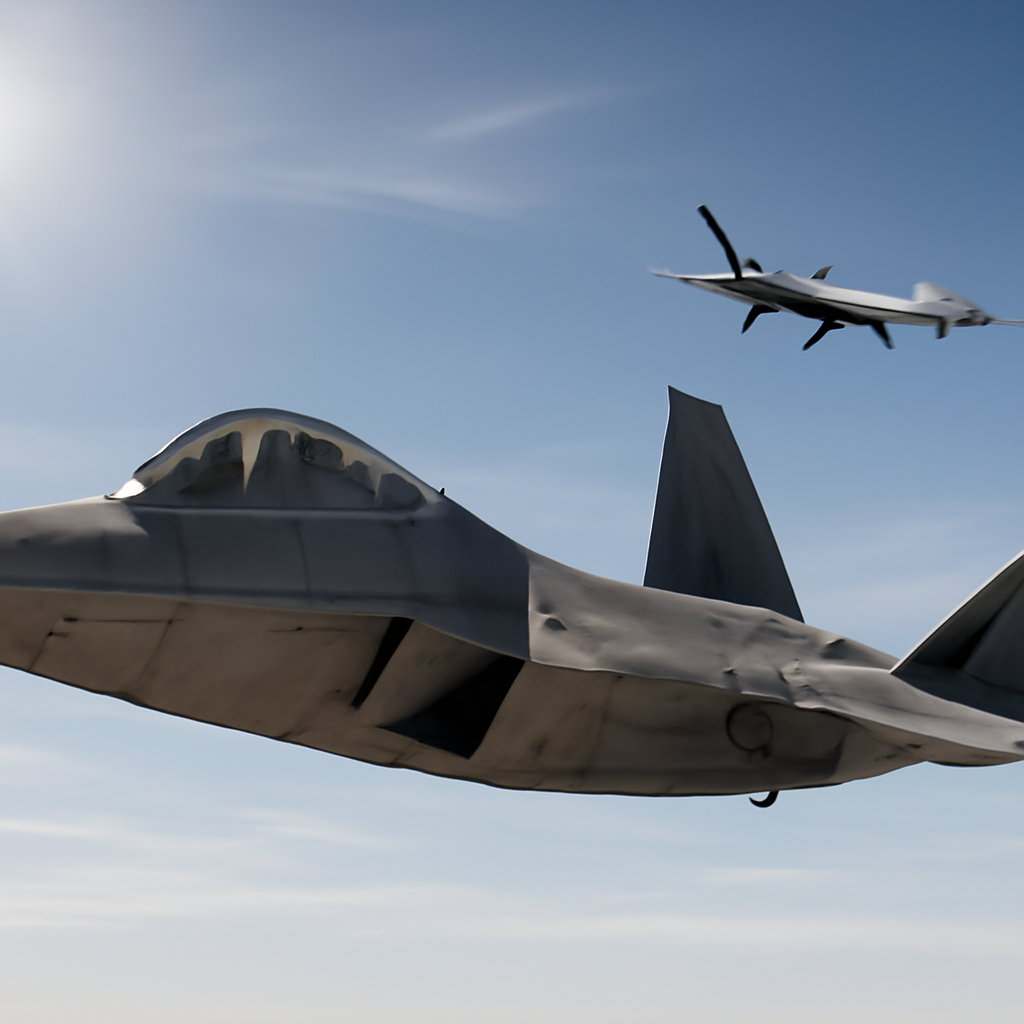
On October 13 an F‑35C made the first arrested landing aboard a Gerald R. Ford‑class carrier when Lt. Cmdr. Robert Mason of Air Test and Evaluation Squadron (VX)‑23 trapped aboard the future USS John F. Kennedy in the Western Atlantic. The first catapult launch followed the next day as part of Aircraft Compatibility Testing conducted by VX‑23 and a detached F‑35 Integrated Test Force team using an instrumented jet. One of the jets was pictured carrying an inert JDAM.
Kennedy received preliminary acceptance on September 29 and remains a Pre‑Commissioning Unit while Huntington Ingalls Industries completes final system checks; the ship is expected to be delivered in spring 2027. The lead ship USS Gerald R. Ford “does not currently embark F‑35Cs and will need upgrades” to do so, the reporting notes; Congress required Kennedy be equipped to embark F‑35Cs, a factor that contributed to additional delays.
How Carrier Strike Group 9, VX‑23, and regional partners are positioned
- Carrier Strike Group 9: Will use the Yokosuka visit to resupply and proceed to Keen Sword 27 while operating disaggregated elements across the Pacific; whether the MUSV Seahawk joins for the exercise remains unresolved.
- VX‑23 and the F‑35 test community: Have validated arrested landings and catapult launches aboard PCU John F. Kennedy, advancing Aircraft Compatibility Testing ahead of Kennedy’s delivery.
- Regional partners in 7th and 5th Fleets: Will see two carrier strike groups active in the Western Pacific and the Middle East respectively — Theodore Roosevelt in 7th Fleet for bilateral training and George H.W. Bush back in 5th Fleet to “support maritime security and stability.”
Taken together, the past week’s movements underscore two parallel strains: record‑setting afloat endurance and combat operations from Abraham Lincoln, and a test‑and‑integration rhythm across the fleet — from MUSV transits to F‑35C deck trials on Kennedy. The immediate questions are concrete: will Seahawk join Roosevelt for Keen Sword 27, and will Kennedy complete its acceptance path in time to begin F‑35C operational embarkations after spring 2027?