A Mk 48 ADCAP heavyweight torpedo, carrying a 650 lb warhead out to between 12 and 21 nautical miles, is at the center of a newly reconstructed, classified seabed-warfare effort the U.S. Navy quietly placed inside its FY2025–FY2027 research and development budgets.
Liberator: a seabed, containerized torpedo launcher
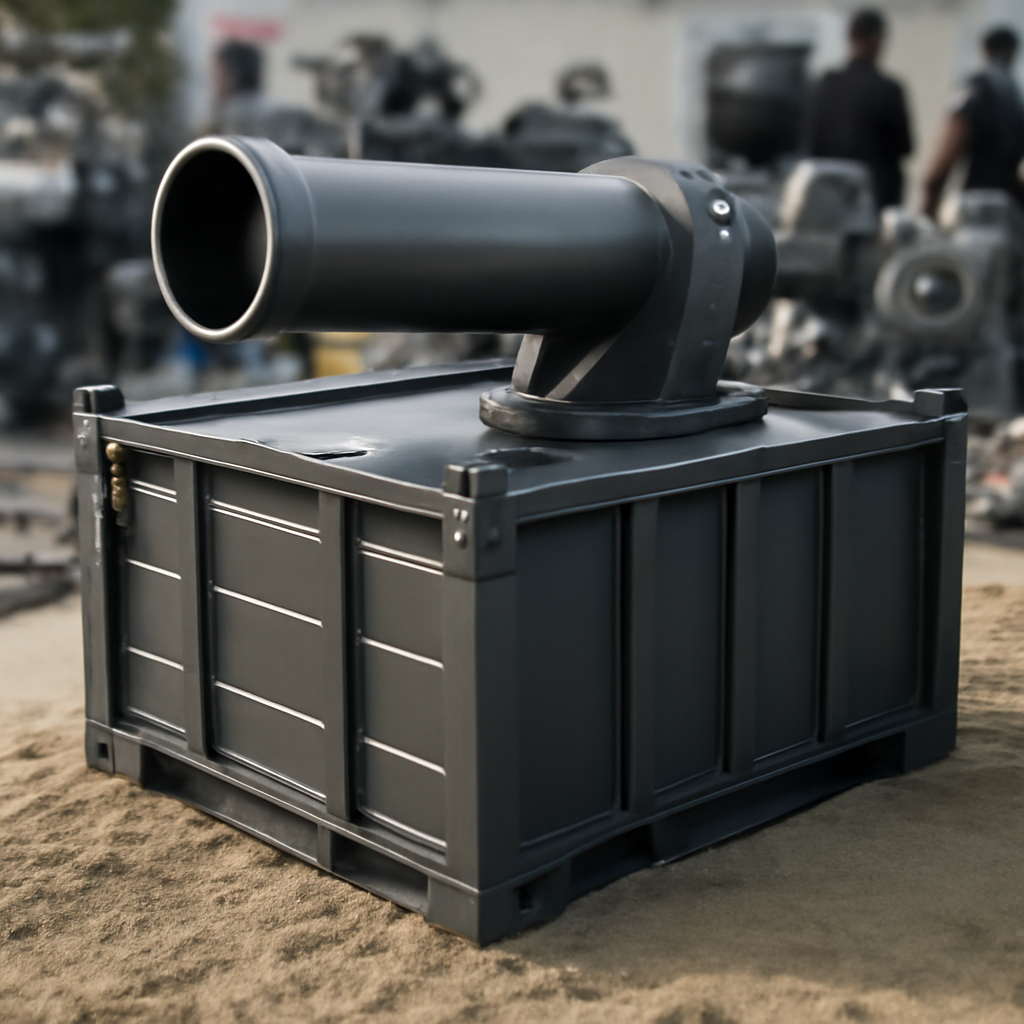
Budget documents reconstructed by Quwa describe a stationary, containerized system called Liberator designed to be emplaced on the ocean floor and to fire the Mk 48 ADCAP heavyweight torpedo and other payloads. The launcher is conceived as a leave-behind autonomous weapon for attacks on surface ships and submarines. The Navy declined to comment on the program and no contract values have been disclosed.
Designed to fit Orca’s 10‑metre multi‑purpose payload module
Liberator is sized to fit inside the Boeing Orca extra-large unmanned undersea vehicle’s (XLUUV) 10‑metre multi‑purpose payload module, identifying Orca as the intended delivery vehicle. Publicly discussed Orca payloads had previously focused on mine‑laying and survey tasks — notably the Hunter mining payload — but Liberator repurposes the XLUUV as a seabed munition emplacement platform rather than a direct strike vehicle.

This site is the portfolio.
OSINTSights runs on Cloudflare Workers, D1, R2, and Vectorize, with an AI pipeline on Hetzner ARM. Nubivance designed, built, and operates it. We do the same for clients.
See what we buildPayloads, variants and operational concept
Besides the Mk 48 ADCAP heavyweight torpedo, documents flag Mk 54 lightweight torpedoes, one‑way attack undersea vehicles and emerging torpedo variants as possible future loads for the launcher. The operational concept described in the documents frames an XLUUV emplacing heavyweight torpedo launchers in a contested strait as performing anti‑surface warfare by proxy: the vehicle places ordnance on the seabed weeks or months before it is needed, then withdraws before any shooting starts.
Program structure, timeline and acquisition steps
The program sits with the Program Executive Office for Unmanned and Small Combatants. Following a classified industry day held in October 2025, that office let competitive Other Transaction Authority prototype contracts during FY2026. Production and acquisition‑strategy decisions on Liberator are expected during FY2027, and an at‑sea demonstration is planned for late FY2027. The Navy’s silence and the lack of disclosed contract values are consistent with a system whose operational utility depends on adversaries not knowing where such systems are emplaced.
Hadalus, MARLIN/MALAMAN and AVISTA: parallel trends
- Hadalus: Full specifications were published in the same month, offering a 10‑metre undersea vehicle with 2,300 kg payload capacity, 2,000 nautical miles of endurance and a 3,000‑metre operating depth around a free‑flooded carbon‑fibre exoskeleton. Its prototype has completed at‑sea demonstrations with the U.S. Navy, including submerged launch, and its cost is claimed at between one‑third and one‑fifth that of comparable long‑endurance systems.
- MARLIN and MALAMAN (Türkiye): The Turkish Navy, Sefine Shipyard, Aselsan and partners completed trials in which the MARLIN unmanned surface vessel laid MALAMAN smart bottom mines in both remotely controlled and fully autonomous release modes. MALAMAN operates at depths between 5 and 100 metres using combined pressure, magnetic and acoustic sensing, and the weapon is also launchable from 533 mm torpedo tubes of Turkish submarines.
- AVISTA (HAVELSAN): At TEKNOFEST Mavi Vatan HAVELSAN unveiled AVISTA, a self‑funded project covering underwater positioning, three‑dimensional mapping and low‑signature autonomous operation. Sea trials were planned shortly after the unveiling, with operational readiness targeted for 2027.
What this means for systems integrators, procurement leaders, and regional navies
- Systems integrators and technologists will watch delivery‑vehicle interfaces closely: Liberator’s explicit fit to Orca’s 10‑metre module makes payload‑module standards, physical integration and launch sequencing immediate engineering priorities.
- Naval procurement offices and policymakers face schedule and secrecy tradeoffs: FY2027 decisions on production and an at‑sea demonstration late that year place a compressed timetable on evaluations, while the program’s classified nature limits public market signals such as contract values.
- Regional navies and operational planners must evaluate seabed emplacement as an operational concept: Liberator and parallel systems like MALAMAN shift effect to long‑dwell seabed layers and to uncrewed delivery paths that can include both surface and subsurface platforms.
Liberator, as reconstructed from budget filings, reframes extra‑large undersea vehicles from survey and mine‑laying platforms to forward seabed arsenals. The program’s next concrete milestones — prototype demonstrations under OTA contracts in FY2026 and an at‑sea demonstration with production decisions expected in FY2027 — will determine whether the concept moves from classified budgets to a fielded capability.
Source: Quwa — The US Navy Is Building a Seabed Torpedo Launcher Sized for Orca