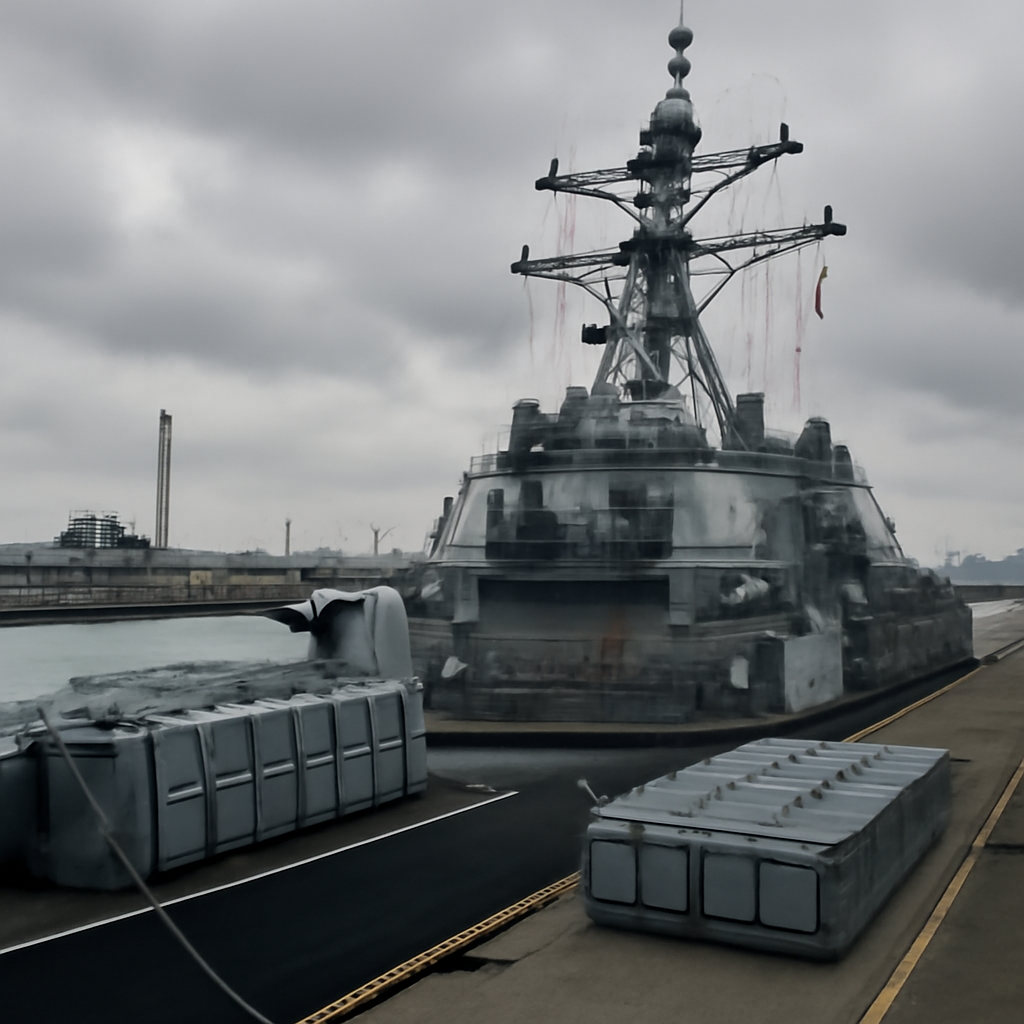
In April 2024, a Center for Strategic and International Studies (CSIS) report estimated that the US military had fired more than 1,000 Tomahawks — roughly 30 percent of its entire operational stockpile of approximately 3,100 — during recent operations against Iran.
Tomahawk delays that exposed a capability gap
That depletion is the proximate cause of a diplomatic and deterrence headache: Secretary of Defense Pete Hegseth notified Japanese Defense Minister Shinjiro Koizumi that deliveries of US-made Tomahawk cruise missiles to Japan — an acquisition of up to 400 missiles contracted between fiscal 2025 and 2027 — would be delayed, perhaps by as much as two years. The delay is not framed in the source as a routine procurement hiccup but as a symptom of a wider industrial shortfall: the US military is itself short of missiles needed both for operations and for fulfilling allied orders.
The stockpile crisis and two decades of neglect
The CSIS numbers illustrate a broader, long-running problem. The article traces the shortfall to more than two decades of neglect of the US munitions industrial base. It recalls that as early as 2007, a Joint Capabilities Mix study concluded the United States needed roughly twice as many SM-3 and THAAD interceptors just to meet minimum requirements identified by regional combatant commanders. Congress acknowledged the problem then — and, the author writes, set it aside. The pattern of recognition followed by inaction, sustained over nearly twenty years, has allowed the current shortfall to grow until operational uses in one theatre now create delivery shortfalls for partners in another.

Audit-ready is a season. It shouldn't be.
Evidence in spreadsheets, controls drifting between audits, frameworks multiplying on flat headcount. Nubivance runs continuous compliance on Rapid7 Cyber GRC - SOC 2, HIPAA, ISO 27001, PCI, CMMC.
End the scrambleTyphon deployments, Chinese response, and strategic signalling
Against this industrial backdrop, the decision to deploy Typhon mid‑range missile systems takes on heightened significance. The Typhon is described in the source as a land‑based launcher for SM‑6 and Tomahawk missiles. The United States has already deployed the system in the Philippines and is moving forward with deployment in Japan; the source also notes that an earlier planned Typhon deployment to Germany was cancelled by the Trump administration.
Beijing's public reaction was immediate. Chinese Foreign Ministry spokesperson Guo Jiakun urged Japan to “take a hard look at its history of aggression” and “act prudently in military and security areas.” The source interprets these comments as the standard mix of historical grievance and intimidation Beijing has used when US allies make security decisions China dislikes, and as evidence that the Typhon deployment “materially changes the military balance in a way that Beijing finds disadvantageous.”
Deterrence, inventory versus qualitative superiority, and arms‑control logic
The article argues that deploying cruise missiles — sea‑, air‑ and land‑based — is essential in a region where, the Pentagon reports, China maintains significant quantitative advantages in cruise and ballistic missile inventories. The US and its allies have relied on qualitative superiority and advanced defensive systems to offset that advantage; the author stresses that quality matters only if the missiles that embody it are actually available for deployment or sale to allies.
There is also a stated arms‑control logic: the source suggests China may be more willing to negotiate when faced with deployments by others that impose tangible strategic and economic costs, pointing to the Cold War path that led to the INF Treaty as a historical model. The Typhon deployment in Japan is presented as an “opening move” that raises the costs of the status quo and could create incentives for negotiated limitation — not as an endpoint but as the start of a longer sequence.
What this means for Japan, the Pentagon, and regional allies
- Japan (Japanese Defense Minister Shinjiro Koizumi): Faces delayed deliveries of up to 400 Tomahawk missiles contracted for fiscal 2025–2027, a concrete setback to planned force posture and deterrent capability.
- The Pentagon and Deputy Secretary of Defense Stephen Feinberg: Are described as “working seriously” to address the munitions industrial base gap, but the article asks whether the department can move fast enough and sustain long‑term investment to prevent repeat shortfalls.
- Regional allies and the Indo‑Pacific deterrence architecture: Stand to bear the cost of constrained US capacity; the credibility of US commitments is framed as dependent not only on strategic clarity but on “the material capacity to back those commitments with deliverable capability.”
The central yardstick in this account is material: strategic clarity and advanced systems mean little if the physical munitions are not available. The two‑year delay in Tomahawk deliveries to Japan, the CSIS estimate of one‑third of the US Tomahawk stockpile expended in a single theatre, and two decades of underinvestment together pose a stark choice. Unless the US fixes its munitions industrial base and expands co‑production with allies, the article concludes, constrained capacity will persist — and regional allies will continue to pay the price.