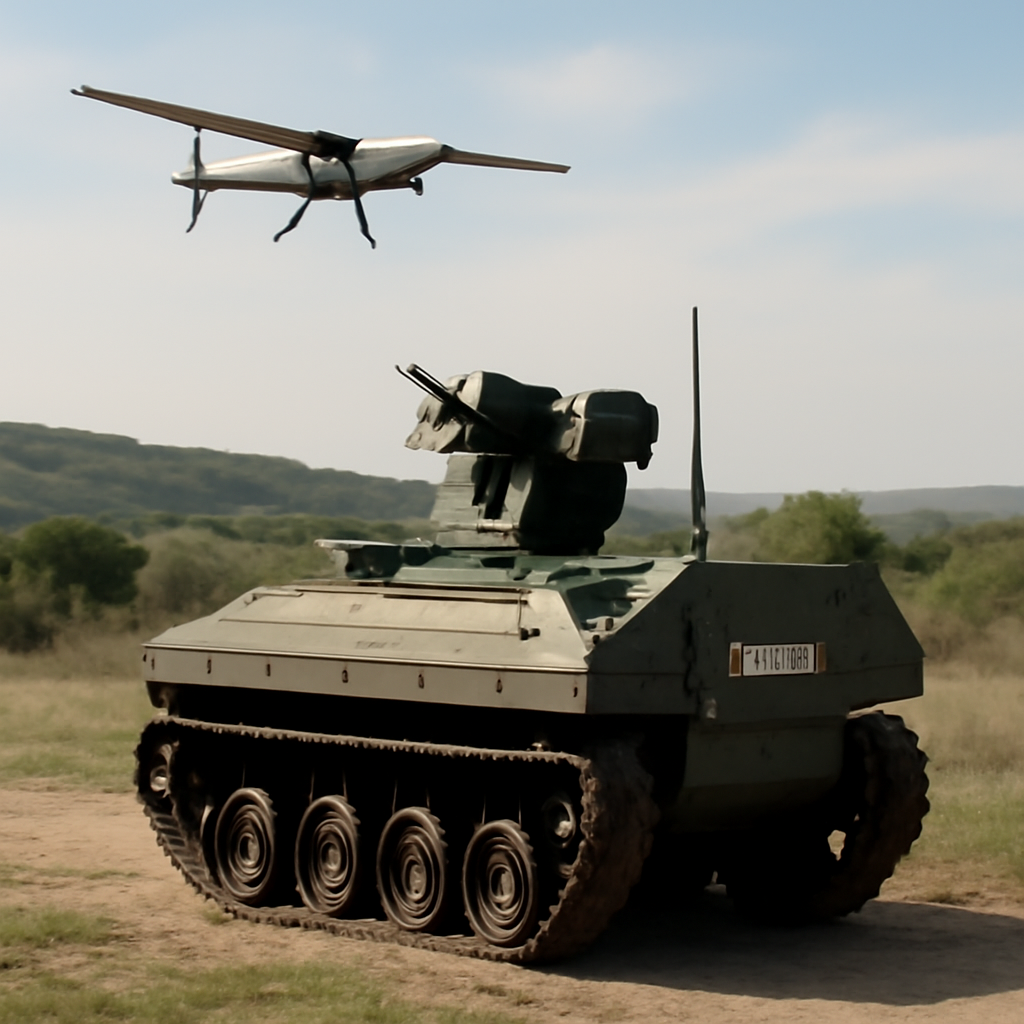
"I don't really care about platforms. I care about autonomous warfare, and are we really willing to take a step forward and embrace autonomous warfare," Gen. Frank Donovan told Defense One, laying out how he sees the Pentagon’s future fight and how he intends to bring it to the Western Hemisphere.
Gen. Frank Donovan’s framing of autonomous warfare
Donovan, recently moved from running the Defense Autonomous Warfare Group (DAWG) to commanding U.S. Southern Command (SOUTHCOM), described autonomy as a change in how warfare is organized rather than a portfolio of discrete platforms. He invoked the DAWG’s recent prominence — including a near-$50 billion request tied to the effort in the next fiscal year — to argue that the Pentagon must embrace autonomous warfare, not just individual robotic systems. Donovan said his focus is on synchronizing resources with true joint-force needs and warned of a “misconnect” between forward operational requirements and service acquisition paths.
SOUTHCOM Autonomous Warfare Command and the link to the DAWG
At SOUTHCOM Donovan is planning a SOUTHCOM Autonomous Warfare Command to close the gap he describes: to take joint autonomous requirements from the forward edge, refine them, and drive them back into DAWG and the services. He used an image of “the two Olympic rings” that don’t touch to describe how requirements and resources currently fail to align. Donovan said that, during DAWG’s short nine-month window, he worked under Gen. Bryan Fenton and Adm. Frank Bradley and for Deputy Defense Secretary Stephen Feinberg, whose control of resources created the authority needed to accelerate replication of promising systems into operations.

Audit-ready is a season. It shouldn't be.
Evidence in spreadsheets, controls drifting between audits, frameworks multiplying on flat headcount. Nubivance runs continuous compliance on Rapid7 Cyber GRC - SOC 2, HIPAA, ISO 27001, PCI, CMMC.
End the scrambleOperational data environment and open architecture
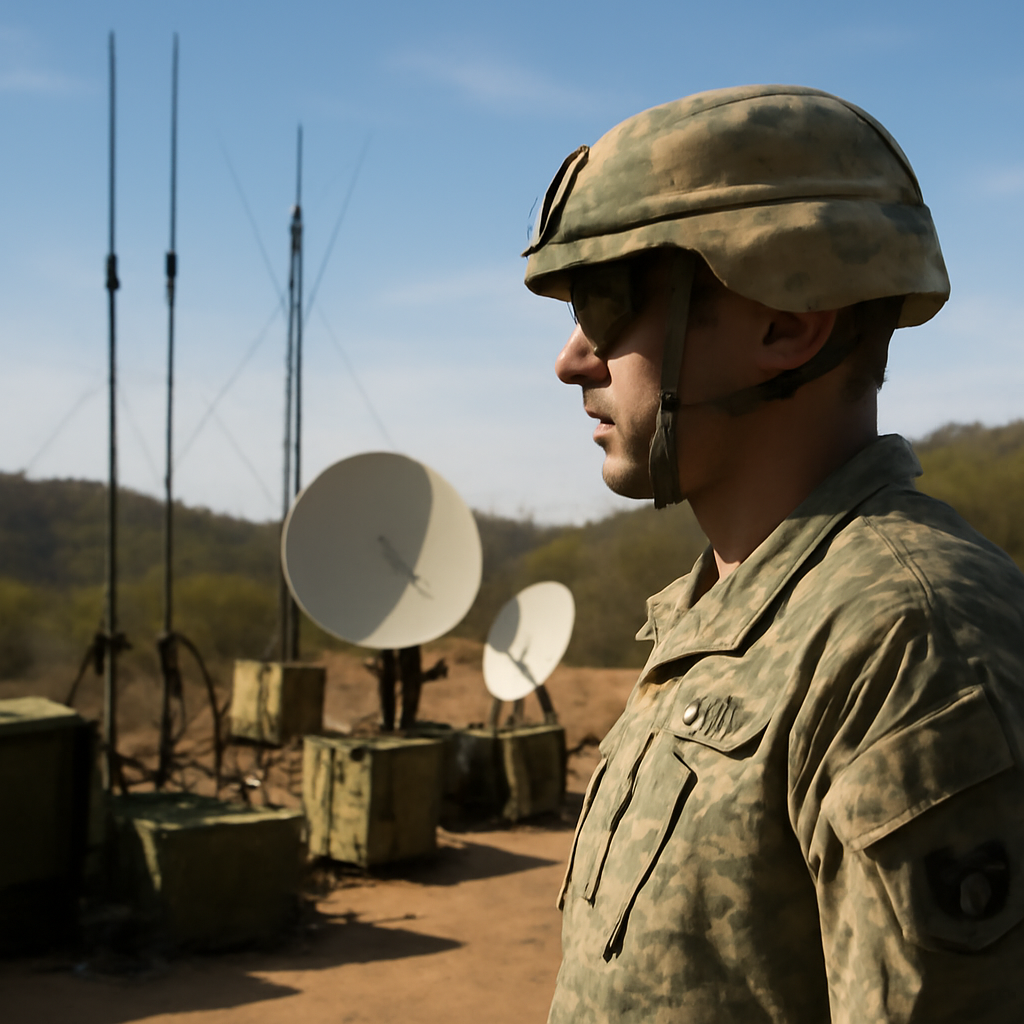
Donovan emphasized that autonomy hinges on data and networks more than on individual robots. He said SOUTHCOM’s priority is to “set the environment” — an operational data environment with layered data at the forward edge so special operations and conventional forces, using ATAK or a cell phone, can plug in and employ whatever robotic capability arrives. That environment must avoid vendor lock-in: “[It] is truly a fully capable system that we can use in selecting the needs,” he said.
On openness, Donovan reported progress from the vendor community but warned that two years ago “not at all” was the state of play. He urged leaders to provide “very clean” demand signals so industry knows what to build, and stressed that autonomy will require a rethinking of delegation and human control — particularly around lethal effects. On small one-way attack systems he said he is concerned about an overinfatuation with FPV and that he would “like to move away from FPV entirely,” noting anxieties about collateral damage and final approval authority.
Scaling small companies, acquisition experiments, and program trade-offs
Donovan described DAWG best practices for scaling: take operator needs from programs like Replicator (tranche one and two), bring companies and acquisition officials together, and downselect to firms that can scale and embrace open architecture. He said the DAWG slimmed down options “almost by a third” where companies couldn’t scale or meet openness requirements. Donovan described sprint development centers where “operators right next to vendors, right next to tech dev, and right next to the acquisition experts” rapidly iterated and then supported winners with cash to scale.
He also framed a strategic tension for the defense industrial base: one-way systems “ain’t coming back,” which changes lifecycle and contracting models because platforms designed for short operational lives create different incentives than long-lived, upgradeable systems. Donovan contrasted this with larger programs — asking whether traditional MQ-9-type ISR approaches remain appropriate in an era where proliferated, layered ISR and P-LEO concepts are rising.
What this means for small companies, commanders, and recruits
- Small companies and the defense industrial base: Expect DAWG-style downselects and sprint centers to favor firms that can demonstrate open architecture and credible scaling plans. Donovan said DAWG’s approach included offering financial backing to scale once a capability proved operationally useful.
- Commanders and warfighters (SOF, conventional, and partner forces): Donovan prioritized an operational data environment that lets a forward operator plug in a phone or ATAK client and access robotic assets without being locked into a vendor stack. He also warned that training and ranges today constrain realistic comms-denied and electronic-attack drills — citing mundane hurdles such as civilian roads triggering special approvals when ranges need to simulate contested movements.
- Recruiting and senior enlisted leaders: Donovan identified recruiting as his “biggest concern,” noting that less than 1% of Americans serve and emphasizing the need for digitally native recruits. He urged retention changes for senior enlisted ranks, proposing an immediate quadrupling of pay for E-7s through E-9s to keep experienced leaders at the apex of their careers.
Donovan’s message is operational and procedural rather than technological: build the data environment, demand open systems, change training to allow delegation under contested conditions, and align acquisition incentives to help promising small firms scale. He left clear tensions on the table — between one-way, consumable systems and long-lived platforms; between service acquisition authorities and joint operational needs; and between current personnel pay structures and the need to retain digital-native talent. How SOUTHCOM’s Autonomous Warfare Command links back into the DAWG — and whether the Pentagon will sustain the DAWG-style buy-in the commander described — will determine whether his “step forward” into autonomous warfare becomes a deployed change or an aspirational argument.
Read the original Defense One interview with Gen. Frank Donovan