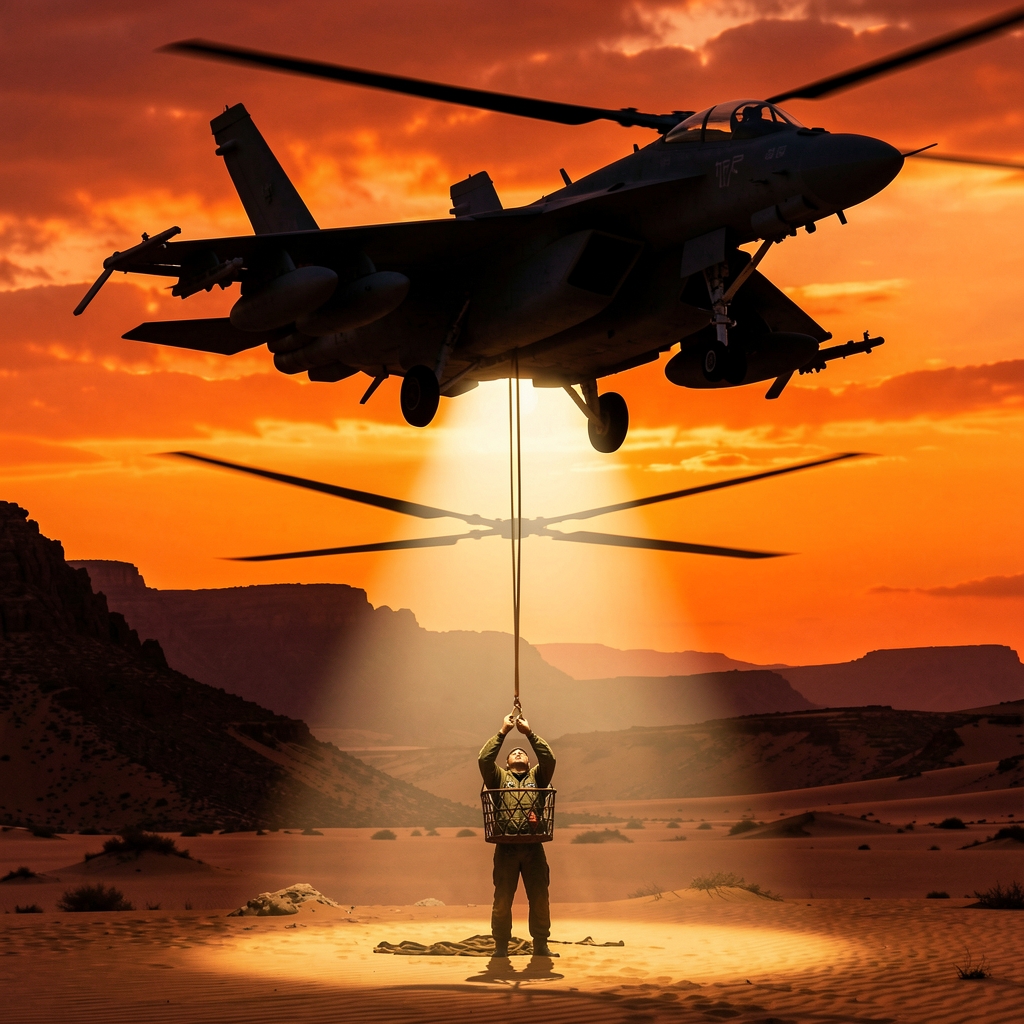
How do you extract a downed F-15E weapon systems officer from deep inside Iranian territory — quietly, quickly, and at great risk? That is the central question behind a newly detailed account that has emerged about a high-risk extraction effort. The War Zone reports that investigators and observers have "gotten many new details" about how the operation unfolded, and the story has been updated to reflect that reporting.
Background: an extraction, and fresh reporting
The War Zone has published an updated, detailed account of an operation to rescue an F-15E WSO that took place deep inside Iranian territory. According to that report, new information has become available that illuminates how the high-risk effort went down. The post, titled Everything We Now Know About The Operation To Rescue The F-15E WSO (Updated), appeared on The War Zone.
What the reporting says — and what it does not
The reporting makes clear two basic facts: that an F-15E WSO required extraction, and that the extraction occurred deep inside Iranian territory. Beyond that, The War Zone states that "many new details" about the effort have been revealed in its updated account. The published piece represents the current publicly available aggregation of those details.
At the same time, The War Zone's framing signals limits: the account is presented as an accumulation of new information rather than a definitive, final narrative. Where gaps remain in public reporting, the updated article reflects ongoing attempts to piece together how a complex, high-risk retrieval was planned and executed.

The cyber insurance questionnaire just landed. Now what?
SOC 2, HIPAA, insurance renewals - someone has to own security strategy. Nubivance provides fractional CISO leadership without the full-time salary.
Get a security leadWhy this reporting matters
- Operational transparency and public understanding: Detailed reporting about sensitive military operations shapes public understanding of how forces conduct risky recoveries far from friendly territory. When outlets such as The War Zone compile and update details, they contribute to a clearer, if still incomplete, public record.
- Risk assessment for planners and policymakers: Accounts that surface operational details—techniques used, challenges encountered, and outcomes—inform debates about acceptable risk levels for future missions and the trade-offs policymakers face when personnel are isolated in hostile environments.
- Technologists and logistics: Descriptions of an extraction operation can illuminate the interplay of aircraft capabilities, communications, intelligence, and logistics. Technologists and logisticians reviewing such reporting can better appreciate the operational constraints and the dependencies that matter most in contested environments.
- Adversary perception and messaging: Publicized details about a retrieval inside another nation's territory can influence how adversaries assess intent and capacity. Even the act of reporting that "many new details" exist can affect strategic signaling, whether by revealing perceived vulnerabilities or by demonstrating the reach and resolve of those involved.
Different perspectives on the updated account
For readers seeking objective clarity, The War Zone's updated article serves as a focal point: it aggregates new findings and updates earlier reporting. For analysts and policymakers, the primary value lies in teasing out implications from the assembled details—what the operation suggests about planning, rules of engagement, and contingency preparations.
For technologists and operators, the account invites technical questions about survivability, extraction methods, and the support systems required for personnel recovery in denied areas. For broader audiences, the narrative underscores the human dimension of military operations: that individuals can become the center of complex, high-stakes efforts to recover them.
Looking ahead
The War Zone's updated reporting represents the latest public step in reconstructing a risky extraction from inside Iranian territory to rescue an F-15E WSO. As the outlet itself signals by publishing an updated piece, such accounts evolve as new information emerges. Readers and analysts should expect further refinements and, potentially, additional disclosures that either corroborate or complicate today's understanding.
What remains clear from the current reporting is a set of enduring questions: how such operations are planned and authorized, how risk is balanced against the imperative to recover personnel, and how public disclosure shapes strategic perceptions. If "many new details" have now come to light, the next question is whether they will lead to broader lessons—or new controversies—about conducting personnel recovery in contested territory.
https://www.twz.com/news-features/everything-we-now-know-about-the-operation-to-rescue-the-f-15e-wso