"The B-2’s impressive performance underscores the U.S. military’s commitment to adaptability and flexibility in the face of emerging security challenges," said US Pacific Air Forces commander Gen. Kevin Schneider after a June demonstration that showcased new long-range, ship-sinking tools in the Pacific.
B-2 bomber and the LRASM: Valiant Shield, June 27
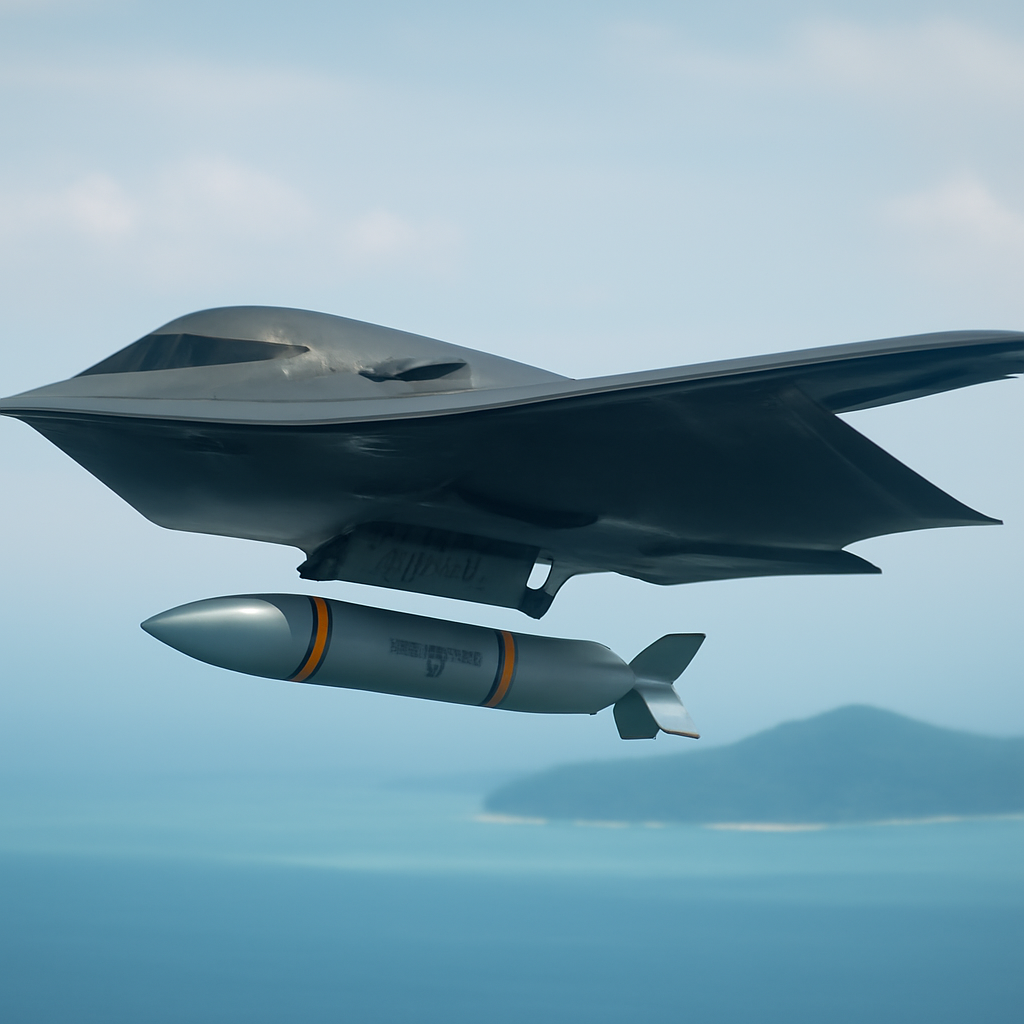
On June 27, north of the Mariana Islands, a US Air Force B-2 bomber launched an AGM-158C Long Range Anti-Ship Missile (LRASM) at the decommissioned amphibious transport dock Juneau during a sinking exercise (SINKEX) phase of Exercise Valiant Shield, according to a US military news release. The launch appears to be the first public release of an LRASM from a B-2, the only in-service stealth aircraft able to carry the weapon internally. The release emphasized that internal bomb bays preserve the bomber’s low radar cross-section and enable "stealthy, long-range anti-ship attacks" across the vast distances of the Pacific.
RIMPAC SINKEX: Mobile Bay, Peleliu, and mixed ordnance, July 17
At Rim of the Pacific (RIMPAC), held off Hawaii from June 24 to July 31 with participation from 30 nations, two decommissioned US ships were sunk on July 17. The cruiser Mobile Bay and the helicopter assault ship Peleliu were struck by a combination of submarine-launched torpedoes and missiles, including LRASMs, Spike Non-Line of Sight (NLOS) missiles, and Naval Strike Missiles (NSMs), the exercise reporting shows. Rear Adm. Suzanne Bailey, deputy commander of the US 3rd Fleet and commander of the RIMPAC Combined Exercise Control Group, described the exercise as "the ultimate test of our kill chain," stressing the requirement for allied forces to work together to detect, track, target, and strike a vessel with live ordnance.

Audit-ready is a season. It shouldn't be.
Evidence in spreadsheets, controls drifting between audits, frameworks multiplying on flat headcount. Nubivance runs continuous compliance on Rapid7 Cyber GRC - SOC 2, HIPAA, ISO 27001, PCI, CMMC.
End the scrambleUnmanned Surface Vessels: GARC, USV Division 32, and live-fire debut
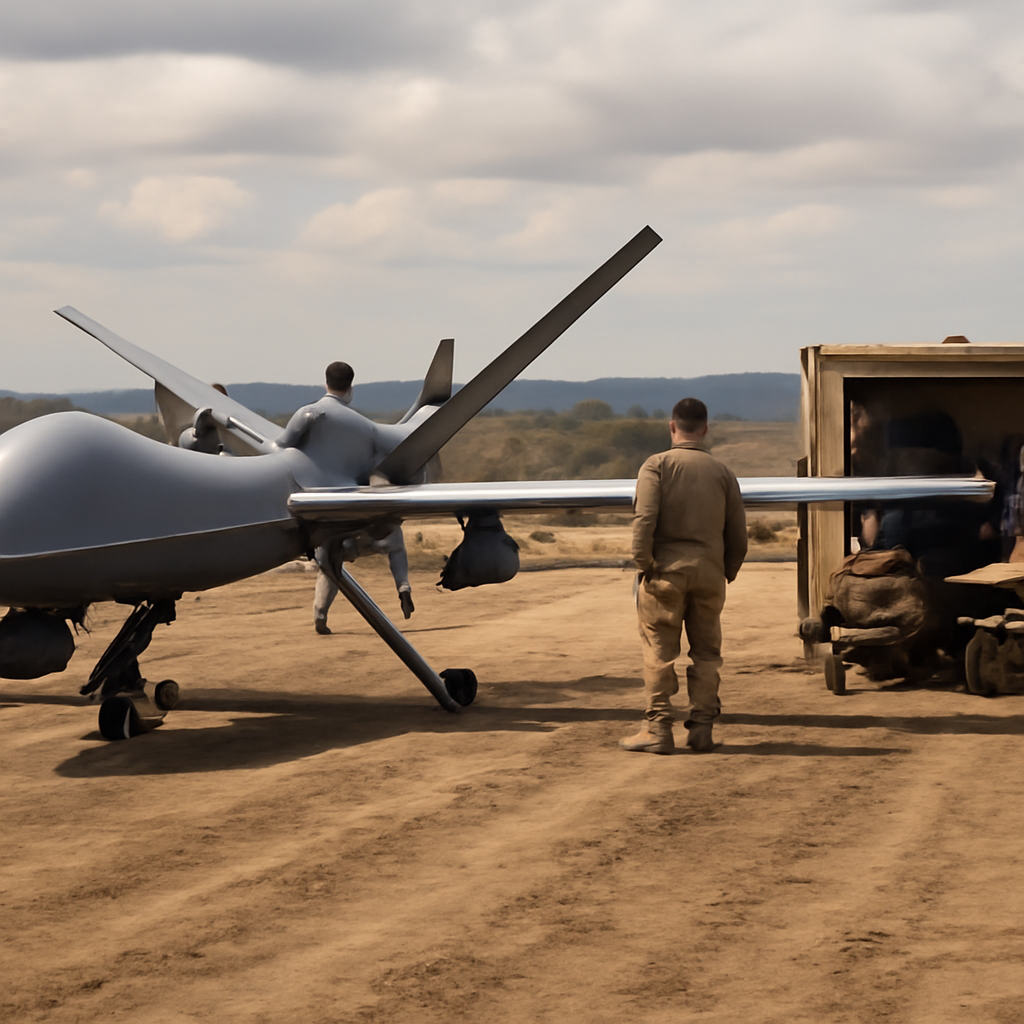
RIMPAC also included the first recorded live-fire use of a Global Autonomous Reconnaissance Craft (GARC) USV, according to an officer involved and Pentagon video released after the exercise. The video showed at least one USV surveying the badly damaged Peleliu before ramming the target; the Pentagon caption did not identify the model. Lt. Sarah Weinstein, commanding officer of USV Division 32, later identified the craft as a GARC built by Baltimore-based BlackSea Technologies in a social media post, writing that USVDIV-32 had executed the Navy’s "first GARC Live Fire during RIMPAC 2026." USV Division 32 is one of three USV divisions established in January and is tasked with operating and sustaining USVs.
The public account also notes that the US Navy has previously used USVs in combat: three Saronic Corsairs struck a small Iranian submarine undergoing maintenance at Bandar Abbas on July 13, demonstrating that unmanned surface platforms are already in operational use.
Multinational, multi-domain practice of the "kill chain"
Both Valiant Shield and RIMPAC emphasized integrated, multi-domain operations. A Navy news release on Valiant Shield highlighted training with Japan, Canada, New Zealand and Australia to build "real-world proficiency in sustaining joint forces through detecting, locating, tracking, and engaging units at sea, in the air, in space, on land, and in cyberspace." Bailey’s description of the SINKEX at RIMPAC as a complex, multi-domain effort that offers "the most realistic training possible" underscores that these events were designed to exercise the full detection-to-engagement sequence across platforms and services.
What this means for navies, BlackSea Technologies, and policymakers
- Naval forces and allied planners: The exercises demonstrated integration of stealth-enabled, long-range strike (LRASM from a B-2) with torpedoes, NSMs, and USVs in coordinated SINKEX scenarios; naval planners will have a public record of combined tactics for multi-domain target prosecution to evaluate and refine.
- BlackSea Technologies and procurement officers: The identification of a GARC built by Baltimore-based BlackSea Technologies and its use by USV Division 32 in a live-fire role will focus attention on unmanned surface craft capability, sustainment, and the operational role of newly formed USV divisions.
- Policymakers and regional security officials: The visible use of long-range, stealth-penetrating munitions and autonomous surface systems in multinational exercises will inform discussions about interoperability, rules of engagement for live ordnance training, and how allied forces manage multi-domain kill chains.
These summer exercises left the public record with two clear operational "firsts": the first publicly reported LRASM launch from a B-2 and the Navy’s first recorded GARC live fire during RIMPAC 2026. Together, the events visually and technically tied stealth-enabled, long-range strike, legacy naval firepower, and unmanned surface platforms into a single SINKEX playbook — a development the exercises’ organizers presented as a test of allied detection, targeting, and strike coordination. Whether these demonstrations translate into sustained changes in deployment patterns, procurement, or doctrine will now be an operational question for the participating navies and their planners.
Source: Breaking Defense — US flexes new ship-sinking weapons at summer naval exercises