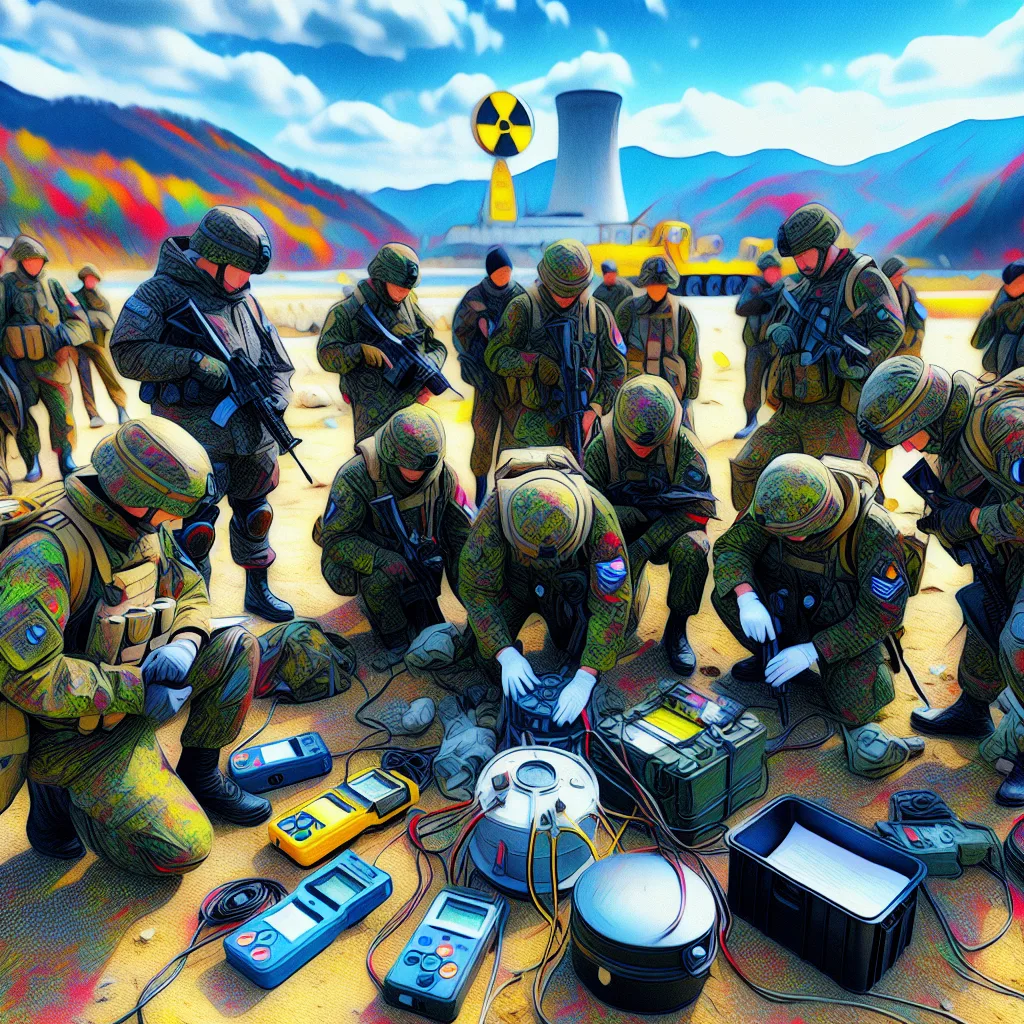
US Military Conducts Historic Nuclear Response Training in South Korea
In a significant development for regional security, the United States military has conducted its inaugural nuclear response training in South Korea, marking a pivotal moment in the ongoing collaboration between US Forces Korea (USFK) and the South Korean military. This training, held on April 15-16 at South Korea’s Strategic Command, underscores the heightened focus on nuclear preparedness amid escalating tensions in the region. As North Korea continues to advance its nuclear capabilities, the question arises: how prepared are the allies to respond to a potential nuclear threat?
The training session involved personnel from both the US and South Korean armed forces, emphasizing a joint commitment to nuclear deterrence and crisis management. According to USFK reports, the exercise was designed to enhance the readiness of both nations in the event of a nuclear incident, whether through an attack or an accident. This collaborative effort reflects a broader strategy to bolster defense mechanisms in a region that has seen increasing military provocations.
Historically, the Korean Peninsula has been a flashpoint for military tensions, particularly since the Korean War in the early 1950s. The armistice that ended active hostilities did not result in a formal peace treaty, leaving North and South Korea technically still at war. Over the decades, North Korea has developed its nuclear arsenal, conducting multiple tests that have drawn international condemnation and heightened fears of a potential conflict. In response, the United States has maintained a military presence in South Korea, with approximately 28,500 troops stationed there as a deterrent against aggression.
Currently, the geopolitical landscape is fraught with uncertainty. North Korea’s recent missile tests and aggressive rhetoric have prompted the US and South Korea to reassess their defense strategies. The nuclear response training is a direct response to these provocations, aiming to ensure that both nations are equipped to handle a range of scenarios involving nuclear weapons. The training included simulations of nuclear weapon effects, crisis management protocols, and coordination between US and South Korean forces.
Why does this matter? The implications of this training extend beyond mere military preparedness. It signals a commitment to collective security in the face of a shared threat, reinforcing the US-South Korea alliance. Furthermore, it serves as a deterrent to North Korea, demonstrating that the allies are not only prepared to respond but are actively enhancing their capabilities. This could influence North Korea’s strategic calculations, potentially leading to a recalibration of its aggressive posturing.
Experts in military strategy emphasize the importance of such training exercises. According to Dr. Bruce Bennett, a senior defense analyst at the RAND Corporation, “Joint exercises like this are crucial for ensuring that both US and South Korean forces can operate seamlessly in a crisis. They build trust and improve communication, which are vital in high-stakes situations.” This perspective highlights the necessity of preparedness in an unpredictable environment.
Looking ahead, the outcomes of this training could have far-reaching effects on regional dynamics. Observers should watch for potential shifts in North Korea’s military strategy, as well as responses from China and Russia, both of whom have vested interests in the stability of the Korean Peninsula. Additionally, the US and South Korea may increase the frequency of such exercises, further solidifying their military partnership.
In conclusion, the inaugural nuclear response training in South Korea is not just a military exercise; it is a statement of resolve and unity in the face of adversity. As tensions continue to simmer, one must ponder: how far are nations willing to go to ensure peace, and what risks are they prepared to take in the pursuit of security?



