“LUCAS, indispensable,” Adm. Brad Cooper told reporters when asked how the kamikaze drones had performed — a terse endorsement that now coincides with a major new upgrade to the system.
Shield AI’s Hivemind selected to add swarming to LUCAS
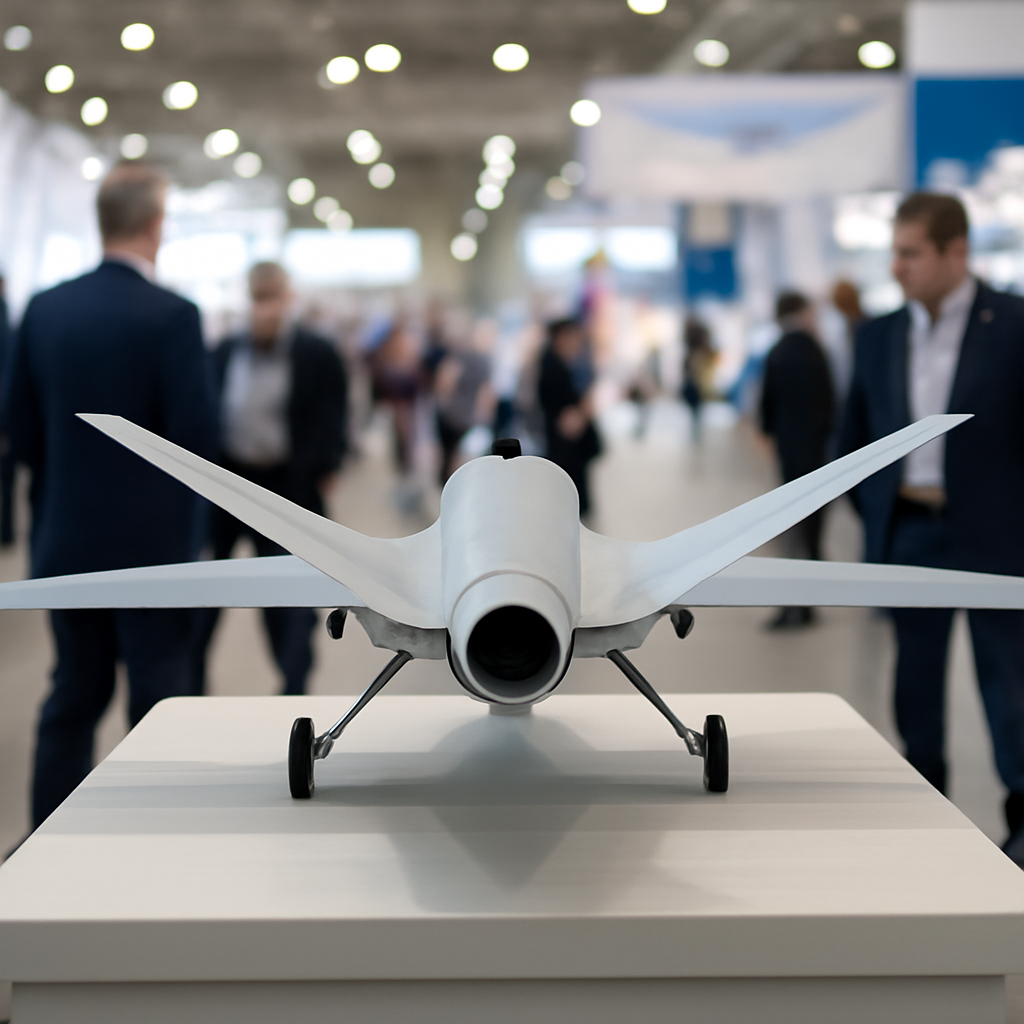
The Office of the Under Secretary of War for Research and Engineering (OUSW R&E) chose Shield AI to integrate its Hivemind autonomy software into the Low-Cost Uncrewed Combat Attack System (LUCAS). LUCAS, built by SpektreWorks and developed under the Office of the Deputy Assistant Secretary of War for Prototyping and Experimentation, is a long-range, one-way attack drone intended to field “affordable mass” in coordinated waves. Each LUCAS drone costs around $35,000, a fraction of the price of available missiles with similar range.
What Hivemind will do on LUCAS
Under the plan, Hivemind will function as an AI “pilot” that enables groups of LUCAS drones to coordinate movements, maneuver collaboratively, and adapt to changing battlefield conditions in real time. Shield AI says Hivemind allows a single operator to monitor and direct multiple platforms simultaneously, while autonomy handles navigation, coordination, and mission execution. Human operators retain authority over strike decisions and can override or redirect the swarm at any time, consistent with the policy that “the moral decision behind the use of lethal force is always made by a human,” Brandon Tseng, Shield AI’s president and co‑founder, said.

Audit-ready is a season. It shouldn't be.
Evidence in spreadsheets, controls drifting between audits, frameworks multiplying on flat headcount. Nubivance runs continuous compliance on Rapid7 Cyber GRC - SOC 2, HIPAA, ISO 27001, PCI, CMMC.
End the scrambleHow the autonomy is described and where it’s already been used
Tsold by Shield AI as analogous to the systems behind self-driving cars, Hivemind uses onboard sensors and GPUs to perceive environments and make mission-level decisions. The company says it has integrated AI pilots for 28 different platforms, including Anduril’s YFQ-44A under the U.S. Air Force’s Collaborative Combat Aircraft program, the U.S. Navy BQM-177 test aircraft, the Airbus UH-72B Lakota helicopter, and the Destinus Hornet platform. Tseng also described sustained work in Ukraine: Shield AI has been “shipping hundreds of AI pilots for one-way attack drones into Ukraine,” and in that conflict the company reports the autonomy has increased kill probability and reduced timelines and cost per effect.
Combat pedigree, communications, and planned testing
LUCAS is based on the Iranian Shahed-136 design; the original Shahed has been a signature weapon in the war in Ukraine and has a range in excess of 1,000 miles. LUCAS is smaller, with a range “around half that distance.” The program’s combat debut came in Operation Epic Fury, the U.S. part of the joint U.S.-Israeli attack on Iran that began on February 28, when “a large number of” LUCAS drones were fired against Iranian targets.
Some LUCAS drones already include miniature SATCOM terminals, which Shield AI and the program’s backers say are significant because they enable beyond-line-of-sight command — a prerequisite for keeping a human “in the loop” over long ranges. Shield AI plans initial flight tests of Hivemind-equipped LUCAS before an operational demonstration this fall in which a single operator will direct a swarm; Tseng said the company hopes to start flight testing in July. He also stressed that the final decision on fielding AI-equipped LUCAS drones “rests with the customer” and that he would not disclose government fielding timelines.
What this means for the U.S. military, Shield AI, and Ukraine
- U.S. military — If Hivemind works as intended, officials expect swarming to turn LUCAS from a cheap, massed expendable into a coordinated force multiplier: increasing probability of kill, lowering cost per effect, and enabling missions to continue despite jamming or lost datalinks.
- Shield AI — The company is leveraging operational experience and supply lines established in Ukraine, where it reports rapid integration timelines (eight weeks to field an AI pilot on one platform) and hundreds of shipped AI pilots for one-way attack drones.
- Ukraine — Shield AI’s work in Ukraine serves as both an operational proving ground and a technical reference point; the company cites increased effectiveness there — for smaller one-way attack drones with a range of about 62 miles and an $8,000 overall price, where the AI pilot costs roughly $1,000 — as informing the LUCAS effort.
Putting an AI pilot into LUCAS is a deliberate attempt to move beyond raw numbers toward coordinated mass. If flight testing in July and a single-operator demonstration this fall proceed as planned, the program will provide a concrete test of whether autonomy can preserve human control while making massed attack drones more effective in GPS- or communications-denied environments — a claim Shield AI has tied directly to its recent operational experience.