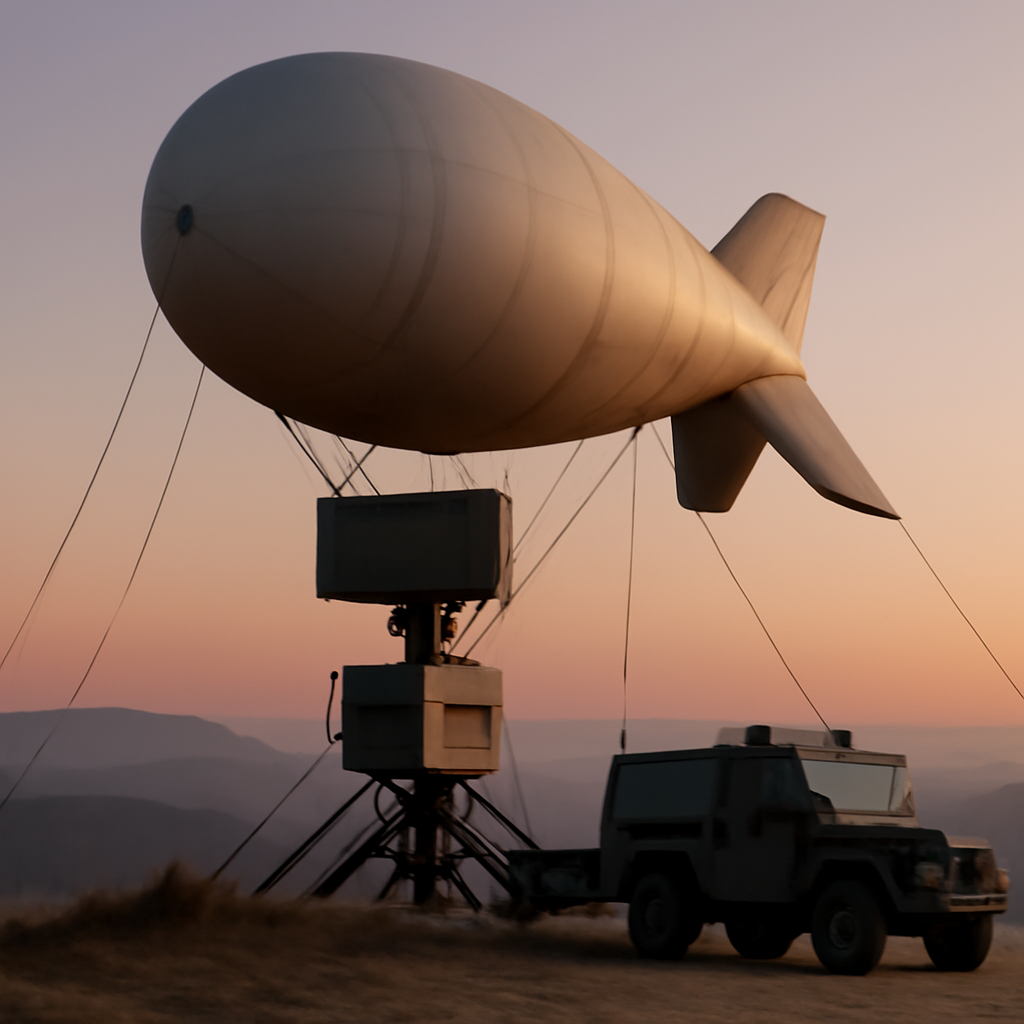
On 7 July 2026, ASELSAN detailed the GÖKBAĞI system, presenting it as a Near-Orbit Satellites and Military 5G/6G Communication System designed to tie a low-Earth orbit (LEO) satellite network to a dedicated military 5G/6G core.
ASELSAN’s stated scope and headline capabilities
ASELSAN describes GÖKBAĞI as a combined space and terrestrial architecture whose prime attributes are “secure and encrypted communications, high data capacity, uninterrupted connectivity while on the move, and high resilience in electronic warfare (EW) conditions.” The company is the prime contractor and says its remit stretches from the space segment through the ground segment, including advanced satellite control centres and the military 5G layer.
ASELSAN frames the project’s value proposition as control over military communications: a national LEO constellation paired with a military 5G/6G core intended to provide a communications backbone that external suppliers could not switch off in a crisis. The firm says the design will allow every element of the Turkish Armed Forces (TSK) — and, in principle, allied and partner units operating alongside them — to share one secure network at the tactical level.
How GÖKBAĞI is positioned relative to satellite telephony
ASELSAN emphasizes that embedding a military 5G/6G core separates GÖKBAĞI from a satellite-telephony service. Rather than merely carrying voice traffic, the system is described as pushing “high-bandwidth, low-latency networking down to units in the field,” with the orbital layer used to transport that traffic beyond the reach of fixed infrastructure. The company also stresses EW resilience as central to the design on the assumption that high-intensity conflict will be “contested hard in the electromagnetic spectrum,” where commercial or foreign-controlled links may be vulnerable.

Audit-ready is a season. It shouldn't be.
Evidence in spreadsheets, controls drifting between audits, frameworks multiplying on flat headcount. Nubivance runs continuous compliance on Rapid7 Cyber GRC - SOC 2, HIPAA, ISO 27001, PCI, CMMC.
End the scrambleGÖKBAĞI amid a crowded Turkish space sector
GÖKBAĞI arrives into a domestic market already active with several state and private projects. TÜBİTAK operates the GÖKTÜRK-1, GÖKTÜRK-2 and İMECE observation satellites in low orbit; Türkiye placed its first indigenous communications satellite, TÜRKSAT-6A, in orbit in 2024. Plan-S, Türkiye’s first private LEO operator, runs 16 satellites in its Connecta network and is aiming for 200. ASELSAN itself is expanding its LUNA Internet-of-Things line, with LUNA-2 launched aboard a SpaceX vehicle in March 2026. Separately, Baykar’s Fergani Uzay unit is building toward a roughly 100-satellite constellation on a Starlink-like model.
How, or whether, these parallel efforts will dovetail — and whether they point toward a future Turkish global navigation satellite system (GNSS) — has not been spelled out by Ankara.
Contract status, capability gaps, and technical unknowns
GÖKBAĞI is a contract and a capability brief rather than an operational system. The program first surfaced publicly on 1 February 2026 at Türkiye’s 5th Global Strategies in Defence and Aviation Industry Conference; the underlying contract was signed at the SAHA 2026 exhibition earlier this year, and ASELSAN held the contract’s opening meeting at its Macunköy Technology Base. The 7 July disclosure filled in aspects of the capability picture rather than announcing a fresh award.
Critical technical and programme details remain undisclosed: ASELSAN has not provided the planned constellation size, the specific orbit, a budget, or a fielding date. The source notes that standing up and sustaining a military LEO network “is a demanding task that Türkiye has not attempted at this scale before,” underscoring the gap between stated intent and an operational timetable or specification set.
What this means for the Turkish Armed Forces, ASELSAN, and foreign suppliers
- The Turkish Armed Forces (TSK): If delivered as described, GÖKBAĞI aims to provide a sovereign, resilient communications backbone able to extend secure, low-latency networking to tactical units even where terrestrial infrastructure is degraded or absent.
- ASELSAN: The company has been named prime contractor with responsibilities across space and ground segments; the 7 July brief establishes intent and scope but leaves the technical architecture and schedule as the next milestones to define programme risk and resource needs.
- Foreign suppliers and commercial operators: Turkish coverage positions the programme explicitly as a route to reduce dependence on foreign systems and remove an external “off-switch” in crisis conditions, framing future procurement and partnerships through a sovereignty lens.
What the 7 July reveal confirms is intent: Ankara wants a sovereign military communications layer in orbit and has named the prime contractor meant to build it. The specifications and the schedule are the concrete items to watch next; until ASELSAN publishes constellation plans, budgets and fielding dates, GÖKBAĞI remains an asserted architecture rather than a demonstrated capability.