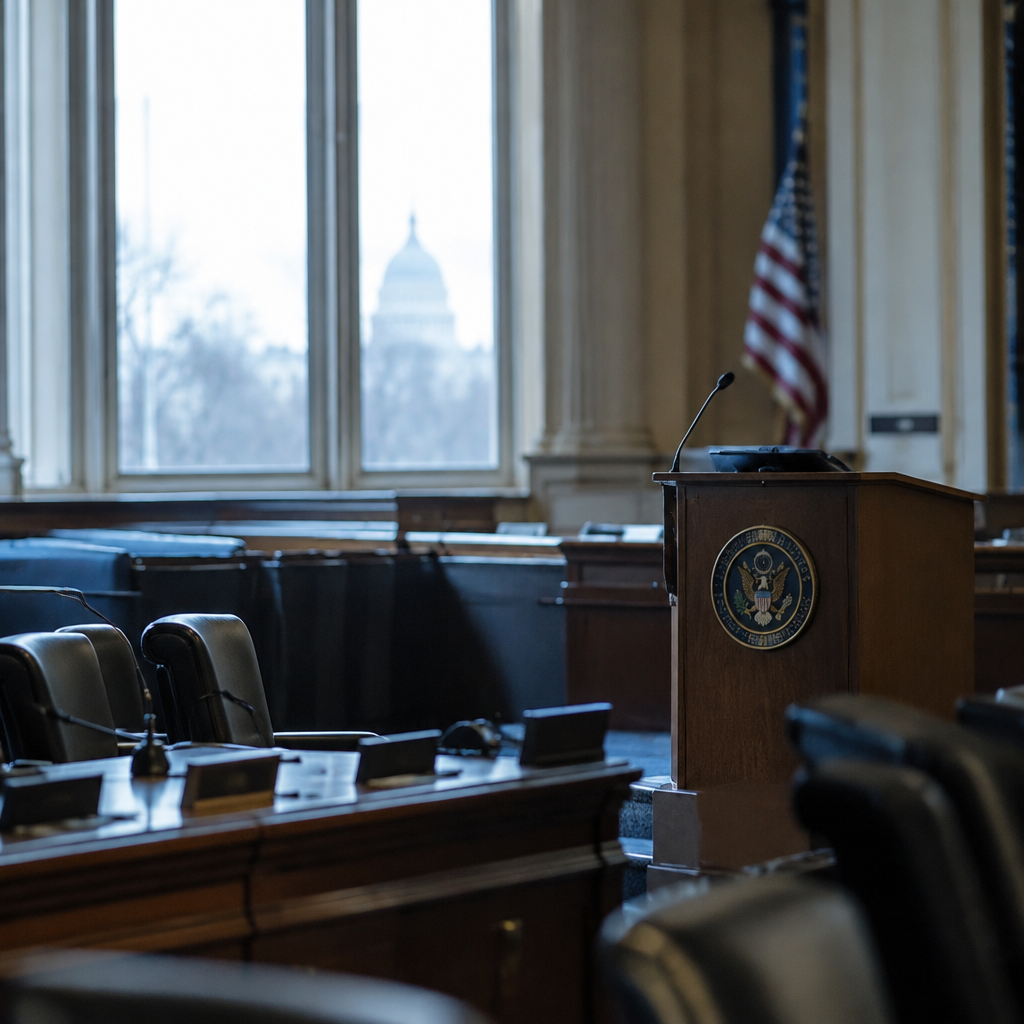
“On Tuesday, about three in four American voters told exit pollsters the Iran war was a crucial or major factor in their vote, and six in 10 called the war the wrong decision.”
What Tuesday's returns concretely show
The midterms left a clear electoral footprint: Democrats are poised to hold the most House seats they have had since 1993 and at least 54 seats in the Senate. Exit polling singled the Iran war out as central to voters’ decisions, and much commentary treated the vote as a public rebuke of that conflict. Ben Rhodes called the result “a rebuke of the war” and urged his party to become “the anti-war party.” Joel Pollak framed the returns differently, listing administration achievements and arguing voters punished diesel prices. John Hulsman reduced the outcome to a simpler logic: “a war of choice had caused an energy shock, and voters had punished Republicans for it.” The article presents all three interpretations as plausible readings of voter intent — and stresses that none dictates Washington’s next moves.
Two binary unknowns that will decide Indo‑Pacific policy
The piece identifies two clear binary uncertainties that together produce four possible policy configurations for US engagement in the Indo‑Pacific. First: what the president does about Beijing. The article frames two divergent presidential paths — a deal with Xi Jinping, trading tariff relief and softer public positions on Taiwan for summits and Chinese purchases of US goods; or an economic and diplomatic fight with China that would risk raising fuel prices. The president’s previous responses to setbacks and his stated priorities leave both approaches on the table.
Second: which wing of the Democratic caucus will prevail on how much the United States should pay for security abroad. The hawks — anchored by long‑serving senators from armed services and foreign relations committees — press for more Indo‑Pacific funding, firmer statutory backing for Taiwan arms sales, and protections in an AUKUS submarine deal against executive repricing. The restrainers seek spending at home and fewer commitments overseas, with Alexandria Ocasio‑Cortez named as a prominent House voice. The article notes an unusual concurrence: on reducing overseas burdens the restrainers and some Republicans (it cites JD Vance as aligned on that point) look similar.

Audit-ready is a season. It shouldn't be.
Evidence in spreadsheets, controls drifting between audits, frameworks multiplying on flat headcount. Nubivance runs continuous compliance on Rapid7 Cyber GRC - SOC 2, HIPAA, ISO 27001, PCI, CMMC.
End the scrambleThe four Washingtons and regional fallout
- Trump–Xi deal + Democratic hawks ascendant: A White House bargaining with Beijing, while Congress attempts to fence in the executive with law and money. Allies will receive mixed signals, Canberra would pivot more to Capitol Hill than the White House, Beijing would probe Southeast Asia and the Pacific islands, and American standing would erode slowly.
- Trump–Xi deal + Democratic restrainers ascendant: Regional posture is starved of support as congressional hearings consume the majority’s attention. Japan, the Philippines and Taiwan would hedge openly; Australia would face questions about continuing to pay into a submarine program a transactional Washington might re‑price.
- Combative Trump + Democratic hawks ascendant: Increased spending in Guam, northern Australia and the Pacific islands, accompanied by envoys asking Canberra for commitments on Taiwan that Australia has avoided making.
- Combative Trump + Democratic restrainers ascendant: Tough rhetoric without the funding to back it; allies see the capability gap before Washington does, creating a temptation for Beijing to test that space.
What this means for Australia, Japan, and Taiwan
Australia will face immediate, practical questions about partnering with Washington under each scenario: whether to press the White House or to work Capitol Hill harder; whether to continue a costly submarine program that a transactional Washington could re‑price; and whether it would receive direct requests for commitments on Taiwan. Japan, the Philippines and Taiwan are predicted to hedge more openly if Washington’s posture is underfunded or inconsistent. Across the board, the article argues, allies will be sensitive to mixed signals — whether from bargaining with Beijing or from congressional rhetoric without matching resources.
Three concrete signposts to watch
The article offers three telltale events that will reveal which Washington is taking shape: whether a summit with Xi Jinping occurs before or after the new Congress sits in January; how the first defence budget vote inside the Democratic caucus breaks; and what newly empowered committee chairs say first about Australia’s promised submarines. Those moments, the piece argues, will show whether the White House moves toward a transactional deal with Beijing or toward confrontation, and whether congressional funding and law will buttress or hollow out the US posture in the Indo‑Pacific.
Tuesday’s returns changed the arithmetic in Washington, but the article’s central claim is stark: the midterms did not prescribe policy in the Pacific — two binary choices will. Which president chooses which China strategy, and which Democratic wing controls budget and lawmaking energy, will together determine whether allies see a funded, fenced‑in US posture, a transactional bargain, or tough talk without the means to back it.