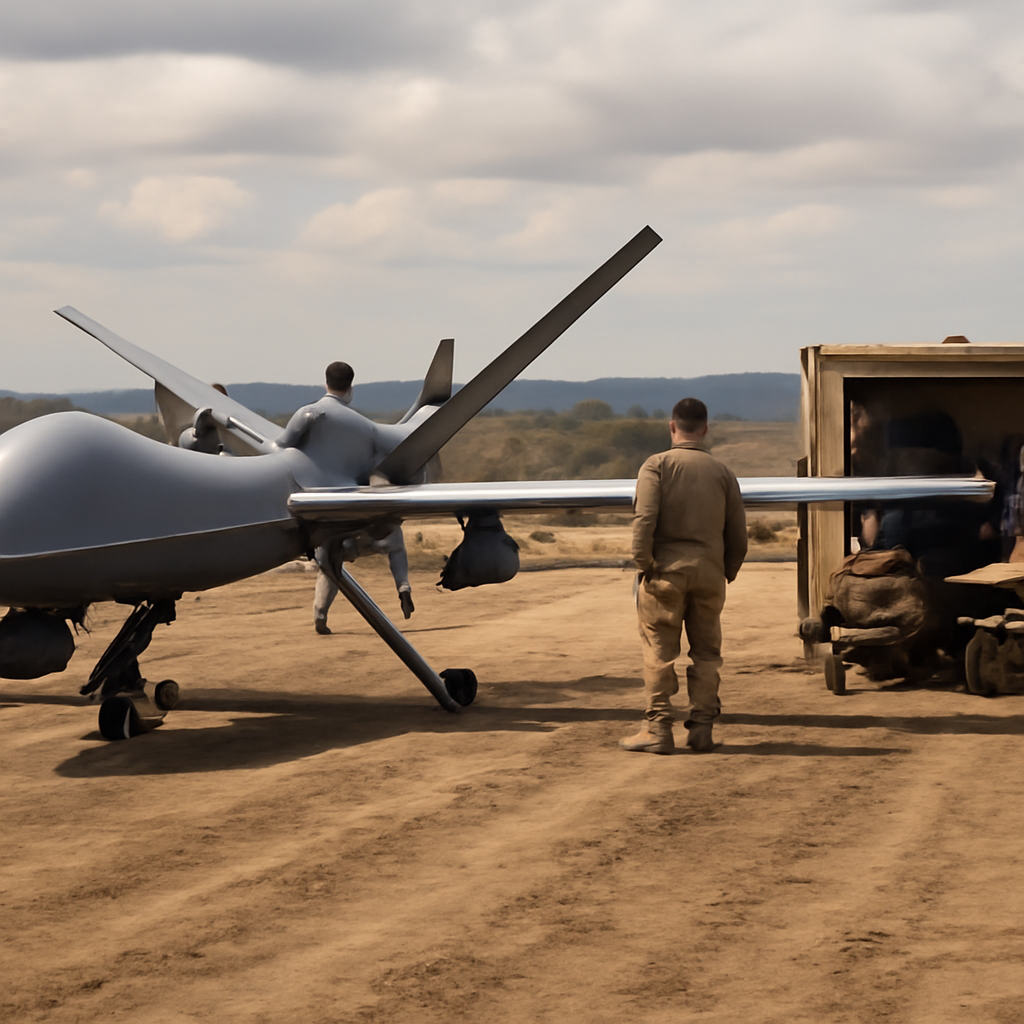
"The ability for our lowest echelon units – squad, platoon, company – to defend themselves against one-way attack systems is really maybe one of the biggest holes in our swing," Lt. Gen. Jay M. Bargeron said during a media roundtable introducing the U.S. Marine Corps' Ground Combat Element (GCE) 2040.
GCE 2040: a doctrine built around the ubiquity of drones
GCE 2040 presents a vision of future ground combat that centers on the consequences of ubiquitous sensors, AI/ML-enabled systems, waves of expendable drones, electronic warfare, and long-range precision fires. The document—unveiled by the Marine Corps in a roundtable that TWZ attended virtually—does not single out a named adversary, but repeatedly frames the problem in terms of littoral, anti-access fights that the Marines expect to face against peer-level adversaries.
Organic Counter-small UAS (O-CsUAS) kits, frangible rounds, and passive measures
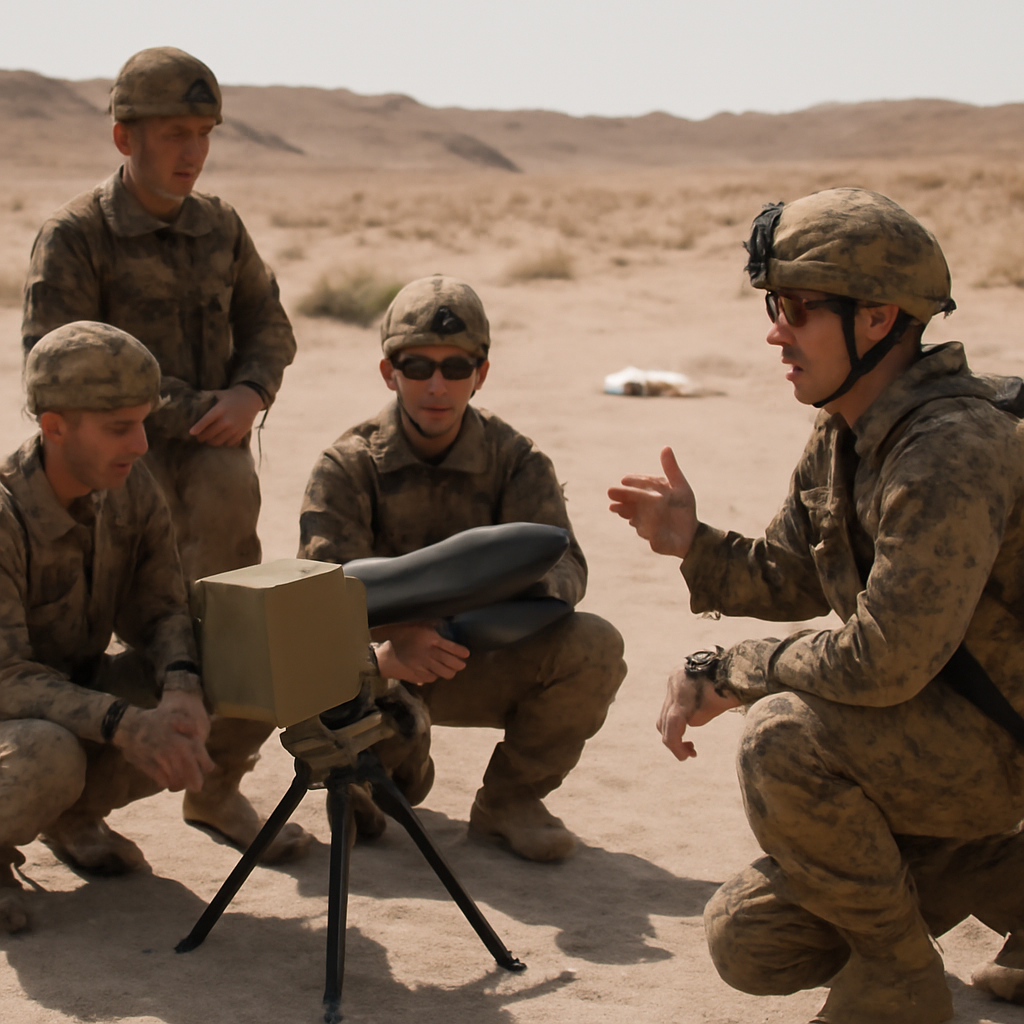
To push protection down to squads, GCE 2040 integrates active and passive measures. A Marine official told TWZ that the Organic Counter-small UAS, or O-CsUAS, initiative has already fielded dismounted kits to squads. Those kits enable Marines to detect and defeat drone threats with both kinetic and non-kinetic means, the official said.
Complementing those kits are changes to ammunition and tactics: the Corps has purchased 400,000 frangible 5.56 rounds designed to be more effective against aerial targets and is training Marines on their use. Passive countermeasures—multi-spectral camouflage, dispersion, and displacement—are also emphasized to degrade enemy targeting.

Audit-ready is a season. It shouldn't be.
Evidence in spreadsheets, controls drifting between audits, frameworks multiplying on flat headcount. Nubivance runs continuous compliance on Rapid7 Cyber GRC - SOC 2, HIPAA, ISO 27001, PCI, CMMC.
End the scrambleLayered air defense: MADIS, LMADIS, MRIC, and the semi-fixed "Home Alone"
Bargeron described a layered protection concept that combines squad-level measures with forward ground-based air defenses. From longer ranges, systems such as the Marine Air Defense Integrated System (MADIS), Light Marine Air Defense Integrated Systems (LMADIS), and Medium-Range Intercept Capability (MRIC) are intended to defend formations. A Marine spokesman told TWZ that "Home Alone" is a Counter-small Unmanned Aircraft System (CsUAS) described as a semi-fixed site ground-based air defense solution supporting the layered structure; the service declined to provide technical details, citing its classified nature.
Bringing precision strike to the squad: Organic Precision Fires and Neros Archer
GCE 2040 also pushes precision strike capabilities down to the lowest echelons. Bargeron said the Organic Precision Fires (OPF) aim to allow individual Marines and rifle squads to strike targets at ranges of about 20 kilometers—ranges previously requiring fixed-wing, aviation, or indirect fire support. He described that change as “dramatic.”
The Marines are already experimenting with FPV systems such as the Neros Archer. According to the company’s LinkedIn page cited in the reporting, the Neros Archer can carry a 2 kg (4.5 lb) payload over 20 kilometers. Bargeron noted these systems are being used and have been sent to Ukraine, where small units routinely employ them.
Phased modernization timeline: 2026–2040
- Near-Term (2026–2030): refine and accelerate ongoing Force Design modernization, address the immediate drone threat, and set conditions for future investments.
- Mid-Term (2031–2035): mature investments in AI and autonomous systems to enhance headquarters functions, streamline logistics, and improve operational tempo; drone formations and layered counter-UAS capabilities become critical.
- Long-Range (2036–2040): the GCE is envisioned to be transformed by AI-enabled command and control, widespread human-machine teaming, and resilient dispersed formations that increase combat power and survivability on littoral terrain.
What this means for Marines, U.S. Army training, and Ukrainian operators
- Marines: will need training, doctrine changes, and equipment—O-CsUAS kits, frangible ammunition, and new precision fires—to operate more independently and survive in drone-saturated environments.
- U.S. Army training elements: recent exercises in Germany, where U.S. soldiers were initially outperformed by Ukrainian drone operators and only improved after lessons learned, underline the urgency of adapting tactics and training to small-unit drone threats.
- Ukrainian operators: the reporting notes Ukraine as an active theater where FPV and expendable drone tactics are practiced at scale, and where systems like the Neros Archer are already in use by small units.
GCE 2040 frames a clear, technology-driven pivot: devolve both defense and precision strike to the smallest units while layering broader air defenses forward. The document is explicit about the problem—drone ubiquity is “the most significant risk to ground maneuver”—and explicit about tools and timelines, from O-CsUAS kits and 400,000 frangible rounds to a 2026–2040 phased modernization plan. Yet the reporting also records the question the Marines themselves acknowledge: will these changes arrive fast enough to match adversaries already experimenting with massed drones and AI-enabled systems? That question remains the decisive one as GCE 2040 moves from concept to fielded reality.