MARCORSYSCOM announced a sole-source award to Anduril worth $15,711,445.50 to buy Pulsar-L electronic warfare jammers for Amphibious Combat Vehicles, the command said yesterday.
MARCORSYSCOM’s urgent purchase and the contract rationale
Marine Corps Systems Command (MARCORSYSCOM) justified the sole-source deal as a response to an “unusual and compelling need” to provide forward-deployed Marines with self-defense against emerging uncrewed aerial systems (UASs). The justification document released by MARCORSYSCOM states the requirement was formalized on April 7 and emphasizes that failure to deliver the capability "places Marines at unnecessary risk, potentially leading to mission failure and loss of life."
What the Anduril Pulsar-L is claimed to do
According to MARCORSYSCOM, the Anduril Pulsar-L is “a platform-integrated omni-directional SK C-UAS [soft-kill counter-uncrewed aerial systems] with a combined sensor/jammer package that detects, tracks, identifies, and defeats radio frequency-dependent Group 1 and Group 2 Unmanned Aerial Systems (UASs).” The document also says the system “provides counter positioning, navigation, and timing capabilities.”
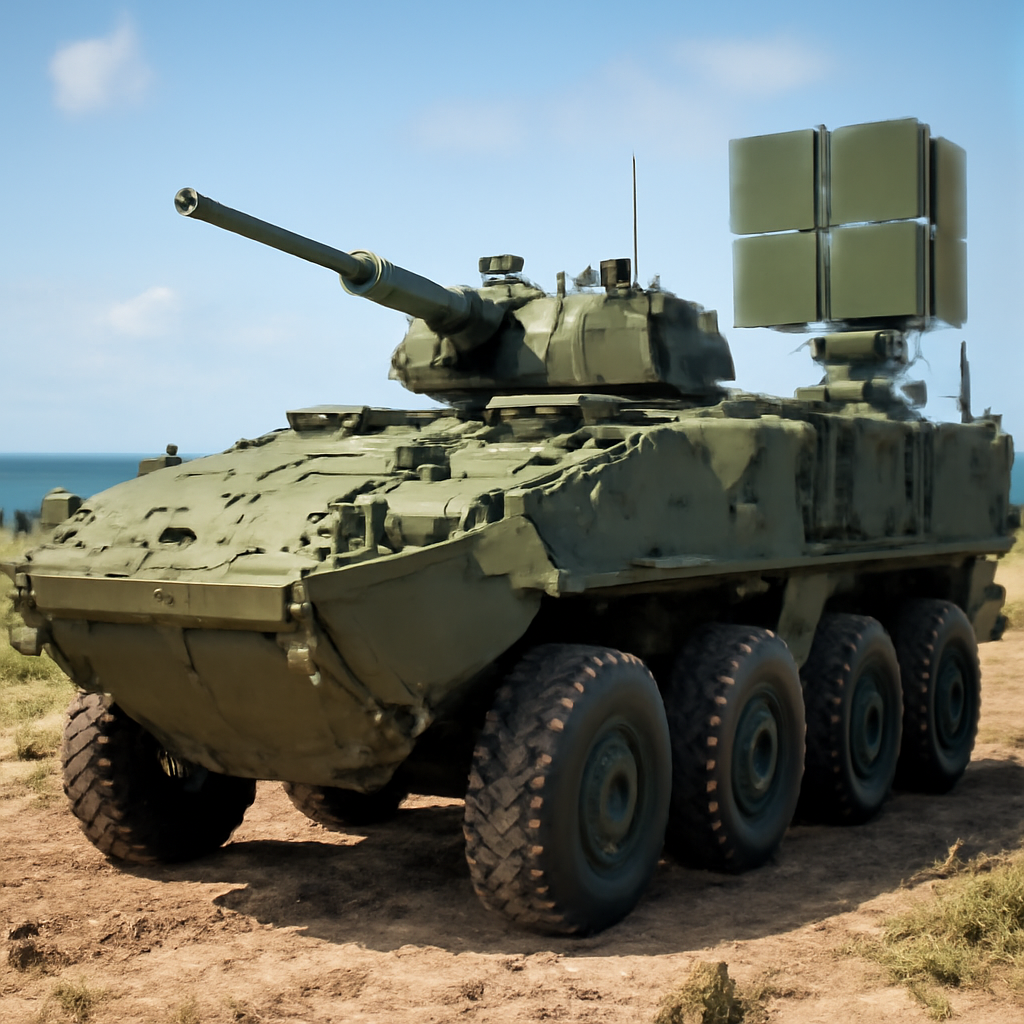
Pulsar-L was first unveiled by Anduril in April 2025 and is described in the justification as lightweight enough to be mounted on the ACV while remaining within the vehicle’s allotted space, weight, and power claims. MARCORSYSCOM adds that Pulsar-L is already “in use by the Special Operations Command” because of its low weight and the ability to engage multiple UASs while static or on the move.

Audit-ready is a season. It shouldn't be.
Evidence in spreadsheets, controls drifting between audits, frameworks multiplying on flat headcount. Nubivance runs continuous compliance on Rapid7 Cyber GRC - SOC 2, HIPAA, ISO 27001, PCI, CMMC.
End the scrambleWhich drone threats the system is meant to target
MARCORSYSCOM framed the immediate risk as kamikaze drones and small weaponized types that fall into U.S. military Group 1 and Group 2 categories. The U.S. military definitions cited in the document are:
- Group 1: designs weighing up to 20 pounds, up to 1,200 feet altitude, top speeds up to 100 knots.
- Group 2: gross weights between 21 and 55 pounds, up to 3,500 feet altitude, top speeds up to 250 knots.
The document notes these types are used daily in Ukraine to attack armored and unarmored vehicles and personnel, and that their use is growing globally.
The Marine Corps’ ACV fleet, vulnerabilities, and future defenses
As of April 2026 the Marine Corps had 150 baseline ACV personnel carriers (ACV-P) and 21 command-and-control ACV-C versions in inventory. The default armament of the ACV-P is listed as a single .50 caliber M2 machine gun in a remote weapon station. The service’s stated acquisition goals include 389 ACV-Ps, 33 ACV-Cs, 152 ACV-30s (30mm cannon-armed turrets), and 34 ACV-R armored recovery vehicles.
MARCORSYSCOM’s justification describes Pulsar-L as one part of a broader effort to harden the ACV family, alongside plans for a program of record for SK C-UAS slated to initiate in FY27. The document says components of that future program “will be procured through full and open competition” because advanced non-kinetic and SK defeat technologies are expected to be mature by then. Marine Corps program manager Chris Melkonian has previously discussed integrating active protection systems (APS), improved situational awareness, and overhead protection to the platform in lightweight form factors.
Machine learning claims, operational tempo, and timing
MARCORSYSCOM’s justification touts Pulsar-L as “the only known commercially available system that meets the minimum requirement to rapidly identify and respond to emerging UAS technologies and tactics without frequent updates to predefined threat data libraries,” adding that it “uses machine based learning to continually adapt.” The document and reporting note, however, that exactly how Pulsar-L leverages machine learning and how quickly it adapts is “still not entirely clear.”
The record in Ukraine is cited to underscore the pace at which electromagnetic-spectrum developments and countermeasures evolve; MARCORSYSCOM’s document says that cycle “can be regularly measured in weeks.” The purchase was formalized April 7 — the report points out that this date is roughly a week after the United States and Israel first launched major combat operations against Iran, and it notes that Iranian drones, missiles, and other capabilities have been a “real threat” to U.S. forces in the region.
What this means for technologists, policymakers, and Marines
- Technologists and security teams: Watch how Pulsar-L’s machine-learning claims are validated in operational use. The justification highlights the need to adapt to new waveforms and tactics without lengthy vendor updates.
- Policymakers and procurement leaders: The sole-source purchase is framed as an urgent stopgap ahead of a planned FY27 program of record that will use full and open competition; procurement timelines and technology maturity will be central to that transition.
- Marines and vehicle program managers: Pulsar-L is intended to provide a mobile, organic SK C-UAS to improve survivability of ACVs while preserving mobility, weight, and power constraints—an immediate defensive layer until broader APS and C-UAS integrations are fielded.
The sole-source award to Anduril buys time and capability at a precise price: $15,711,445.50. It also frames a larger dilemma the Marine Corps faces — how to add layered, adaptive defenses to a fleet still expanding toward its planned mix of ACV variants and armaments. The immediate step is clear; whether Pulsar-L’s adaptive claims hold up under fast-changing electromagnetic threats and whether the FY27 competitive program delivers broader, mature solutions are the questions that remain.