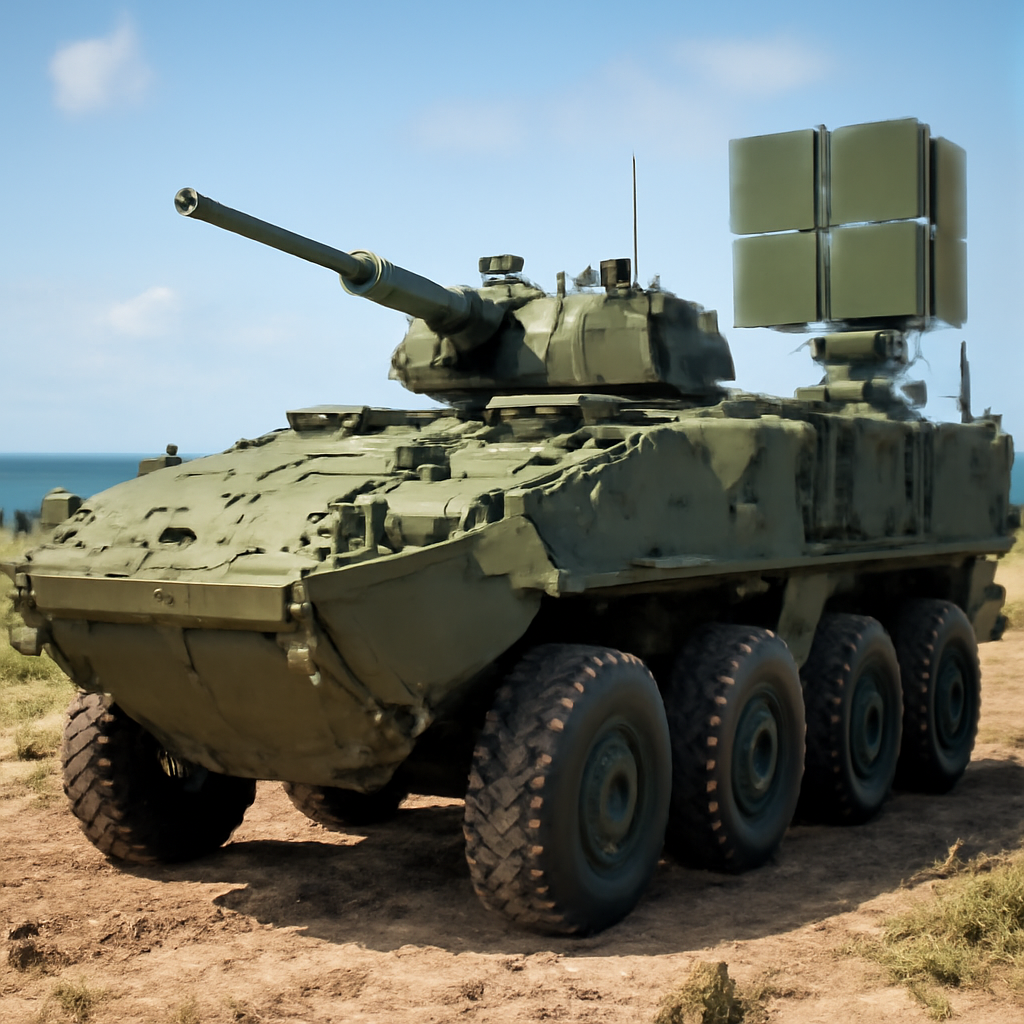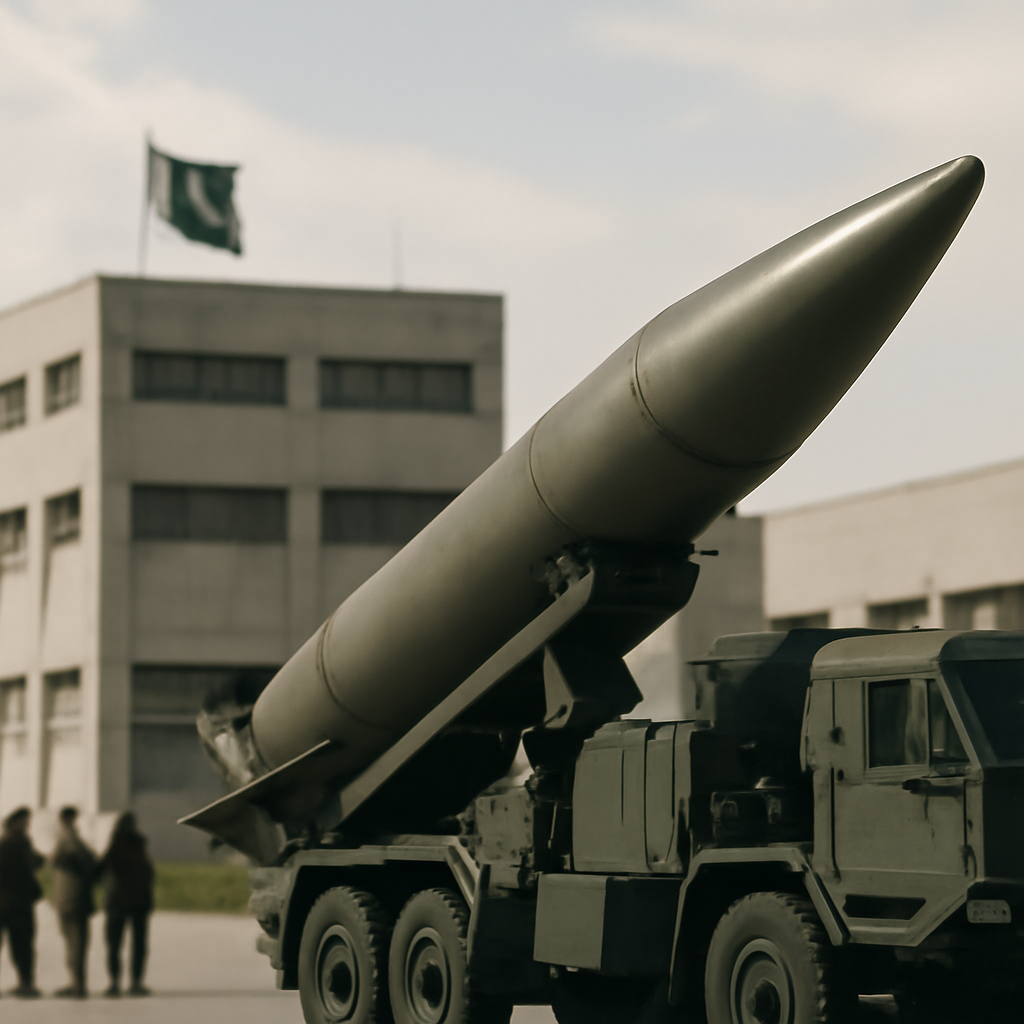
"Looking forward to complete acquisition of Barracuda long-range missiles and [Latvian-U.S.] defense industry cooperation," Latvian President Edgars Rinkēvičs wrote after visiting Anduril Industries and witnessing the signing of memoranda with Latvia's Ministry of Defence and Origin Robotics.
Edgars Rinkēvičs’ visit to Anduril and the announcement
Latvia’s president visited Anduril Industries in the United States and publicly announced moves toward acquiring the company’s Barracuda family of long-range cruise missiles. Rinkēvičs met with Anduril founder Palmer Luckey and witnessed memoranda of cooperation involving the Latvian Ministry of Defence and Origin Robotics, according to the president’s post on X. The president’s statement did not specify which Barracuda variant, the number of missiles, delivery timelines, or contract value. The reporting outlet reached out to Anduril for further details.
The Barracuda family and the likely candidate
Anduril manufactures the Barracuda family in three named variants: Barracuda-100M, -250M and -500M. A likely candidate for Latvia is the Barracuda-500M, which official descriptions put at more than 500 nautical miles of range and a stated speed range of roughly 190 to 500 knots. The Barracuda family is jet-powered and autonomous; the air-launched variant has received the U.S. military designation AGM-189A. Given Latvia’s limited inventory of suitable aircraft, the country would acquire the surface-launched version, designated SLB-500M. Anduril demonstrated a prototype surface-launched Barracuda-500 — its launcher, missile and booster concept — in testing in 2025.

This site is the portfolio.
OSINTSights runs on Cloudflare Workers, D1, R2, and Vectorize, with an AI pipeline on Hetzner ARM. Nubivance designed, built, and operates it. We do the same for clients.
See what we buildHow the move fits into NATO eastern-flank long-range strike trends
The potential Latvian purchase sits within a broader European shift toward “deep precision strike,” defined in the reporting as conventional systems able to threaten targets hundreds or thousands of miles away. Latvia has already ordered the U.S.-made Army Tactical Missile System (ATACMS), which will be fired from M142 HIMARS launchers, is expected to enter service in 2027, and has a maximum range of about 186 miles. European NATO members including France, Germany, Poland, Italy, Sweden and the United Kingdom are pursuing combinations of indigenous development and foreign procurement to fill long-range strike requirements.
The reporting highlights that for NATO’s Baltic members, mobile ground-launched weapons expand the ability to strike military targets at depth without requiring air superiority over the launch area. The deterioration of Europe’s security environment since Russia’s full-scale invasion of Ukraine, and the 2019 collapse of the Intermediate-Range Nuclear Forces Treaty, are cited as drivers for renewed interest in longer-range conventional strike. The piece also notes that Ukraine’s long-range strike campaign has underlined both the strategic value of distant strikes and the importance of sufficient stocks of precision weapons.
Industrial cooperation: Origin Robotics, Poland precedent, and Latvian industry outreach
Latvia’s public comments tie acquisition to defense-industry cooperation. Latvia’s Investment and Development Agency says its defense-technology delegation is seeking opportunities for joint development, testing, manufacturing, system integration and supply chains; Origin Robotics is among participating Latvian companies. The delegation includes firms working across unmanned and counter-unmanned systems, communications, electronics, sensors, software, artificial intelligence, cybersecurity and manufacturing.
There is a recent European precedent: in July 2026 Anduril signed a strategic agreement with Polish maintenance, repair and overhaul provider Wojskowe Zakłady Lotnicze Nr 2 (WZL-2) to establish production of the Barracuda-500M at WZL-2 facilities in Bydgoszcz. Polska Grupa Zbrojeniowa said Poland was the first European country to sign such an agreement. Polish officials have emphasized the missile’s intended low production cost relative to higher-end U.S. cruise missiles and plan to progressively increase Polish content.
What this means for the Latvian Armed Forces, NATO’s eastern flank, and Anduril/Origin Robotics
- Latvian Armed Forces: Acquiring a surface-launched Barracuda would represent a step toward ground-launched precision fires with much greater reach than ATACMS, potentially altering Latvia’s ability to hold distant targets at risk. Specifics on variant, quantities and employment remain unspecified.
- NATO’s eastern flank and allied planners: Latvia joining a wider move to fieldable ground-launched long-range systems would signal that long-range conventional strike is moving beyond Europe’s largest militaries toward wider regional adoption, reinforcing trends other members such as Poland are already pursuing.
- Anduril, Origin Robotics and Latvian industry: The announced memoranda and Latvia’s delegation indicate interest both in acquiring capability and in industrial cooperation. Whether any portion of production, assembly or integration will occur in Latvia is not publicly detailed; Poland’s July 2026 agreement offers one model for combining purchase with local production.
The announcement raises concrete questions central to procurement and regional strategy: which Barracuda variant will be acquired, how many missiles and launchers Latvia will buy, whether Latvia will host any production or integration work, and when deliveries might occur. For now, the development is another clear indicator that deep precision strike is becoming a broader NATO requirement on Europe’s eastern flank rather than a capability concentrated only among the largest militaries.