The United States plans to procure at least 10,000 of Castelion’s Blackbeard hypersonic missiles over the next three years.
The CBO definition — why “hypersonic” matters
The Congressional Budget Office frames a hypersonic missile as “a missile that travels within the atmosphere (rather than above it) at speeds greater than Mach 5 and that can maneuver in the atmosphere for much of its flight.” That definition separates two very different technical paths: an air-breathing cruise weapon that sustains powered hypersonic flight inside the atmosphere, and ballistic or boost-glide weapons that achieve hypersonic speeds only during parts of their trajectory. A ballistic missile that passes Mach 5 on descent, or that maneuvers only in its terminal phase, falls outside the CBO’s operational portrait of a hypersonic cruise capability.
Air-breathing hypersonic cruise missiles: the gold standard — and why they’re rare
Air-breathing hypersonic missiles — using ramjets or scramjets to sustain propulsion at Mach 5+ within the atmosphere — are widely treated in technical literature as the “gold standard.” The United States demonstrated a scramjet demonstrator as early as 2013: the X-51 Waverider reached Mach 5.1 in that test, which the US Air Force called “the longest air-breathing hypersonic flight ever.” Even so, the United States has not fielded an operational air-breathing Hypersonic Attack Cruise Missile, and the source notes that complete adoption of this stack remains elusive for most militaries.
The operational attraction of air-breathing cruise designs is survivability. By flying low — whether sea-skimming in maritime environments or terrain-hugging in land attacks — cruise missiles can exploit gaps in long-range, high-altitude air-defence coverage. Subsonic cruise designs pioneered nap-of-the-earth and sea-skimming techniques; supersonic and hypersonic cruise missiles can extend those survivability advantages, albeit with hard trade-offs in turn radius, reaction time, atmospheric drag and thermal stress.

Audit-ready is a season. It shouldn't be.
Evidence in spreadsheets, controls drifting between audits, frameworks multiplying on flat headcount. Nubivance runs continuous compliance on Rapid7 Cyber GRC - SOC 2, HIPAA, ISO 27001, PCI, CMMC.
End the scrambleBallistic boosters and glide vehicles: the practical route to hypersonics
In practice, most current “hypersonic” adoption leans on rocket boosters, ballistic missiles, or boost-glide vehicles rather than sustained air-breathing propulsion. The source emphasizes that many militaries are following precisely this pattern: using rocket boosters to get weapons to hypersonic speeds or employing glide bodies to complicate defence. Russia, for example, promoted the 3M22 Zircon as scramjet-powered — but “more recent findings show that the Zircon might also involve ballistic missiles.” That ambiguity underlines how program rhetoric and technical reality can diverge.
The recent United States procurement plan for 10,000 Blackbeard missiles — itself a non-air-breathing hypersonic solution — is an operational illustration of the appeal of massing weapons that rely on boosting or glide tactics rather than the more complex air-breathing stack.
Why the ballistic path is presented as Pakistan’s pragmatic goal
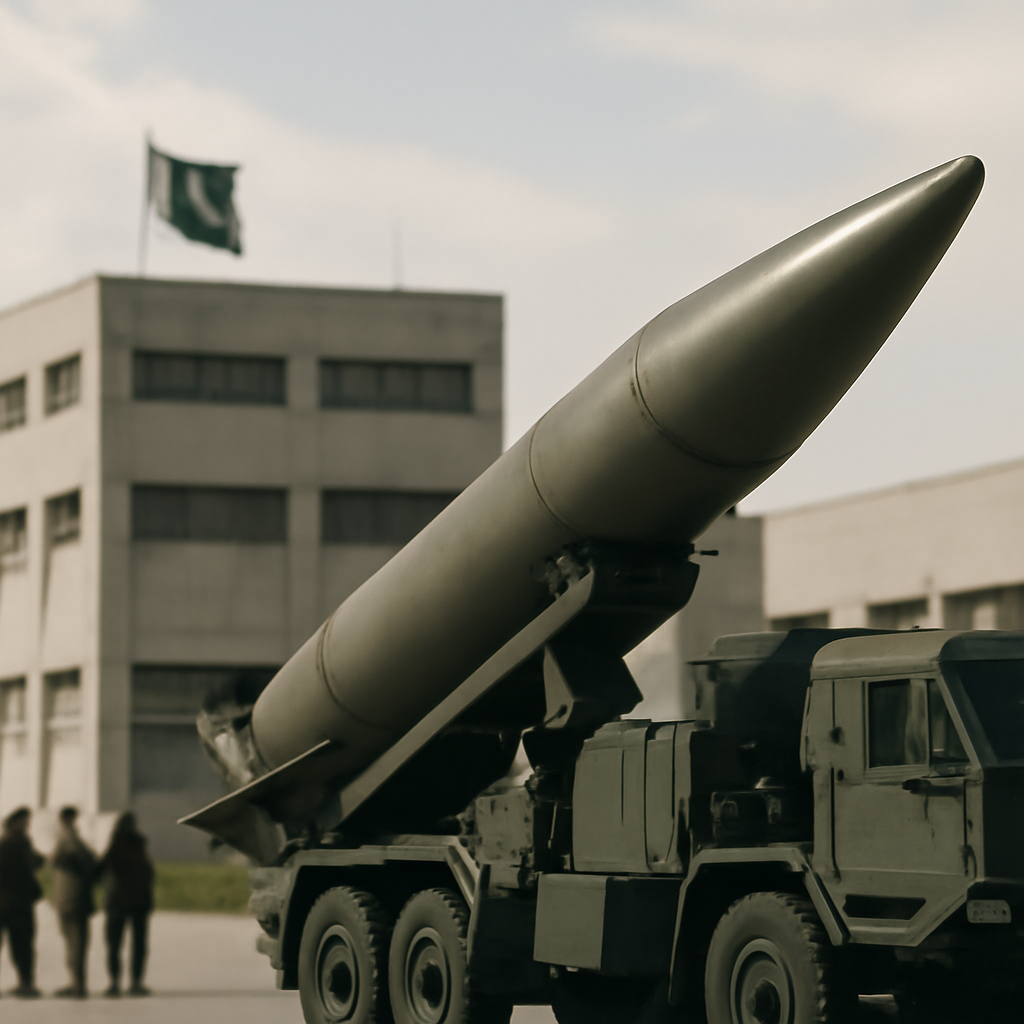
The article’s core argument is straightforward: given the technical barriers and scarcity of operational air-breathing hypersonic cruise missiles, Pakistan’s realistic path to a credible hypersonic strike capability will look more like the ballistic or boost-glide approaches than a scramjet-powered cruise missile. The piece points to the broader international pattern — major militaries leaning on boosters, ballistic missiles, or glide vehicles — and contrasts that with the rarity of true air-breathing deployments. It further notes that China leads in the air-breathing hypersonic stack, with India “rapidly closing in,” underscoring how difficult and resource-intensive that particular technical track remains.
How Pakistan’s military planners, procurement leaders, and regional militaries are likely to react
- Pakistan’s military planners will weigh survivability gains against technical complexity: the article implies the quickest route to in-service hypersonics favors ballistic or glide approaches that match global trends rather than the high bar of scramjet cruise missiles.
- Procurement leaders will watch affordability and producibility: the United States’ plan to buy 10,000 Blackbeard rounds highlights how massed procurement of boost-glide or rocket-boosted weapons can be fielded at scale, a practical contrast with the still-experimental air-breathing stack.
- Regional militaries — notably China and India, named in the source — will remain technological benchmarks. China is identified as leading in air-breathing hypersonic technologies, and India as advancing its indigenous capabilities; both trends set the technical and strategic context that Pakistan must consider.
In short: the distinction between “hypersonic” as a speed threshold and as an operational category matters. The article argues that for Pakistan, as for many actors, the faster, surer path to fielded hypersonic strike power lies along the ballistic and boost-glide trajectory — the route most militaries have taken — while true air-breathing cruise capability remains the harder, rarer prize that only a few states are actively pursuing.