“Task Force Falcon Strike will expand on Scorpion Strike’s success given the tremendous innovation happening among our regional allies and partners,” Adm. Brad Cooper, CENTCOM commander, said in a statement.
What CENTCOM announced and how the task force will operate
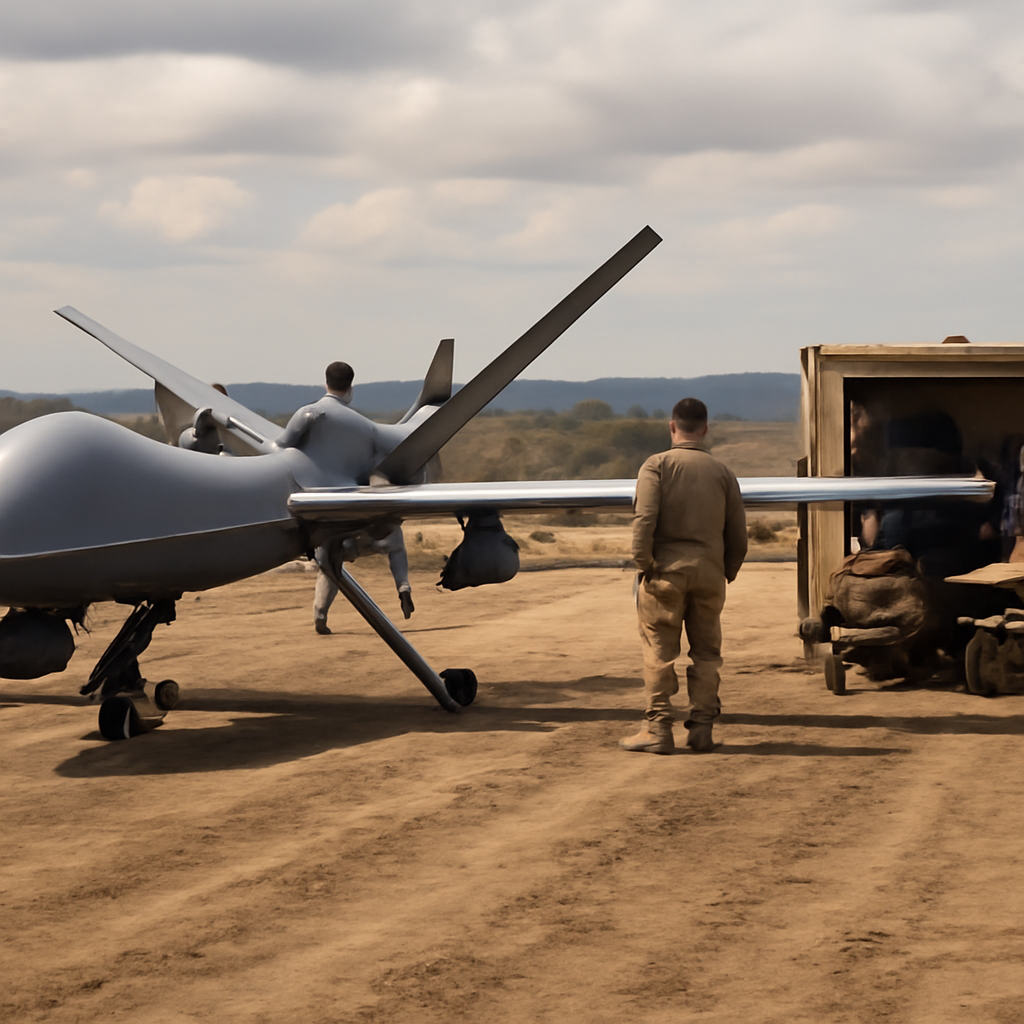
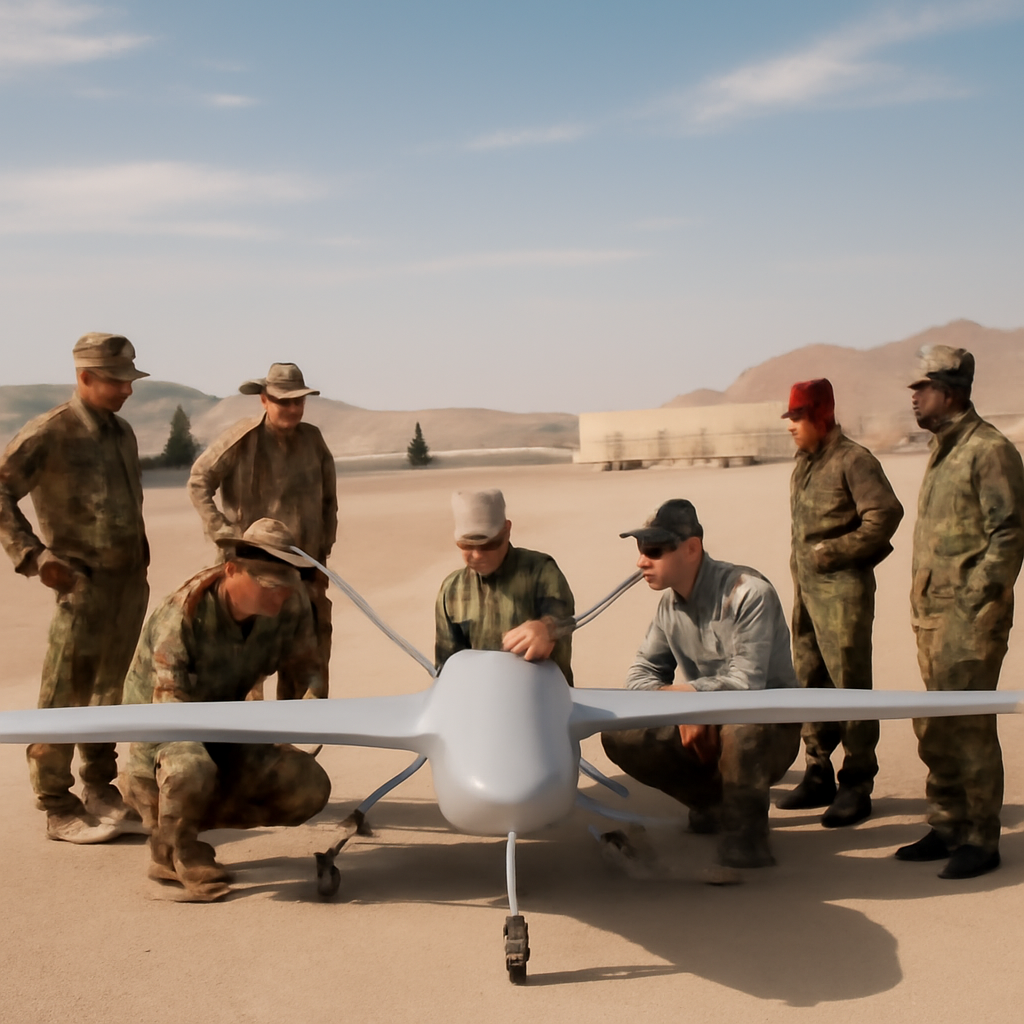
U.S. Central Command announced the creation of what it calls “the first multinational attack drone task force,” dubbed Task Force Falcon Strike (TFFS). CENTCOM said TFFS will “employ one-way attack drones consisting of unmanned systems from above, on, and below the sea operated by military support staff from the United States and regional partners.” The command has begun consulting with and officially inviting regional partners, and said the task force will scale attack drone capabilities across the Middle East “into a unified multi-domain, multinational deterrent.” CENTCOM did not name participating nations or the specific systems that will be used; the command declined to provide further details when asked.
How TFFS builds on Scorpion Strike and recent operational firsts
TFFS follows the December creation of Task Force Scorpion Strike (TFSS), described in CENTCOM material as the U.S. military’s first dedicated one-way attack drone squadron and the first operational unit armed with Low-Cost Uncrewed Combat Attack System (LUCAS) kamikaze drones — a design the announcement calls reverse-engineered from the Iranian-designed Shahed-136. TFSS marked several operational firsts during the war against Iran: LUCAS drones were used on the opening day of the war after the launch of Epic Fury on Feb. 28; a Saronic Corsair unmanned surface vessel (USV) rescued the crew of a U.S. Army AH-64 Apache in June after it was downed by Iran, the first known use of a drone boat for personnel recovery; and in July three Corsair USVs “hit the port at Bandar Abbas Naval Base” and “successfully struck a submarine and ship maintenance facility in Iran,” a sequence CENTCOM posted on X and produced video of.

Audit-ready is a season. It shouldn't be.
Evidence in spreadsheets, controls drifting between audits, frameworks multiplying on flat headcount. Nubivance runs continuous compliance on Rapid7 Cyber GRC - SOC 2, HIPAA, ISO 27001, PCI, CMMC.
End the scrambleUncrewed underwater vehicles, demining, and precedent in the Black Sea
CENTCOM’s new task force announcement states it will include uncrewed underwater vehicles (UUVs) as attack weapons. CENTCOM noted that while UUVs have been used for demining in the Strait of Hormuz, if UUVs have been used in combat by the U.S. that use “has not been publicly acknowledged.” The command pointed to other militaries’ activity: Ukraine’s state security service (SBU) said it carried out a UUV attack on a Project 636 Varshavyanka-class submarine in Novorossiysk in December 2025, and Ukraine’s Magura line of sea drones has been credited with roles against the Russian Black Sea Fleet. CENTCOM framed TFFS as a way to integrate these above-, on-, and below-sea capabilities with regional partners.
How CENTCOM, regional partners, and maritime operators are positioned
- CENTCOM and SOCCENT: U.S. Special Operations Command Central (SOCCENT), which launched Scorpion Strike, will lead the new task force’s staff of U.S. and regional representatives. CENTCOM says integrating these capabilities together will “rapidly realize the new possibilities that are on the horizon.”
- Regional partners: CENTCOM has begun formal invitations and consultations; the command emphasized collective strength in integration but has not disclosed which states will join or whether partners will bring their own equipment.
- Maritime operators and shipping: The announcement comes amid renewed attacks on shipping: the Houthis carried out their first deadly attack on shipping in the Red Sea in more than a year, and imposed a blockade on Saudi shipping in the Bab al-Mandeb Strait while attacking Saudi vessels, oil infrastructure, and Saudi-backed forces in Yemen. One incident cited in open reporting described the Tanzania-flagged Tihamah being hit by three consecutive ballistic missiles in the Bab el Mandeb, with four crewmembers killed, according to Yemen’s Ministry of Transport.
Why the United States says it is doing this — and what remains unknown
CENTCOM framed TFFS partly as a response to operational pressures. The command cited concerns about the U.S. “magazine depth” of expensive, high-end standoff weapons and said one-way attack drones aim to take pressure off that class of munitions. The announcement also highlighted a possible economic dimension: TFFS “could also create a lucrative regional marketplace for one-way attack drones, including those built at scale in the United States.”
At the same time, significant questions remain. CENTCOM’s announcement did not name participating nations, list the specific unmanned systems beyond general categories, or say whether regional partners will supply their own equipment. The command declined to provide further details when asked, and the public record does not yet show U.S. combat use of UUVs. Those gaps leave open how quickly the task force will become operational, how command relationships will be structured, and how the new formations will be employed amid the ongoing standoff over the Strait of Hormuz — a dispute marked in recent days by competing claims from President Donald Trump, who posted that “the U.S.A. has total control over over the Strait of Hormuz. I THINK WE WILL KEEP IT!” and Tehran officials who say the Strait remains “under Iran’s control and management.”
CENTCOM said it will scale the force as partners formally join. As the command develops the answers, the immediate effect is clear: the United States is institutionalizing the use of one-way attack drones across air, surface and subsurface domains and inviting regional actors to knit those capabilities into a single, multinational deterrent. How broad that coalition becomes, what systems it fields, and how it is used at sea and under it are the facts still to be revealed.