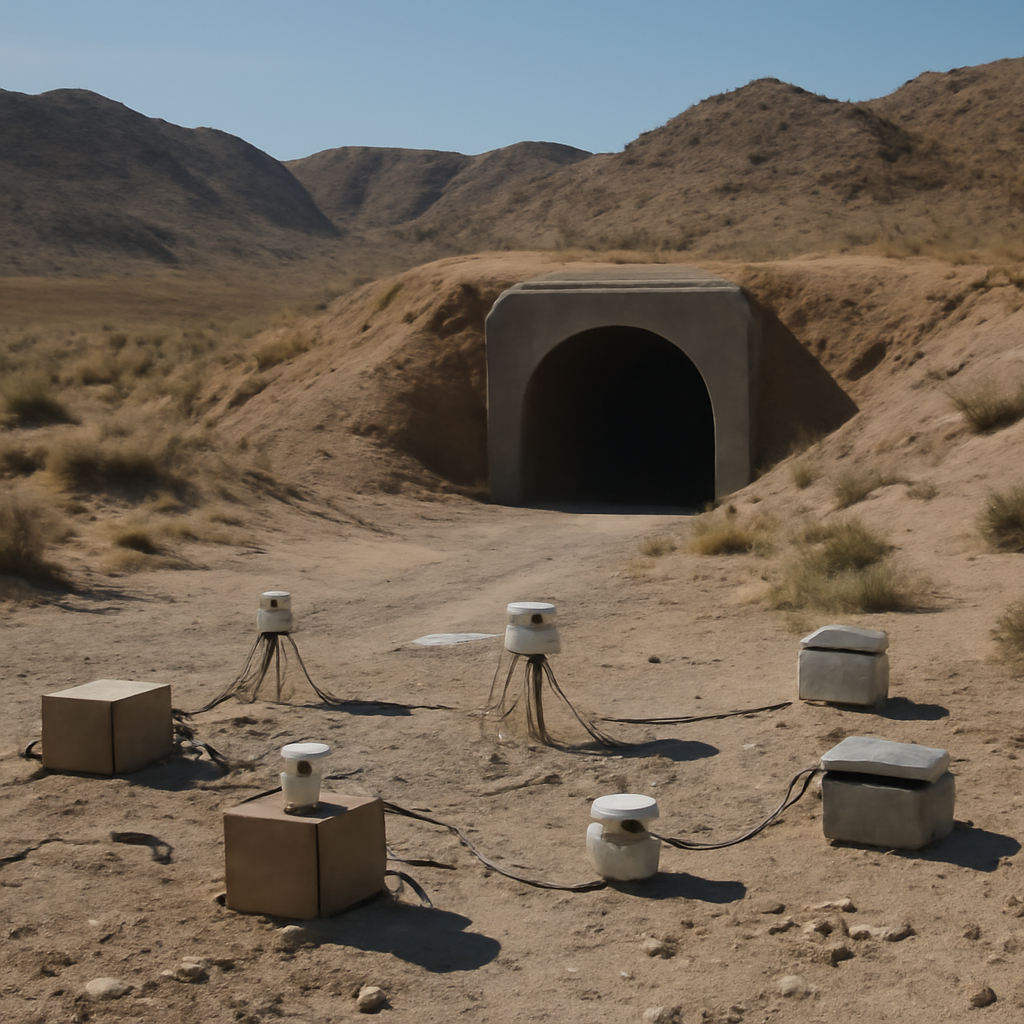
"There is a real risk that Iran has diverted centrifuges to an undeclared location, and that the IAEA does not know where those machines are," Kelsey Davenport told reporters on Friday.
Hidden centrifuges, Natanz and Fordow
Inspectors will face a tougher task than in 2015. Under the Joint Comprehensive Plan of Action, Tehran accepted broader monitoring and sharp limits on nuclear development; after the U.S. withdrew from that deal in 2021, the source says, Iran began restricting inspectors' access to data and facilities. That means the International Atomic Energy Agency (IAEA) would begin any renewed inspections "without a clear understanding of how much nuclear material Iran holds or how many centrifuges and other enrichment tools it has," the experts said.
Two heavily fortified enrichment sites — Natanz and Fordow — were attacked last June, the source reports, and Matthew Sharp of MIT’s Center for Nuclear Security Policy warned the IAEA could find it difficult "to provide any confidence that Iran does not retain an undeclared enrichment capability somewhere outside of the facilities attacked last summer." Kelsey Davenport of the Arms Control Association emphasized a concrete operational risk: centrifuges may have been moved to undeclared locations, and tracing them will be "one of the key tasks for the IAEA."
IAEA budget shortfall: €250 million and a mid‑August payroll deadline
IAEA Director General Rafael Mariano Grossi told the agency’s board of directors this month that the organization is missing €250 million in "overdue assessed contribution amounts" and warned that if dues aren’t paid by mid‑August, the agency "won’t be able to make payroll or fund key operations." Matthew Sharp called that prospect a "self-made catastrophe" for the United States.
The source also reports tensions between Washington and the IAEA: as recently as March, the State Department was pressuring the agency to re‑examine compensation for inspectors and other staff and to rein in expenses. Grossi "didn't name names," Sharp said, but he added it "seems very likely to me that the United States is a primary driver of the shortfall and therefore to blame." Sharp noted, however, that President Trump did not include the IAEA among the 66 multilateral organizations he withdrew from last year and that Grossi "has apparently been engaged in the U.S.-Iran talks, which is a positive sign of confidence in the IAEA."

Audit-ready is a season. It shouldn't be.
Evidence in spreadsheets, controls drifting between audits, frameworks multiplying on flat headcount. Nubivance runs continuous compliance on Rapid7 Cyber GRC - SOC 2, HIPAA, ISO 27001, PCI, CMMC.
End the scrambleTools and limits: satellites, OSINT, AI — and the irreplaceable on-site inspector
Experts acknowledge the inspecting agency can now draw on far more powerful tools than a decade ago: commercial satellite imagery, open-source intelligence and AI-assisted analysis. Still, Eric Brewer of NTI’s Nuclear Materials Security Program warned there is "no substitute for on-site inspections." Brewer added that the IAEA’s Additional Protocol gives inspectors the legal authority to hunt for material and devices that may have been "destroyed in the strikes or have been hidden away by Tehran," but he insisted that the Additional Protocol must be included in any final agreement for inspections to truly work.
Matthew Sharp highlighted an operational implication: if Iran provides material that differs from what the IAEA last observed "more than a year ago" — for instance, if some material is "buried or otherwise unavailable" — those discrepancies will be "more difficult to make sense of."
Conflicting statements in Switzerland and Washington’s internal actors
As U.S. and Iranian diplomats met in Switzerland on Monday, the two sides could not even agree about whether they disagreed. U.S. Vice President JD Vance publicly declared that Iran had agreed to allow the return of IAEA inspectors to monitor nuclear materials and research activity; Iranian officials said they had not made such a commitment.
The source flags a political tension that could shape whether technical findings translate into policy: experts warned the White House must place nuclear specialists at the center of any effort, rather than private envoys with business ties. The reporting names envoys Steve Witkoff and Jared Kushner as having "been playing a role in the negotiations while simultaneously working a series of personal side-deals." Davenport urged that "Kushner and Witkoff need to center nuclear experts and listen to nuclear experts because their technical incompetence caused the United States to miss critical diplomatic opportunities in the past." Sharp added that the White House should "stop congratulating itself," noting Iran's long‑standing legal obligations under its IAEA safeguards agreement.
What this means for the IAEA, the White House, and Iran
- IAEA: Must secure €250 million in assessed contributions by mid‑August to avoid payroll and operational disruptions; needs the Additional Protocol written into any inspection arrangement to give inspectors the authority to search for hidden or destroyed materials.
- The White House: Will need to deploy U.S. nuclear security professionals and follow technical advice rather than political or commercial actors if inspections are to produce reliable conclusions; failure to do so risks repeating past diplomatic errors, experts say.
- Iran: If it agrees to tighter inspections, it must also make material and site information available in ways that allow the IAEA to reconcile any discrepancies dating from the period after 2021 or following the strikes on Natanz and Fordow.
Success, according to the experts quoted in the reporting, rests on three hard facts: Iran’s formal acceptance of intrusive inspections (including the Additional Protocol), the IAEA’s ability to function through a looming budget shortfall, and U.S. willingness to let nuclear specialists — not political envoys or transactional relationships — drive technical judgments. Whether those conditions are met before mid‑August and before on‑the‑ground verification begins will determine whether inspections are substantive or merely symbolic.