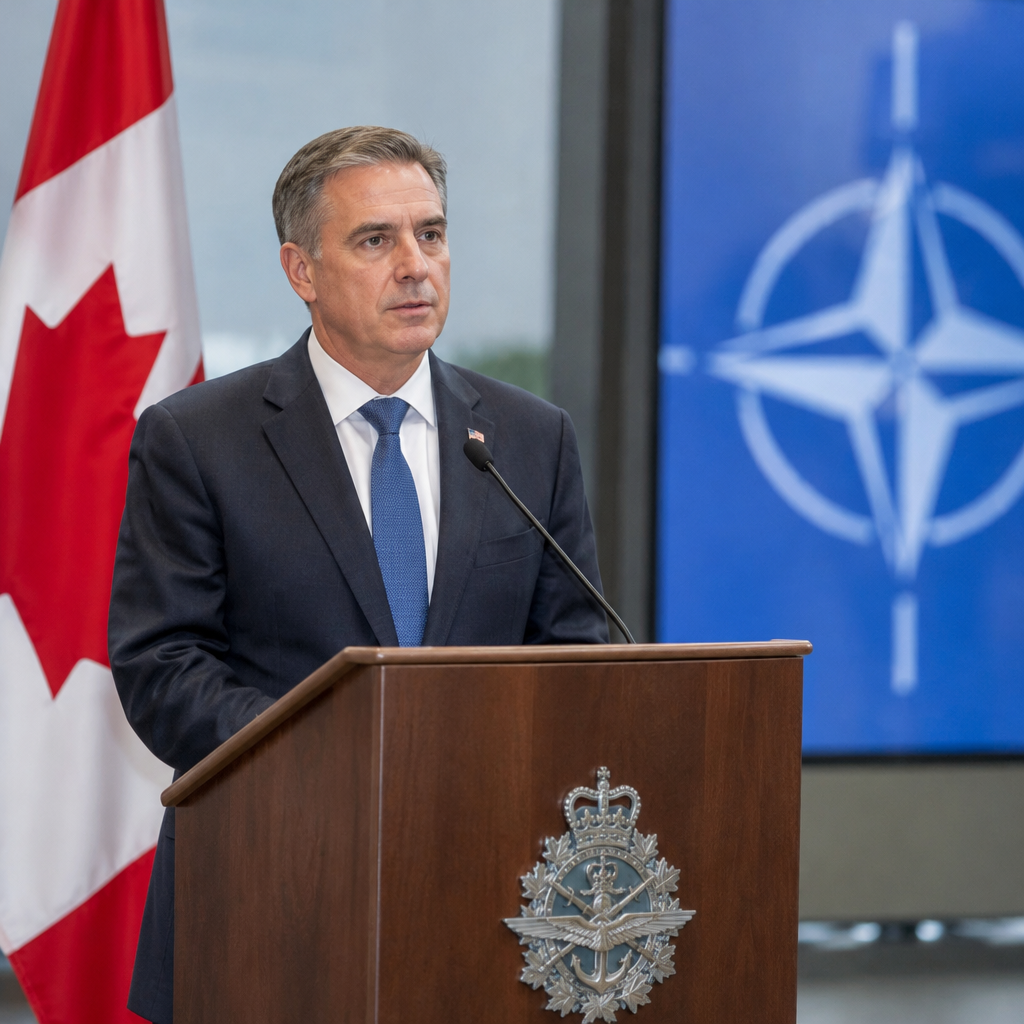
"It’s clear that there’s some sort of document we haven’t seen, not aware of the contents of it," David McGuinty said on the sidelines of the Halifax International Security Forum, summarizing Ottawa’s immediate reaction to a classified U.S. memo reported by The Washington Post.
David McGuinty on Canadian‑U.S. defense ties
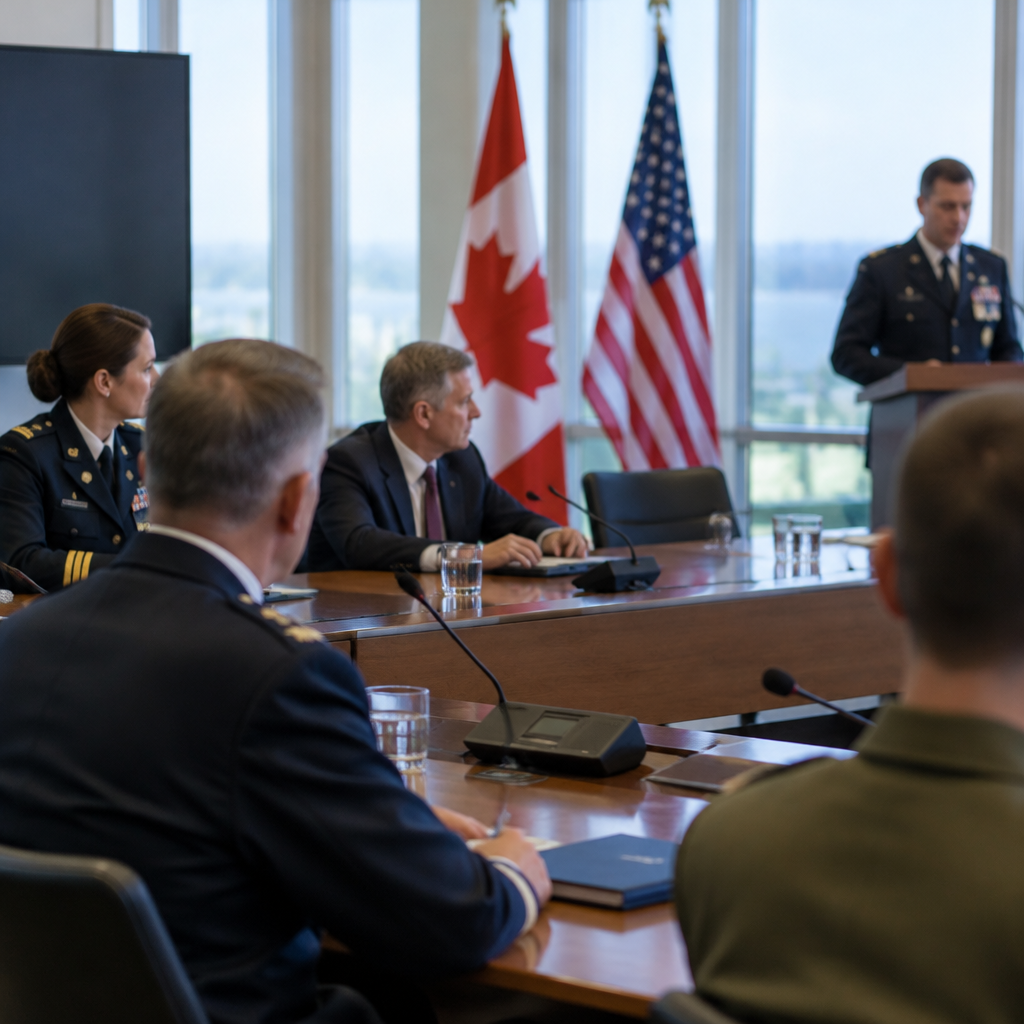
Canada’s minister of National Defense told reporters that, despite media reporting about a classified memo from U.S. Defense Secretary Pete Hegseth, he has not observed any change in the day‑to‑day military‑to‑military relationship. McGuinty said Canadian‑American cooperation on defense, security, and intelligence “continues,” and described the broader defense relationship as “strong.”
At the Halifax forum, McGuinty also reiterated Ottawa’s procurement ambitions: Canada will seek to produce more military hardware domestically in “10 core areas,” “partner with like‑minded partners” where domestic production is not feasible, and use U.S. purchases only as a “third option” if neither domestic production nor partnership is possible.
Pentagon spokesman Sean Parnell’s account
Breaking Defense quoted Chief Pentagon Spokesman Sean Parnell as saying the department is “taking steps to ensure its engagements with Canada advance tangible US defense objectives and ultimately support a reinvigorated defense relationship.” In the same remarks, Parnell asserted that the guidance would not affect defense intelligence cooperation, the binational North American Aerospace Defense Command (NORAD) command, or cooperation through NATO.
Parnell also used an unexpected formulation in describing priorities: “DoW [Department of War] is prioritizing opportunities for bilateral cooperation that strengthens the defense of our Homelands and shared hemisphere, while supporting Canada’s ability to meet NATO obligations.” He did not disclose the classified memo’s contents or the specific changes it might introduce to future engagements.

Audit-ready is a season. It shouldn't be.
Evidence in spreadsheets, controls drifting between audits, frameworks multiplying on flat headcount. Nubivance runs continuous compliance on Rapid7 Cyber GRC - SOC 2, HIPAA, ISO 27001, PCI, CMMC.
End the scrambleSen. Mike Rounds’ briefing to reporters
Sen. Mike Rounds, R‑S.D., told reporters that after reaching out to administration officials he had been informed the memo “does not have any operational impact on DoD personnel that are in Canada today” and “does not impact NORAD, NATO operations or Five Eyes.”
Rounds said the memo places new limits on “general flag officer meetings” to those that advance Department of Defense objectives, and he reported that U.S. personnel must now request permission to attend Canadian think tank events or social engagements — a restriction he framed as narrowing certain forms of routine interaction.
Canada’s Defence Industrial Strategy and the NATO innovation fund
The reporting arrives while Ottawa is moving forward with a new Canadian Defence Industrial Strategy aimed in part at reducing dependence on U.S. defense contractors by growing domestic production capability. McGuinty used the Halifax event to announce that Canada plans to join the NATO innovation fund and initially contribute $100 million CAD ($69.72 million USD).
McGuinty framed that investment as a means to “open up new opportunities for investment in Canadian startups and innovation funds,” promising “new investment, new partnerships, and access to international markets” for Canadian innovators, “good jobs in a growing industry” for workers, and “access to cutting‑edge technologies and capabilities faster” for the armed forces.
How Canadian procurement officials, NATO Allies, and the Canadian armed forces are responding
- Canadian procurement officials: McGuinty’s public roadmap emphasizes domestic production in 10 core areas and an ordered preference—produce, partner, then purchase abroad—which signals that procurement leaders will continue prioritizing the Defence Industrial Strategy regardless of the memo’s existence.
- NATO Allies and the NATO innovation fund: Parnell said U.S. guidance does not affect cooperation through NATO, while McGuinty committed $100 million CAD to the NATO innovation fund — a concrete, multilateral investment intended to integrate Canadian startups and innovation funds with allied markets.
- Canadian armed forces: McGuinty presented the innovation fund and domestic production push as mechanisms to deliver “cutting‑edge technologies and capabilities faster” to the armed forces, a stated end‑use that keeps the services central to Ottawa’s industrial and investment choices.
For now, Ottawa’s public posture is one of cautious assurance: Canadian ministers say operational relationships remain intact even while acknowledging an undisclosed U.S. document exists and asserting independent plans to rebalance procurement toward domestic production and allied partners. The immediate, verifiable changes reported so far are procedural — limits on certain meetings and event participation — rather than the suspension of operational cooperation, and both the Pentagon’s spokesman and a U.S. senator told reporters the memo does not affect NORAD, NATO, or Five Eyes operations.
What remains to be seen is the memo’s full text and whether the newly described limits on “general flag officer meetings” and think‑tank participation will alter longer‑term patterns of military engagement, information exchange, or industrial collaboration. Until that document is made available or summarized by involved officials, Canada is moving ahead with investments and a procurement posture aimed at greater self‑reliance and deeper multilateral links.