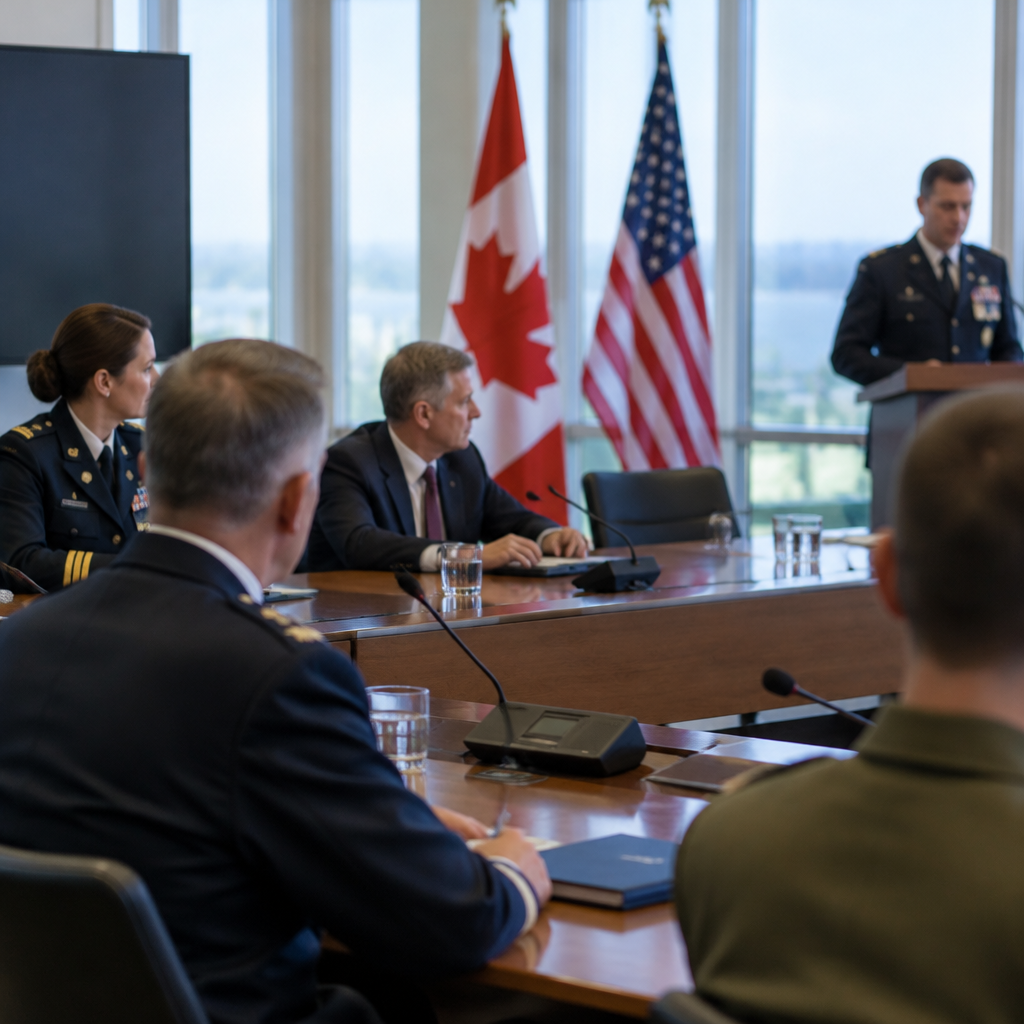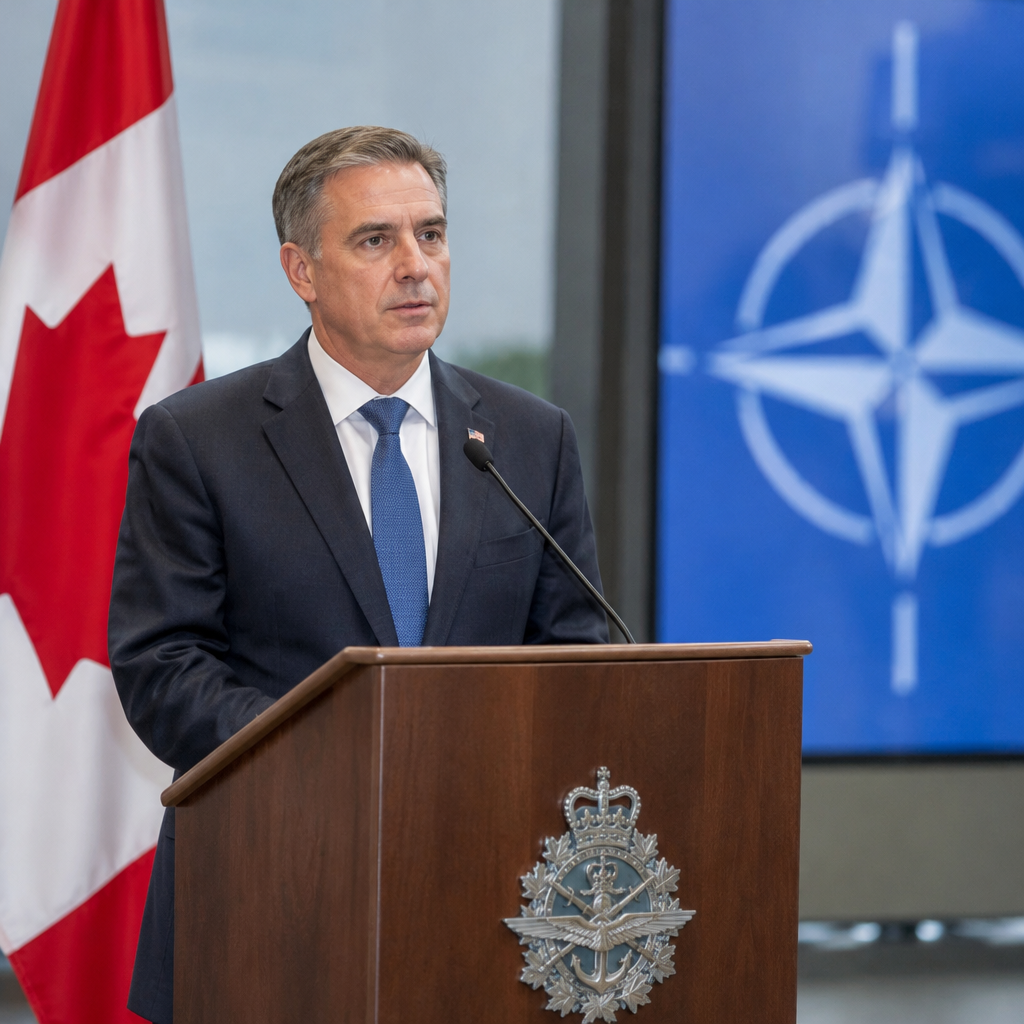
"As far as we're concerned, it's business as usual," Defense Minister David McGuinty said after Ottawa announced a 100 million Canadian dollar commitment to the NATO Innovation Fund (NIF), a move that came hours after reports the United States would limit defense cooperation with Canada.
Canada’s 100 million Canadian dollar pledge and the limits on a domestic payoff
The Canadian contribution pushes total commitments to the NATO Innovation Fund past 1.1 billion euros and makes Canadian defense startups eligible to compete for NIF capital and access its network of venture capitalists. But Ottawa’s choice to place money into the alliance vehicle, rather than routing it directly to domestic firms, carries an explicit caveat: there is “no guarantee that any of the money will come back home.”
NIF President Ari Kristinn Jónsson framed that allocation rule bluntly: “no pro rata in the NATO Innovation Fund. It is finding the best technologies that best address the capability needs of the alliance,” he said here on Saturday.
How the NATO Innovation Fund connects startups, investors and militaries
Tarja Jaakkola, NATO’s assistant secretary general for defense industry, innovation, and armaments, described the NIF at a conference in Izmir, Turkey, as a way to “help successful solutions reach scale” by linking startups with investors and military users across the alliance.
The fund has backed deals that show how the model can accelerate startups. In June 2024, German ground-robot maker ARX Robotics raised 9 million euros in a seed round led by the NIF, which provided more than half the money. That company later drew a 31 million euro Series A led by HV Capital in April 2025, and an 11 million euro extension led by Austrian firm Speedinvest in July 2025, bringing the Series A total to 42 million euros.
Competition for NIF capital is intense. As NIF partner Patrick Schneider-Sikorsky put it in April 2025, the fund had seen “thousands” of deals and invested in about 10 companies—an indication that selection is narrow even as interest is broad.

Your town's IT department is one person. Maybe.
Ransomware crews target small municipalities because nobody's watching. Nubivance gives Maine and New Hampshire towns a security program sized to a town budget.
Protect the town officeTiming and political context: a pledge issued after U.S. steps
The Canadian announcement arrived hours after a White House news conference in which President Donald Trump again accused Canada of unfair trade practices. The source reports that, over the summer, the president imposed 50-percent tariffs on several types of Canadian products, claiming that Canada discriminates against American autos, alcohol and cheese.
PBS, cited in the same account, framed the U.S. president’s argument as resting “in large part on retaliatory actions taken by Canada after the U.S. president imposed tariffs on Canada under the pretext that it should do more to stop fentanyl smuggling.”
Separately, the Washington Post reported that Pentagon leaders had issued a secret memo restricting military cooperation between the United States and Canada. Canadian officials said they had learned of the memo from news reports and had yet to see it. At the Halifax International Security Forum, Sen. Mike Rounds, R-S.D., described the memo as months old and limited to flag officers’ participation in social events, saying it “does not impact any DoD personnel that are in Canada today. It does not impact NORAD. It does not impact NATO operations or [the Five Eyes intelligence sharing partnership]]. Does not impact general or flag officer meetings.”
What this means for Canadian defense startups, NATO, and U.S.-Canada military cooperation
- Canadian defense startups: They gain eligibility to seek NIF funding and access to its investor network, expanding financing options beyond domestic channels—but there is no assurance that Ottawa’s capital will translate into direct investment back into Canadian firms.
- NATO and the NIF: The new commitment raises the fund’s war chest above 1.1 billion euros and reinforces the alliance’s approach of pooling risk capital to scale technologies that meet collective capability needs, rather than allocating funds along national lines.
- U.S.-Canada military cooperation and policymakers: Ottawa framed the pledge as a measured response, with Defense Minister McGuinty emphasizing continuity in operational ties—citing longstanding cooperation such as joint interdiction of drug trafficking in the Caribbean and continued NORAD and intelligence-sharing arrangements—while the diplomatic undercurrent following U.S. trade and memo developments remains unresolved.
Canada’s 100 million Canadian dollar bet on the NIF is thus both strategic and symbolic. It strengthens a transatlantic financing mechanism that has demonstrably accelerated select startups, yet it deliberately prioritizes alliance-wide capability needs over guaranteed national returns. For Ottawa the move answers a political moment: it signals continued commitment to NATO and to collective industrial cooperation even as bilateral strains with the United States play out in tariffs, memos and public accusations.
McGuinty’s refrain—“As far as we're concerned, it's business as usual”—is as much an assurance as a line in a larger strategic gamble: Canada is choosing collective leverage over direct subsidy, while leaving open the question the pledge itself admits—whether Canadian taxpayers will see that money come back in homegrown businesses.