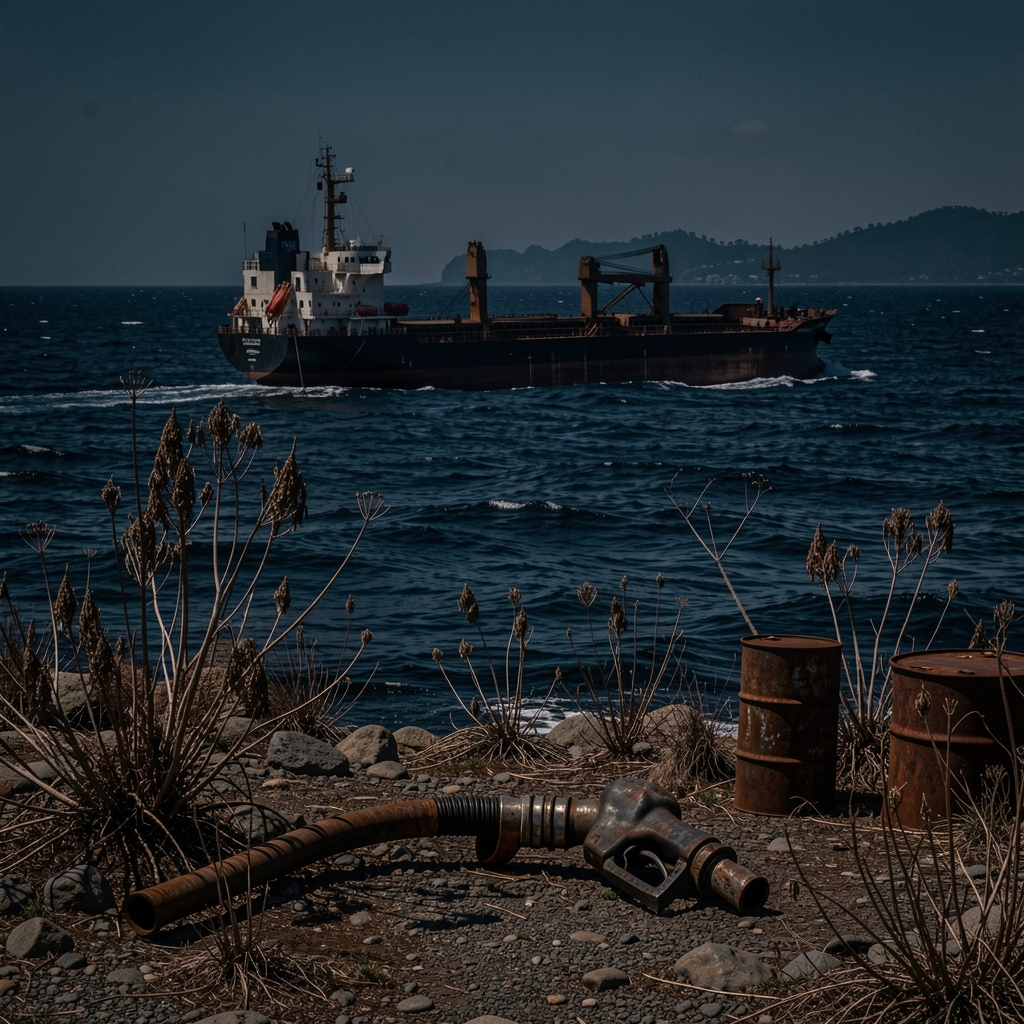
“Don’t assume the United States will carry ...” That blunt line, delivered in Donald Trump’s comments on Iran and the Strait of Hormuz on Tuesday, landed in Australia at a moment when “Australians are watching fuel prices and wondering how bad this could get.” The remark set off an immediate, practical question: if the international security guarantee that many take for granted is called into question, what does that mean for fuel security and for everyday life back home?
What the remark said — and what Australians are watching
The fact on the table is straightforward. Australians are closely following fuel prices and weighing the possible economic consequences. Into that environment came Donald Trump’s Tuesday comments about Iran and the Strait of Hormuz, which the piece frames as delivering a blunt message: “Don’t assume the United States will carry ...” That juxtaposition — domestic concern about fuel costs and an international comment that appears to unsettle assumptions about American engagement — is the immediate context the original author highlighted.
Why this matters beyond a single line
A short quotation can serve as a catalyst. The combination of rising public attention to fuel costs and an international leader’s explicit suggestion that long-held expectations should not be automatic prompts several questions for planners, businesses and consumers. At minimum, the remark pushes fuel security from an abstract policy debate into a lived, financial concern for people watching the pump and their household budgets.
It also reframes risk calculus. When a prominent comment urges against automatic assumptions about external support, it invites governments and firms to revisit contingency plans, supply arrangements and the way they communicate risk to citizens. Even if the comment itself is brief, the uncertainty it generates can ripple into decisions about inventories, pricing strategies and public reassurance.

The cyber insurance questionnaire just landed. Now what?
SOC 2, HIPAA, insurance renewals - someone has to own security strategy. Nubivance provides fractional CISO leadership without the full-time salary.
Get a security leadFour perspectives to keep in view
- Policymakers: The juxtaposition in the source suggests the need to reassess assumptions. If key external guarantees are questioned, planners must examine whether domestic preparedness — in logistics, stockpiles or diplomatic options — matches the level of public concern about fuel availability and prices.
- Businesses and supply-chain managers: Companies watching fuel prices are likely to evaluate exposure to price swings and potential supply disruptions. A public signal that external support might not be automatic encourages stress-testing of supply chains and revisiting contracts and hedging strategies.
- Consumers: For ordinary Australians “watching fuel prices and wondering how bad this could get,” the immediate impact is financial and psychological. Public statements that increase uncertainty can influence household spending, confidence and expectations about how long price pressure might last.
- Adversaries and opportunists: Even a short, clear signal that external support should not be assumed can be read by outside actors as a shift in the operating environment. That perception alone may influence behavior, making clarity and credible contingency planning more important.
What to watch next
The original coverage pairs two facts: public anxiety about fuel costs and a public comment urging against assumptions about U.S. engagement. Together they create a straightforward test for decision-makers and the public: will strategies and communications adapt to reduce uncertainty, or will reliance on assumptions persist?
Assessing the situation will require transparent communication from officials, practical steps by businesses to shore up supply lines, and an informed public conversation about trade-offs. The single, quoted admonition — “Don’t assume the United States will carry ...” — functions less as a policy prescription and more as a prompt: prepare for contingencies, explain the options, and address the immediate worries of people watching the price at the pump.
How governments, companies and consumers respond to that prompt will determine whether a pointed sentence becomes merely a headline or a turning point in fuel-security thinking.
https://www.aspistrategist.org.au/get-serious-about-fuel-security-we-cant-rely-on-the-us-anymore/



