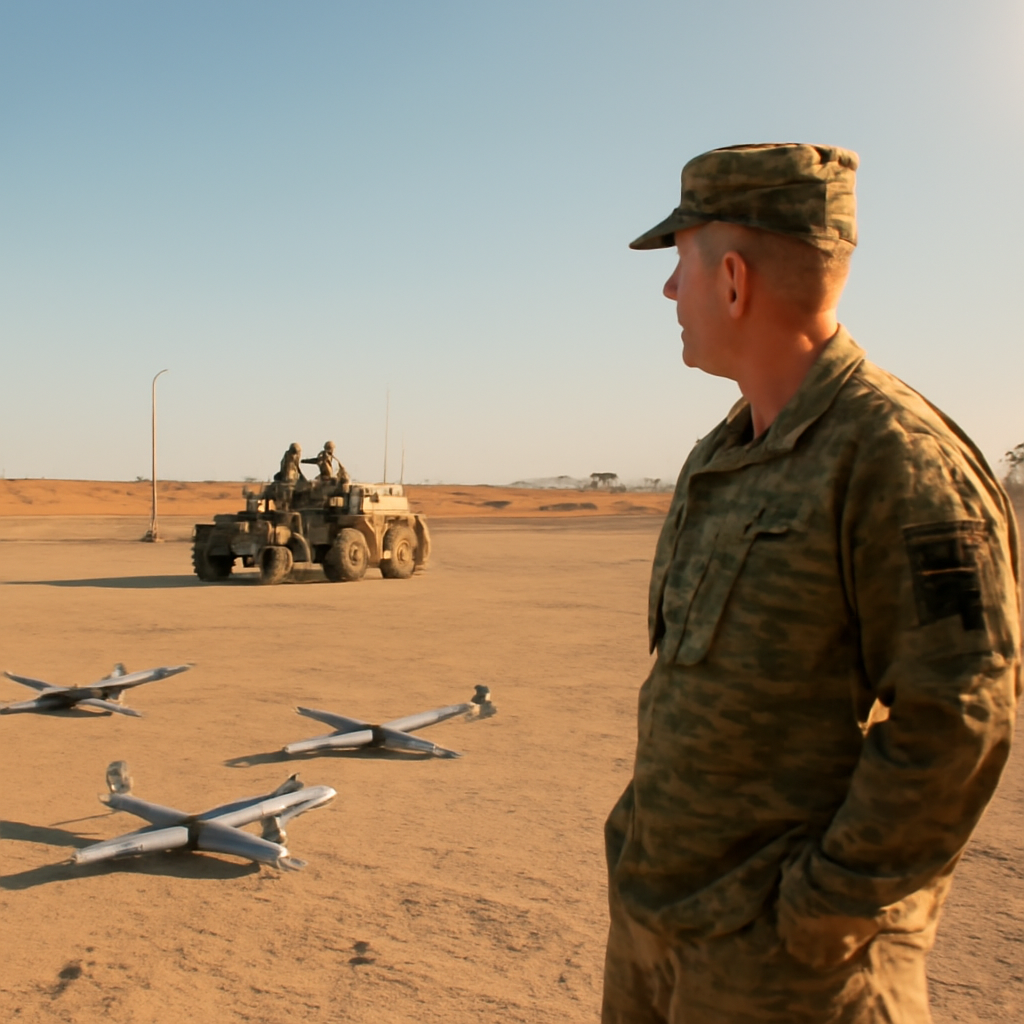
“GEOINT 2026 highlighted the transition of AI from experimental technology to part of everyday operations,” shared Torie Williams, President of Chenega Agile Real-Time Solutions (CARS).
AI's transition: from experiment to everyday operations
Conference speakers and attendees at GEOINT 2026 described a clear shift: artificial intelligence is no longer only an experimental add‑on but an operational tool woven into daily geospatial intelligence workflows. Torie Williams of CARS framed AI as a driver of “innovation, agility, and impact,” while Ashlee Standridge, technical writer at CARS, said that “the deliberate and secure integration of artificial intelligence across the Intelligence Community is generating measurable near-term outcomes and simultaneously reinforcing the framework for long-term mission success.”
Participants emphasized concrete AI capabilities: faster insight generation, multi-sensor fusion, large-scale data processing, and automated analysis. At the same time, Adrianne Moore, Program Manager at CARS, stressed human judgment remains essential — “AI delivers the greatest mission advantage when it serves as an enabler of human decision-making, rather than a replacement.”
Data and operations at scale: enterprise delivery and resilient platforms
Speakers expanded the discussion beyond algorithms to the systems that carry AI outputs into operations. Williams noted GEOINT 2026 “emphasized technologies that support data and operations at scale,” including enterprise data delivery, workflow automation, and resilient operations platforms such as IT Service Management (ITSM).
The thread running through the conference was that intelligence value requires not only advanced analytics but the infrastructure to move data, orchestrate workflows, and maintain reliable operations across complex mission environments. Those capabilities matter as much as model performance when speed, timeliness, and mission continuity are at stake.

The cyber insurance questionnaire just landed. Now what?
SOC 2, HIPAA, insurance renewals - someone has to own security strategy. Nubivance provides fractional CISO leadership without the full-time salary.
Get a security leadIT Service Management and ServiceNow as mission infrastructure
For CARS leaders, a robust ITSM mission platform is a foundational investment. Adrianne Moore argued that “ITSM provides a set of structured processes, standardization, and technology management necessary that mitigate the challenges of visibility, timeliness, and reliability.” She and Williams pointed to state-of-the-art platforms — specifically naming ServiceNow — as enablers of configurable, mission-aligned service models that produce predictable results and “real-time impact awareness.”
Moore added that the “right solution ensures that critical infrastructure is reliable, secure, and supporting the mission with integrated incident change and secure auditable workflows.” That framing treats ITSM not as back‑office paperwork but as a live, operational capability that keeps mission systems available and auditable under pressure.
How analysts and operators, agencies, and vendors are positioned
- Analysts and operators: Conference participants described AI as an enabler that speeds insight generation and supports decision-making, while human analysts remain responsible for judgment, context, and mission alignment.
- Geospatial intelligence agencies: With “a growing number of global hotspots” and tight budgets, agencies were counseled to focus on executing missions rather than implementing technology, and to prioritize reliable, secure infrastructure that reduces downtime and provides operational visibility.
- Vendors and platform providers (including CARS and ServiceNow): The event highlighted demand for configured, mission-aligned platforms that unify incident, change, and auditable workflows—solutions vendors were asked to deliver both at scale and with security built in.
Trust surfaced again and again as the linchpin. Williams said, “Trust is at the heart of today’s data-driven mission,” linking the need for trusted relationships with allies, trusted data sources, and now a trusted IT infrastructure. That triad—people, data, and infrastructure—was presented as the practical architecture for turning raw capability into strategic advantage.
What remains unmistakable from GEOINT 2026 is a simple operational prescription: pair advanced analytics with enterprise-grade delivery and management so that insights reliably reach the people and platforms that act on them. The conference made clear that meeting the scale and tempo of current missions will depend as much on standardization, auditable workflows, and resilient ITSM platforms as on the next breakthrough in machine learning — and that human judgment will continue to shape how those technologies are applied.