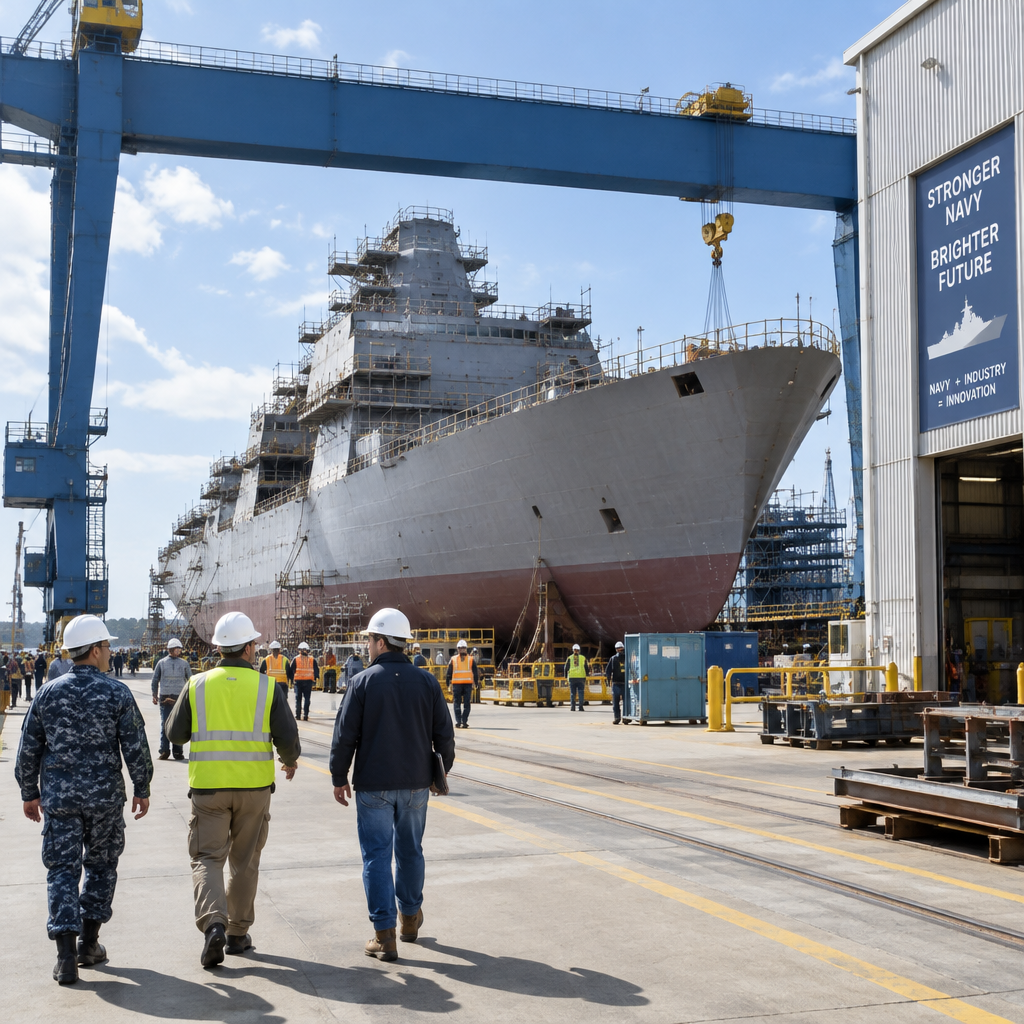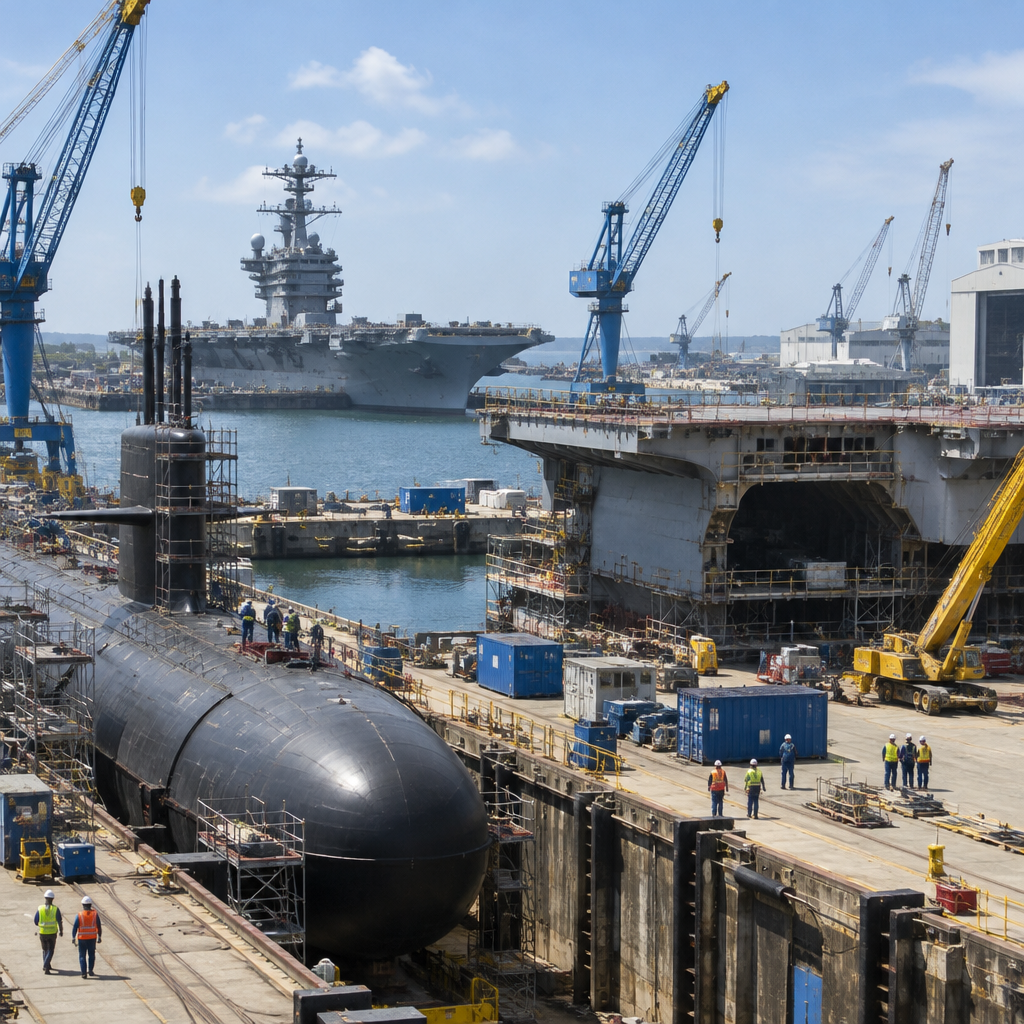
“CSIS estimated China’s shipbuilding capacity at roughly 230 times that of the United States in 2024.”
The industrial question at stake
The strategic question the source frames is simple and brutal: if a Taiwan crisis became a sustained conflict, could the United States replenish weapons, munitions and spare parts fast enough to keep fighting? The article argues that inventories and defense budgets alone do not answer that question. Instead, sustained combat readiness depends on the companies that actually produce weapons, components, and repairs — and on whether those manufacturers can surge output under wartime pressures.
Numbers that strain assumptions
The piece offers a set of stark comparisons and wargame outcomes that expose a readiness gap. In 2024, CSIS assessed China’s shipbuilding capacity as roughly 230 times that of the United States and estimated China was acquiring certain high-end weapons systems at five to six times the U.S. rate. CSIS wargames of the Taiwan Strait found U.S. forces typically expended more than 5,000 long-range missiles in three weeks. By contrast, CSIS reported producing a Long-Range Anti-Ship Missile (LRASM) took nearly two years, and the U.S. budget for fiscal year 2023 proposed buying only 88.
Those figures measure different phenomena — simulated consumption, production lead time, and planned procurement — but together they underline a core argument of the source: ammunition and missile stocks could be consumed far faster than U.S. industry can currently replace them.

This site is the portfolio.
OSINTSights runs on Cloudflare Workers, D1, R2, and Vectorize, with an AI pipeline on Hetzner ARM. Nubivance designed, built, and operates it. We do the same for clients.
See what we buildWhy manufacturer-level analysis matters
The article points to two government and independent findings underscoring the problem. A 2025 Government Accountability Office (GAO) report examined seven major U.S. shipbuilders and found that none was in a position to meet the U.S. Navy’s ship delivery targets at the time, citing infrastructure and workforce constraints. The GAO conclusion illustrates the point that contract awards and budget lines do not automatically translate into faster deliveries without changes to facilities, tooling, suppliers and labor.
As a response to that measurement gap, DefenseWatch.org has introduced an index that scores 27 companies on a 0-to-100 scale to help compare U.S.-based defense manufacturers. The index ingests quarterly datasets from the Federal Procurement Data System (FPDS), SEC filings and notices to the Committee on Foreign Investment in the United States (CFIUS) and weights prime contractors differently under a bespoke methodology. The index is presented not as a definitive wartime forecast but as a structured tool to expose relative vulnerabilities and surge potential across firms.
Three metrics that determine wartime viability
The source highlights three pillars for assessing a manufacturer’s ability to sustain combat operations: “Investment Quality,” “Domestic Contribution” and “Adversary Exposure.”
- Investment Quality: How much capital flowing into a company is used to fix production bottlenecks and meet reliable delivery schedules, rather than other purposes.
- Domestic Contribution: The degree to which a manufacturer can rely on locally sourced components and labor, thereby reducing dependence on foreign suppliers or imports.
- Adversary Exposure: How exposed a manufacturer’s supply chains are to foreign inputs, including partial or full ownership by foreign entities and cyber vulnerabilities.
These categories feed the DefenseWatch index and provide a company-level lens that differs from aggregate metrics like overall defense spending or total number of platforms.
What this means for policymakers, allies, and manufacturers
- Policymakers and defense planners: Must look beyond procurement totals and examine whether individual manufacturers have the facilities, tooling and skilled workforce needed to surge production; additional budget authority alone will not automatically shorten delivery timelines.
- Allies (Japan and Australia, cited by the source): Could use manufacturer-level analysis to understand industrial dependencies and resilience in allied supply chains and to prioritize supplier diversification or joint industrial investments.
- Manufacturers and prime contractors: Will be evaluated not just on current output but on surge-readiness metrics — whether capital is directed to bottleneck relief, whether domestic supply chains are mature, and how exposed their operations are to foreign ownership or cyber risk.
Conclusion: deterrence requires industrial truth-telling
The central strategic point the source delivers is unambiguous: deterrence rests not only on the forces arrayed at the start of a conflict but on the industrial capacity to sustain them. The Department of War’s June 2025 request for a 13 percent increase in the 2026 defense budget signals a shift toward industrial emphasis — from naval expansion to fighter performance, carrier-capable stealth, the so-called “Golden Dome” for Taiwan, and nuclear upgrades — but the budget is only the first step. Measuring which companies can surge, which cannot, and why — using metrics like Investment Quality, Domestic Contribution and Adversary Exposure — is a strategic necessity if Washington hopes to know before a crisis which manufacturers can keep delivering and where the industrial base will struggle.
https://thediplomat.com/2026/10/can-the-u-s-defense-industry-keep-pace-with-chinas-military-machine/