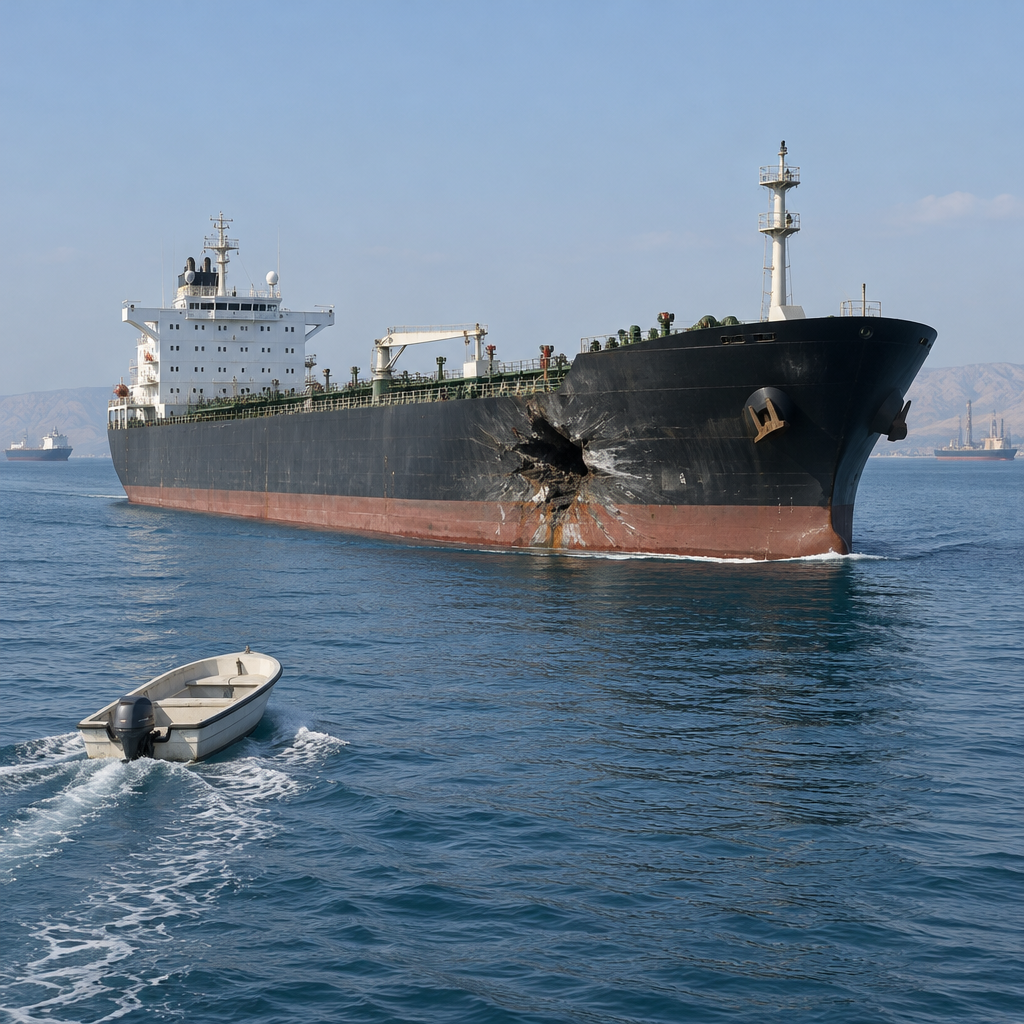
Two explosive devices were placed on the hull above the waterline of the Dubai‑owned tanker Louise 1, producing a blast that ignited a fire in the engine room, the United Kingdom Maritime Trade Operations (UKMTO) center reported.
The attack on the Dubai‑owned tanker Louise 1
UKMTO said a small boat in the Strait of Hormuz approached the tanker, attached two explosive devices and withdrew. Financial Times reported that the devices were limpet mines placed by Iranians. TWZ noted this was the first use of such devices in the current wave of Islamic Revolutionary Guard Corps (IRGC) strikes following Operation Epic Fury, and the first successful limpet attack in the strait since June 2019, when a Japanese and a Norwegian ship were hit.
Limpet mines, precedent and maritime risk
The attack rekindles memories of the 2019 incidents. TWZ recalled video from that episode showing an Iranian Navy or IRGC fast boat returning to remove a dud limpet from the Kokuka Courageous. Greece‑based maritime risk manager Marisks described the tactic’s implications bluntly: “The apparent ability of a small craft to approach a transiting tanker, deploy explosive devices and withdraw presents a significant security concern, particularly in the Strait’s congested shipping lanes,” Reuters reported on Friday.

This site is the portfolio.
OSINTSights runs on Cloudflare Workers, D1, R2, and Vectorize, with an AI pipeline on Hetzner ARM. Nubivance designed, built, and operates it. We do the same for clients.
See what we buildCENTCOM messaging, sea drones, and countermeasures
U.S. Central Command commander Adm. Brad Cooper addressed related mine threats on X, saying U.S. forces had “successfully cleared the strait’s internationally recognized primary transit routes of Iranian sea mines” and that U.S. forces “remain highly vigilant and present to ensure that all primary transit routes in the Strait of Hormuz remain free and clear.” Cooper added that after “we sank Iran’s navy earlier this year, we also successfully cleared” those routes and that he “saw our U.S. assets in the air and on the water, including a squadron of advanced sea drones that were on patrol supporting a defensive layer. Here’s what I didn’t see: I didn’t see the IRGC out there at all.”
The sea drones referenced—uncrewed surface vessels (USVs) such as the Saronic Corsair—have been active in the campaign: TWZ reported the Saronic Corsair was used as a strike weapon in July and previously rescued the crew of a downed U.S. Army AH‑64 Apache earlier in the summer. CENTCOM also pushed back on claims it had acknowledged attacks on Iranian targets; Capt. Tim Hawkins, the command’s spokesman, told TWZ: “The reported notion that CENTCOM claimed any recent attacks is false.”
Surge in attacks, market effects, and diplomacy
October has been unusually violent for regional shipping. Noam Raydan, a senior fellow at the Washington Institute for Near East Policy, has recorded 28 confirmed and reported attacks in the Strait of Hormuz and surrounding waterways in October and 113 since Feb. 28, the BOE Report said. Those strikes, combined with Houthi attacks on Saudi oil infrastructure, have helped push Brent crude above $117 per barrel, OilPrice.com reported.
The economic fallout has been substantial. The New York Times estimated that more than $130 billion in profit was earned by over 50 large U.S. oil and gas companies from April through September as prices rose, a figure the paper described as conservative and not including March or October. At the same time, Qatari mediators returned to Tehran in another attempt to avert wider war. Reuters reported that a senior Iranian official dismissed a Qatari plan as “unacceptable,” and that the proposal outlined a seven‑day timeline with daily confidence‑building steps for both sides.
What this means for Marisks, CENTCOM, and commercial shipping
- Marisks and maritime insurers: Expect heightened concern about small‑craft tactics that allow attackers to attach limpet mines above the waterline and escape; insurers will reassess voyage risk in the Strait’s congested lanes.
- CENTCOM and allied forces: The command is emphasizing mine‑clearance, persistent air and sea patrols, and the use of uncrewed systems as part of a defensive layer; statements from Adm. Brad Cooper stress continued vigilance even as CENTCOM denies recent claims of strikes on Iranian targets.
- Commercial shippers and energy markets: Operators face immediate operational risk to hull integrity and engine rooms, higher insurance and security costs, and an already tight market that has helped drive crude prices above $117 per barrel.
The facts in hand are stark: a small boat was able to approach, affix explosive devices and depart, causing a fire aboard a major tanker in one of the world’s busiest choke points. CENTCOM points to cleared sea‑mine lanes and an array of uncrewed systems on patrol; maritime risk managers warn that the littoral’s congestion still permits low‑profile attacks. As Qatari mediators press talks in Tehran and military planning continues in Washington and Jerusalem, the immediate question left by the record of October attacks is not only whether a single response will deter future limpet operations, but whether diplomacy can outpace escalation in the days ahead.