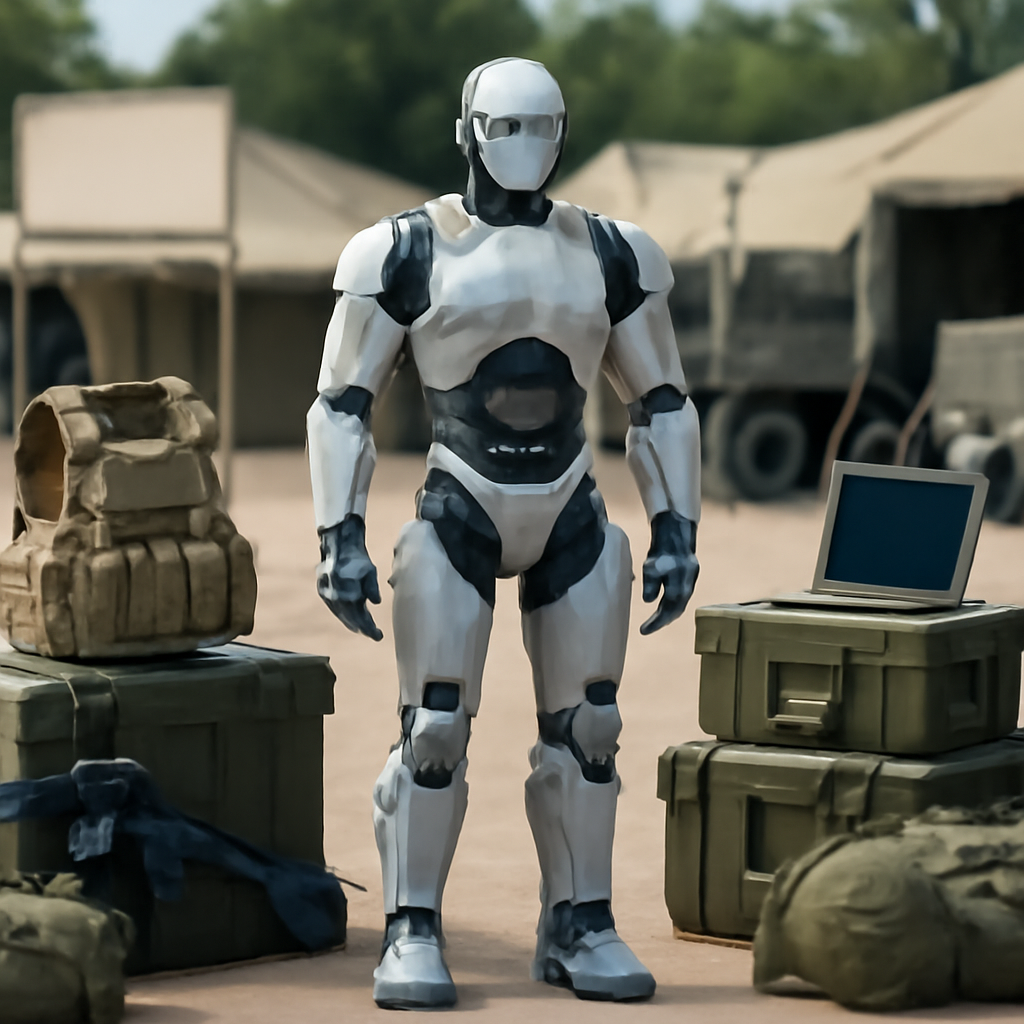
On June 17, U.S. President Donald Trump invoked the Defense Production Act to enable the Department of Defense to establish voluntary agreements with private providers to break bottlenecks and accelerate supply chains.
Kim Jong Un's endorsement of "One China" and the shifting regional alignments
During Chinese President Xi Jinping’s early June visit to North Korea, Kim Jong Un confirmed his support for Beijing’s "One China" principle, a claim used to assert sovereignty over Taiwan. The timing follows Pyongyang’s earlier support for Russia in its war in Ukraine — an effort that included an estimated 15,000 troops — and has raised questions about whether North Korea might play a role in any future China–Taiwan confrontation. The source describes this endorsement as part of a broader regional alignment that could matter if a Taiwan crisis erupts.
How recent wars exposed U.S. stockpile and production shortfalls
The source links acute shortages of munitions and components to a protracted war in the Middle East and to Iran’s asymmetric capabilities, which "significantly depleted the U.S. military’s weapons stockpiles." Shortages named in the report include rocket motors, igniters, guidance systems, and air defense interceptors. Those gaps prompted the emergency expansion of domestic production and specific investments, including a $1 billion investment in L3Harris’s rocket motor facilities described as an attempt to "plug the holes in a manufacturing landscape" heavily reliant on international partners.

Audit-ready is a season. It shouldn't be.
Evidence in spreadsheets, controls drifting between audits, frameworks multiplying on flat headcount. Nubivance runs continuous compliance on Rapid7 Cyber GRC - SOC 2, HIPAA, ISO 27001, PCI, CMMC.
End the scrambleOffshoring since the Soviet collapse: the human and supplier networks that left
The erosion of America’s industrial base did not happen overnight. According to the source, offshoring began shortly after the collapse of the Soviet Union and deepened as U.S. firms pursued cheaper labor and higher margins in emerging economies. Today, "thousands of defense subcontractors supplying the DoD and producing critical components are based abroad," and some electronics and metals the United States relies on can be traced directly to China. The piece emphasizes that the problem is not only fewer factories on U.S. soil but also the wider network of trained professionals and suppliers that migrated away with them — a capability gap federal budgets alone will not fix.
China’s supply‑chain leverage and recent precedents
The report underscores that China has become central for critical minerals, advanced electronics, and renewable-energy technology. Beijing has "already demonstrated on multiple occasions that it is willing to weaponize its control over supply chains," including a "major incident regarding rare earth shipments" and, more recently, actions taken in response to U.S. restrictions on semiconductors and technology investments. Those precedents, coupled with China’s manufacturing scale and processing capacity, mean that several U.S. industrial interests run through its primary geopolitical competitor — a structural vulnerability if conflict were to choke shipping routes, semiconductor production or access to processing hubs.
How the Department of Defense, U.S. policymakers, and manufacturers such as Hadrian are acting
- The Department of Defense: Using the Defense Production Act to reach voluntary agreements with private providers, and authorizing emergency investments such as the $1 billion boost to L3Harris’s rocket motor facilities to accelerate munitions production.
- U.S. policymakers: The source says they have long anticipated and planned for a prolonged Asia‑Pacific contingency, but are now confronting the strategic reality that planning cannot substitute for the physical capacity to produce ships, missiles and components at scale.
- Manufacturers such as Hadrian: Pursuing automation and software-driven production — the report highlights Hadrian’s Opus-powered system — to standardize output and compensate for shortages of specialized labor, offering a potential template for scalable, quicker replacement of critical items.
The combined picture in the reporting is stark: a potential Taiwan conflict could stress semiconductors, shipping routes, and manufacturing hubs simultaneously, exploiting decades of offshoring and the migration of industrial talent. Emergency measures and targeted investments can blunt immediate shortages, but the source argues rebuilding the industrial base requires restoring networks of skilled workers and suppliers, and experimenting with new production models such as AI-driven, autonomous factories.
As the piece closes, it returns to a direct test: if the United States wants to maintain a credible deterrent posture under the Taiwan Relations Act or elsewhere, it must "urgently prioritize the elimination of vulnerabilities across its supply chains." The true test, the source warns, will be not only military strength but "the ability to materially sustain it."