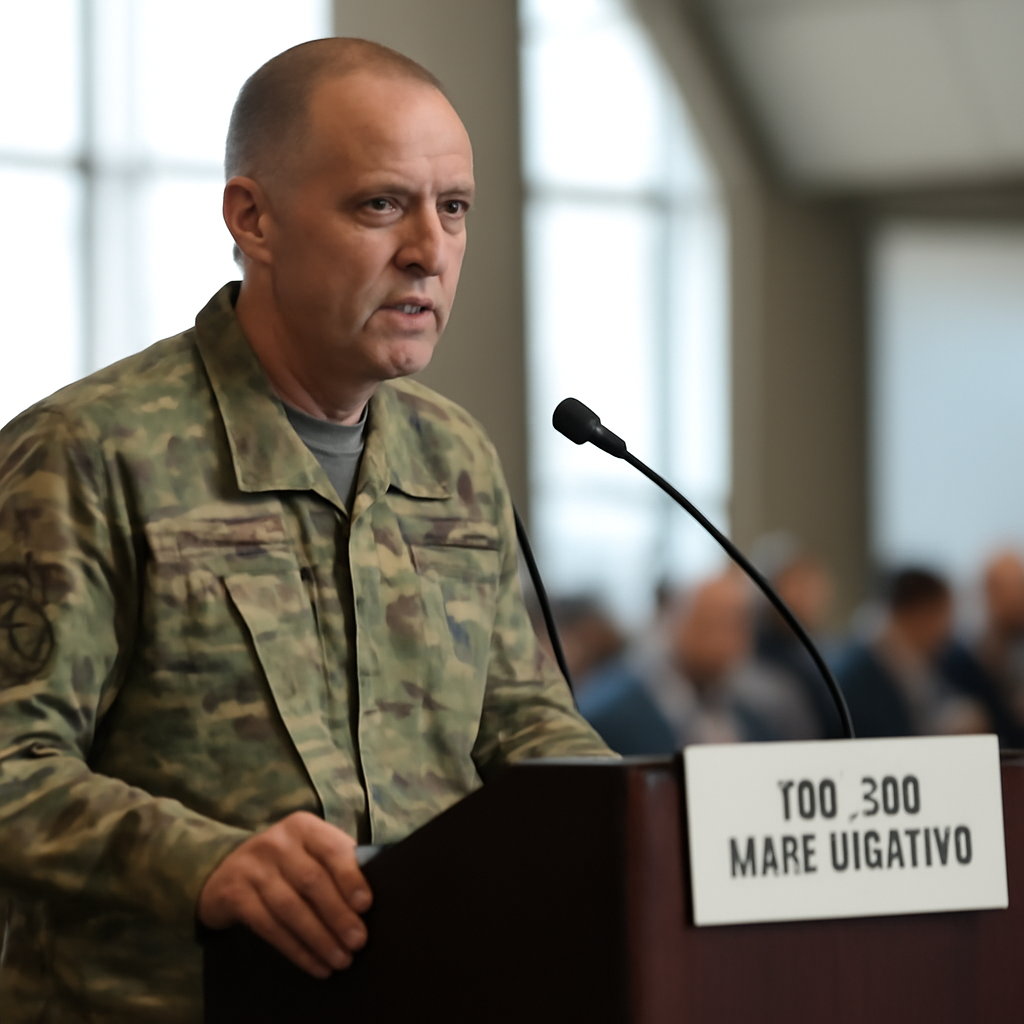
“We always want to proceed safely forward. The work that we do, as I've noted, is, can be dangerous. So we don't want to take risks that are unnecessary and unsafe. So that's always something that we're on the lookout for,” Brig. Gen. Mark Massaro told reporters at the Air, Space & Cyber conference hosted by the Air and Space Forces Association.
Balancing speed and safety at the Air Force Test Center
Massaro, who leads the Air Force Test Center (AFTC), framed the center’s role as one of calibrated urgency: ready to move quickly to meet the Pentagon’s push for faster buys and fielding, but explicitly unwilling to accept avoidable risk. His comments came three months after eight airmen died during a test flight of Boeing’s B-52 Stratofortress at Edwards Air Force Base in California, and nearly a year after Defense Secretary Pete Hegseth pressed for acquisition reforms that include “being open to buying the 85 percent solution” while completing the “more perfect solution” over time.
Massaro acknowledged the larger institutional pressures. The Pentagon’s recent staff cuts and reorganization of its weapons testing organization — changes highlighted in a Government Accountability Office report released earlier this year — have raised oversight concerns that the test center must account for as it adjusts tempo.
Operational tradeoffs: what to accept and what to test
Massaro described a practical risk calculus that blends cost, schedule, performance, and employability for combatant commands and operational warfighters. “There's a lot of capabilities out there today that might not be—from a technology perspective—exactly what it looks like in our minds at the end state. But it's at least the same, if not better, than what might be out there today,” he said, framing rapid integration as a balance between programmatic risk and urgent operational need.
The AFTC is testing system upgrades for the B-52 that the Air Force says could keep the aircraft operational through the 2050s. The center works with program acquisition executives and operators “to understand where those balances are, and design our test programs to accommodate for more rapid” testing and integration, Massaro added.

Audit-ready is a season. It shouldn't be.
Evidence in spreadsheets, controls drifting between audits, frameworks multiplying on flat headcount. Nubivance runs continuous compliance on Rapid7 Cyber GRC - SOC 2, HIPAA, ISO 27001, PCI, CMMC.
End the scrambleRapid integration case study: Falco/APKWS on the F‑15E
Massaro pointed to a near-term example of accelerated testing and integration: a rapid connection of the Falco, the [Advanced Precision Kill Weapon System], to the F‑15E. “Our people, processes, and test assets were postured to respond through integrated developmental and operational testing,” he said. According to Massaro, the technical risk boiled down to “one technical risk to really get through,” which allowed the effort to proceed quickly; he noted, “The Falco was a little bit over a year ago…We had F‑15E's. We had the rockets. We just had never connected them together in that way.”
That vignette illustrates how targeted technical challenges, when isolated and well-scoped, can be resolved faster than entire programs — but it also underscores Massaro’s repeated caveat that safety must remain the backdrop for all such trades.
MMAs and Swarm Aero’s Gamera: competition and capacity
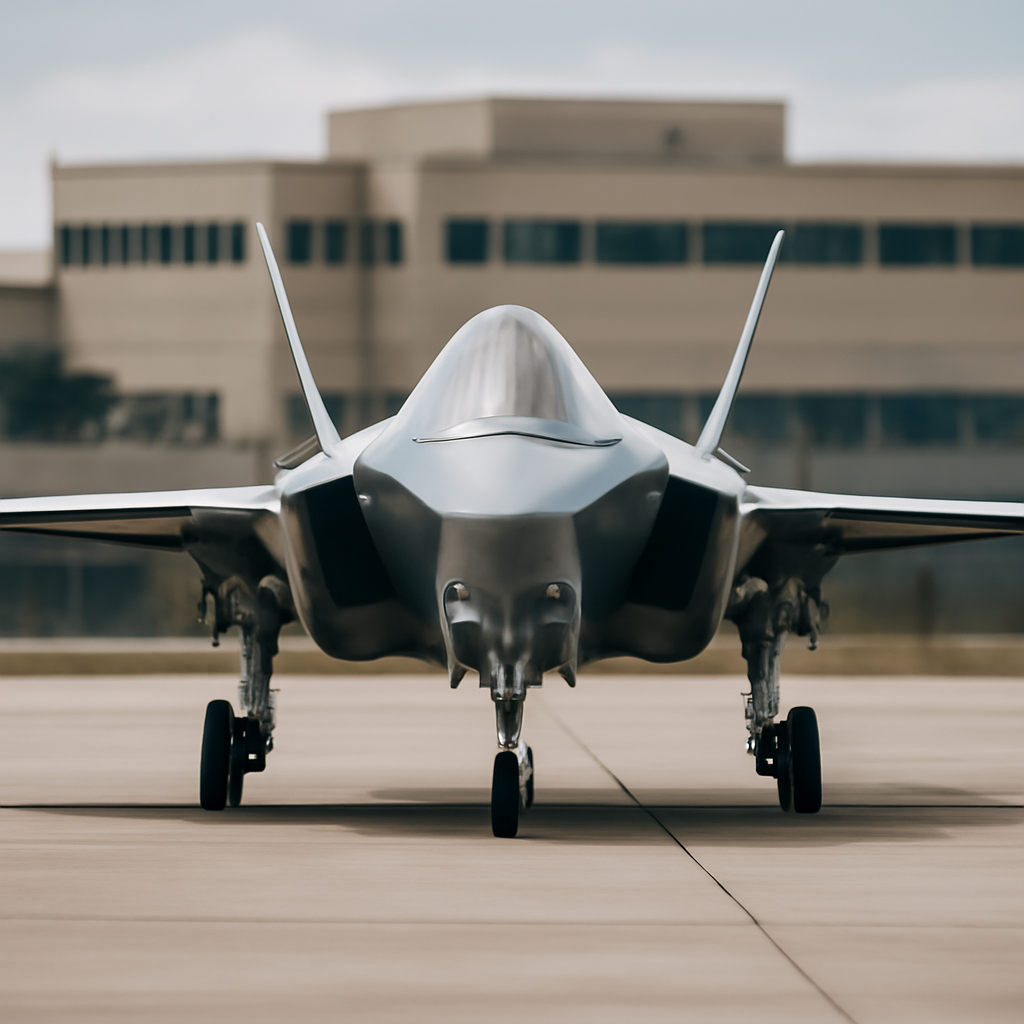
The Air Force’s call for Massed Modular Aircraft (MMAs) to replace General Atomics’ MQ‑9 Reaper drone was announced this week by Troy Meink, the service’s secretary. Swarm Aero, which has aimed at this market for four years, unveiled an autonomous aircraft named Gamera that it describes as a long-range strike UAS with seven connection points for payloads like missiles and sensors and that runs on the company’s Legion autonomy software.
- Swarm Aero CEO Peter Kalogiannis told Defense One the company designed Gamera “to carry a very large payload like the LRASM ... a long distance, and do so as cost effectively as possible,” and he referenced the “$10 million listed in the solicitation” as enabling the expected volumes.
- The company said it is building “several” prototypes in its Oxnard, California, facility and expects the first flight by the end of 2027.
- Co‑founder Oliver Palmer argued the design could “make the rest of the force—the bombers, the fighters, the B‑21s, the F‑47s—it makes them more lethal and more survivable,” and urged broader competition in large aircraft production beyond historic monopoly structures.
AI, data links, and edge compute on mobility and space platforms
Artificial intelligence surfaced repeatedly in conference remarkss. The Space Force’s newly appointed top buyer, Erich Hernandez‑Baquero, said the military must “lean in” to AI: “We cannot afford to lose this race for artificial intelligence,” he told attendees, adding that the answer is not to shy away but to “lean into it, understand it, and apply the right guardrails in place.”
The AFTC now has “an artificial intelligence expert with us on staff now at the Air Force Test Center,” Massaro said, signaling a formal attempt to bridge testing with AI expertise. Air Mobility Command is pushing a separate, concrete connectivity program: Lt. Gen. Daniel Tulley said the ability for air crews to communicate and coordinate — “to pass threat information, to save lives and save aircraft” — has delivered expected benefits.
Tulley acknowledged the command missed an original 2025 goal but is “well down the path” to having a quarter of its fleet data‑link connected. The service is pursuing MAF NEXUS; the goal is to have the capability on all mobility aircraft, either incorporated on future builds or added on to existing platforms. The system, Tulley said, “brings edge compute, the ability to then deploy AI and much more computing horsepower forward on the aircraft, and it does network with the rest of the joint force and the Air Force's battle management system.”
What this means for technologists, acquisition leaders, and operational warfighters
- Technologists and security teams: expect more direct engagement with test organizations now that AFTC has an AI expert on staff and is explicitly postured to integrate AI and edge compute into aircraft through programs like MAF NEXUS.
- Acquisition leaders: will face continued pressure to accept measured “85 percent” solutions where operational need is urgent, while ensuring oversight and safety after recent Pentagon reorganizations flagged by the GAO.
- Operational warfighters: could see faster fielding of capability upgrades — from rapid Falco-to‑F‑15E integrations to modular UAS like Gamera — but will depend on test authorities to validate employability and safety before deployments.
The throughline from National Harbor was plain: speed matters, but the Air Force Test Center is reminding the Pentagon that accelerated acquisition and rapid integration survive only on a foundation of test‑validated safety. The next markers to watch are whether prototypes — from B‑52 upgrades to Swarm Aero’s Gamera — clear their respective technical risks without compromising the safety guardrails Massaro insists remain non‑negotiable.