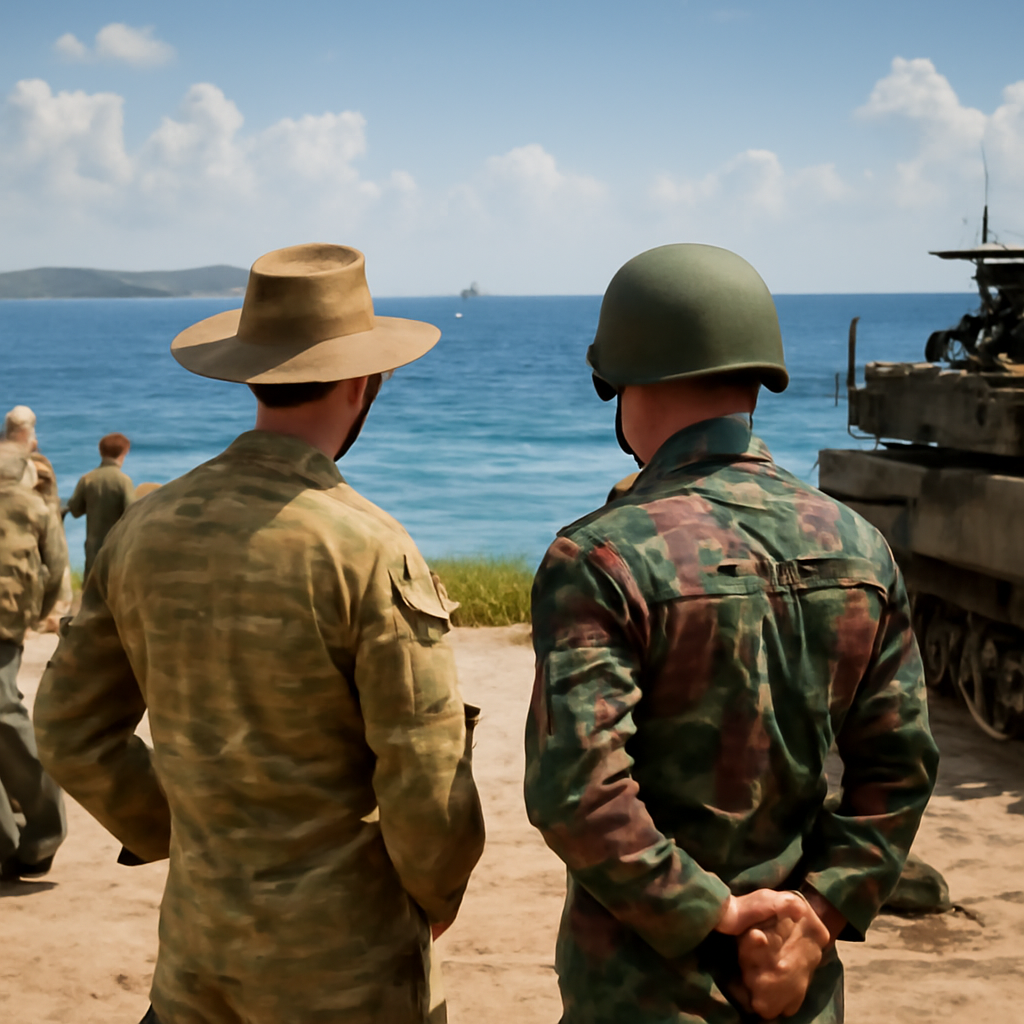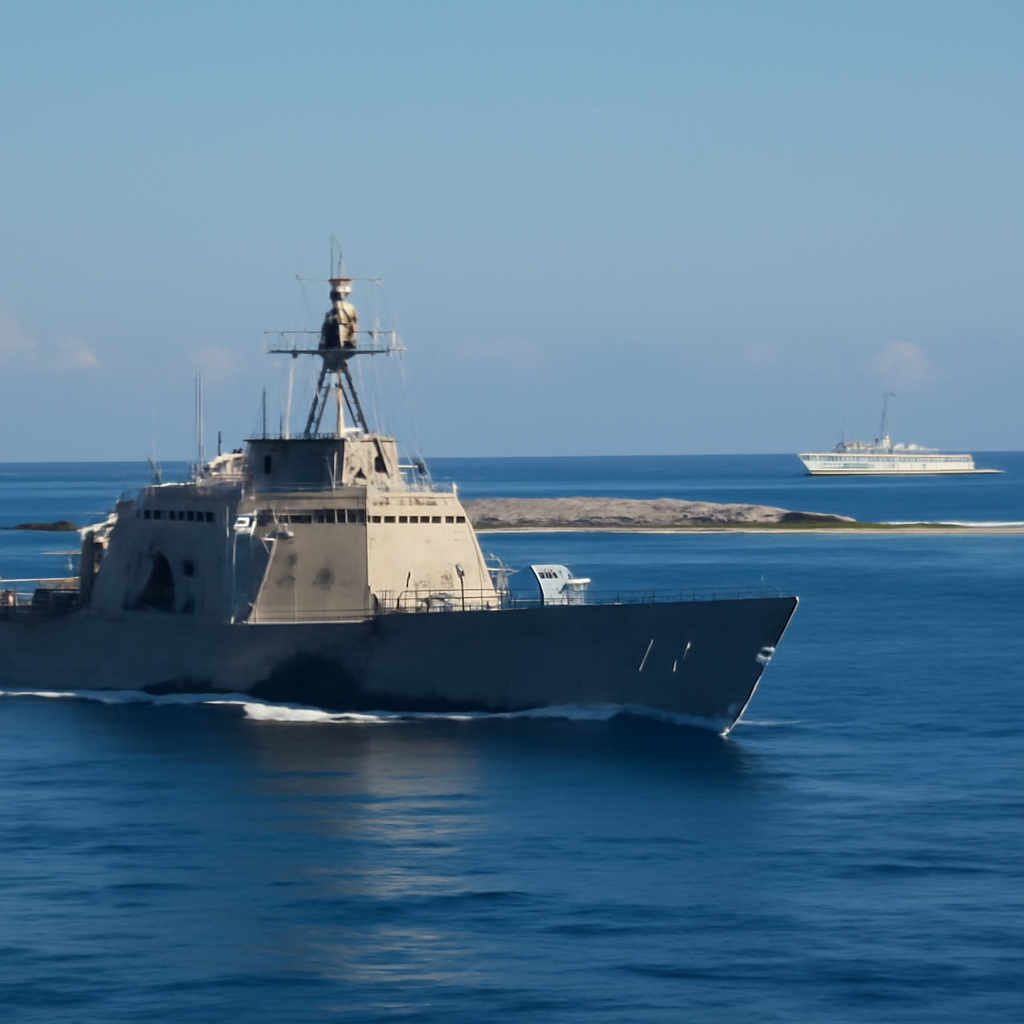
"Illegally intruded" into waters adjacent to Sabina Shoal "without approval from the Chinese government," a spokesperson for the People’s Liberation Army’s Southern Theater Command Navy said on October 20, describing the U.S. naval presence that same day.
October 20 encounter: USS Charleston and the PLA Southern Theater Command Navy
On October 20, 2026, the U.S. Littoral Combat Ship USS Charleston (LCS-18) operated near Sabina Shoal in the Spratly Islands. The Southern Theater Command Navy accused the Charleston of an unlawful intrusion; a U.S. 7th Fleet spokesperson countered that the ship conducted "routine operations in international waters" consistent with international law. The PLA said it "dispatched forces to track and monitor the U.S. vessel," marking the first time it publicly confirmed such action near a maritime feature China does not occupy.
Sabina Shoal's legal and physical status
Sabina Shoal sits apart from prior flashpoints. It was not one of the maritime features named in the 2016 South China Sea Arbitration Award. The United States and the Philippines consider Sabina Shoal a low-tide elevation that cannot itself generate a territorial sea, and therefore view the surrounding waters as part of the Philippines’ Exclusive Economic Zone (EEZ). Beijing disputes that classification. A "Survey Report on the Coral Reef Ecosystem of Xianbin Jiao," published by China’s Ministry of Natural Resources in August 2024, stated there are at least three naturally formed cays above water at high tide; on that basis China treats Sabina Shoal as a rock capable of claiming a territorial sea.

Audit-ready is a season. It shouldn't be.
Evidence in spreadsheets, controls drifting between audits, frameworks multiplying on flat headcount. Nubivance runs continuous compliance on Rapid7 Cyber GRC - SOC 2, HIPAA, ISO 27001, PCI, CMMC.
End the scrambleCompeting legal positions: freedom of navigation versus territorial security
The encounter sits atop an established legal disagreement. The United States asserts a right to operate its military vessels "wherever customary international law allows" and uses freedom of navigation operations (FONOPs) to challenge maritime claims it deems excessive. China rejects that framing, arguing that freedom of navigation cannot justify activities it regards as threatening territorial integrity or security and that U.S. FONOPs "have no place in contemporary international law." A semi-official August 2025 report from the China Institute for Marine Affairs concluded that "U.S. Freedom of Navigation lacks a basis in international law and seriously distorts the interpretation and development of international law."
Notably, news reporting around the October 20 operation did not officially label the Charleston’s presence a FONOP. The U.S. spokesperson’s statement — that "all nations enjoy freedom of navigation and other lawful uses of the sea in this area" — is consistent with Washington’s broader posture but did not specify whether the transit was a formal legal challenge to a named Chinese claim.
Signal and warning: how Beijing’s actions read in Manila
The encounter unfolded against a backdrop of elevated China–Philippines tension. On October 14, Chinese Ambassador to the Philippines Jing Quan reportedly said China could "easily win a conflict" against the Philippines if it chose to use force. Reuters reported at least eight close encounters between China and the Philippines across the South China Sea and Luzon Strait since the start of October. Manila therefore could read the Charleston’s presence as a demonstration of U.S. support for Philippine maritime claims, even if the U.S. did not declare a FONOP.
From Beijing’s perspective, dispatching naval forces to track and monitor a U.S. warship at an unoccupied feature signals a willingness to protect claimed rights at Sabina Shoal and serves as a warning to the Philippines that future provocations, "with or without support from the U.S.," may prompt an escalated Chinese response.
What this means for the Philippines, the U.S. 7th Fleet, and the PLA Southern Theater Command Navy
- The Philippines: Manila may interpret U.S. naval presence near Sabina Shoal as backing of its EEZ claims and should expect Beijing to view such activities as increasingly provocative, given recent confrontations and diplomatic remarks.
- The U.S. 7th Fleet: Operating near contested or disputed features without formally designating a FONOP preserves legal ambiguity but may complicate predictability; routine transits can still elicit active tracking and monitoring by Chinese forces.
- The PLA Southern Theater Command Navy: Publicly acknowledging tracking and monitoring at an unoccupied shoal reflects a calibrated escalation in enforcement posture short of occupation, signaling readiness to respond to perceived intrusions around the Spratly Islands.
The October 20 encounter does more than register another headline in a long-running maritime dispute. By occurring at Sabina Shoal — a feature China does not occupy but treats as part of the Spratly group — the incident reveals shifting tactics: legal argumentation and naval signaling now reach beyond physically occupied reefs. With competing legal narratives intact and recent incidents between China and the Philippines on the rise, similar close encounters appear likely to recur unless Beijing and Washington clarify intentions and incident-management practices. Whether those encounters produce escalation or create pressure to improve crisis channels will depend on strategic choices in both capitals and on how Manila reads the signals in the months ahead.
Source: The Diplomat — “Why the China-US Naval Encounter at Sabina Shoal Is Different,” October 2026