$4.5 billion for four KC‑46A refueling tankers — a single figure that frames a week of shifting military-commercial ties in the Middle East and a new U.S. military drone effort that intends to operate across nations and domains.
$4.5B sale of four KC‑46A refueling aircraft to Qatar
Breaking Defense’s Middle East coverage highlights a potential $4.5 billion foreign military sale: four KC‑46A aerial refueling aircraft to Qatar. The transaction is presented as a prospective sale, and it sits alongside other regional procurement topics covered this week. The specific dollar amount and aircraft type are the concrete particulars reported.
On its face, the proposed sale is notable for scale — four modern tankers at a multi‑billion dollar price point — and for the way it was grouped in regional reporting that ties together procurements, exports, and new operational concepts. Beyond the raw figure, the report does not list contract timing, offsets, or accompanying support packages; the $4.5 billion figure and the aircraft type are the reported facts.
Anticipated surge in Turkish Hürjet exports
The same reporting flagged an anticipated surge in exports of the Turkish Hürjet. The coverage places Hürjet exports alongside the tanker sale as part of a broader pattern of shifting supply and demand for military platforms in the region. The reporting does not offer export volumes or destination states beyond the general observation that Hürjet exports are expected to increase.

Audit-ready is a season. It shouldn't be.
Evidence in spreadsheets, controls drifting between audits, frameworks multiplying on flat headcount. Nubivance runs continuous compliance on Rapid7 Cyber GRC - SOC 2, HIPAA, ISO 27001, PCI, CMMC.
End the scrambleFalcon Strike: CENTCOM’s new multinational, multi‑domain drone task force
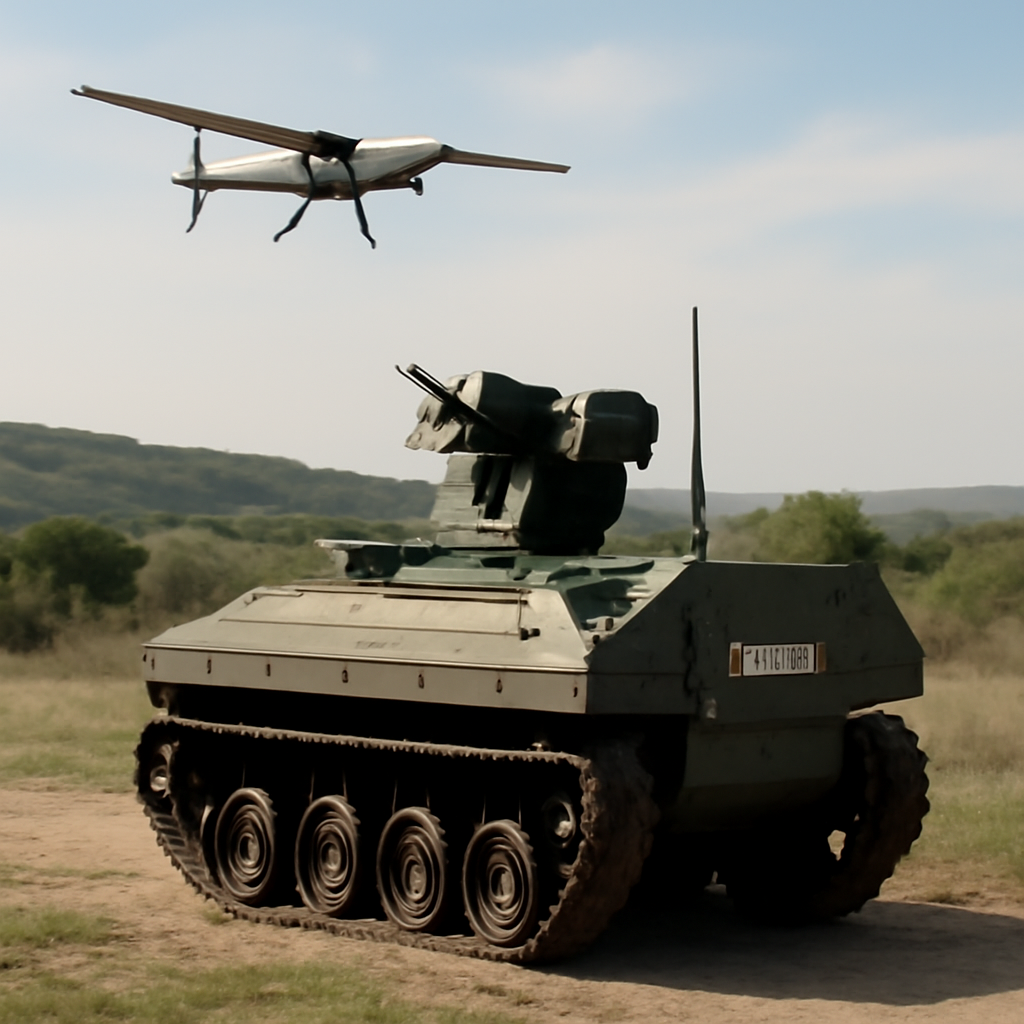
Breaking Defense identifies a newly announced U.S. military drone initiative known as Falcon Strike. The piece describes Falcon Strike as a multinational, multi‑domain drone task force. The report connects the name Falcon Strike with CENTCOM in its headline and with the U.S. military in the body, presenting the task force as an organized effort to bring together partners and platforms across domains.
Those are the report’s explicit elements: Falcon Strike as a named task force, multinational participation, multi‑domain orientation, and association with CENTCOM/the U.S. military. The coverage does not list participating nations, platform types, rules of engagement, or operational basing in this item; it confines itself to the task force’s name and broad character.
The Mecca pact: a trilateral defense arrangement linking Saudi Arabia, Turkey and Pakistan
Breaking Defense contributing editor Riad Kahwaji is cited for regional insight into a newly announced trilateral defense pact linking Saudi Arabia, Turkey and Pakistan. The reporting refers to this arrangement as a newly announced trilateral defense pact and frames it as a development that could energize the defense industries of all three countries. Beyond naming the three states involved and the potential industrial impact, the report does not add treaty text, force posture changes, or timelines.
The report presents the pact and the procurement items — KC‑46A prospects and Hürjet export expectations — in a single context, suggesting a moment in which state‑level defense agreements and procurement decisions are being discussed regionally. The single, attributable analytical claim in the source is that the pact could energize Saudi, Turkish, and Pakistani defense industries.
What this means for Qatar, Saudi Arabia, Turkey, and Pakistan
- Qatar (procurement leaders): The reported potential $4.5 billion purchase of KC‑46A tankers is a concrete procurement option to watch. Procurement authorities in Doha are the named subject of that item by virtue of the target country in the sale announcement.
- Turkey (manufacturers and exporters): The coverage points to an anticipated surge in Hürjet exports, signaling that Turkish aircraft manufacturers and export agencies are in a position to supply more jet trainers/light attack aircraft to external customers.
- Saudi Arabia, Turkey, Pakistan (defense industries): The trilateral Mecca pact is reported as a development that could energize the defense industries of all three nations — a single, specific analytical claim attributed to Riad Kahwaji’s insight in the story.
- CENTCOM and partner militaries (operators): The emergence of Falcon Strike as a multinational, multi‑domain drone task force indicates a named U.S. military initiative geared toward combined drone operations under CENTCOM’s purview, as reported.
The reporting assembled by Breaking Defense’s Middle East bureau and contributors delivers a compact set of facts: a potential $4.5 billion tanker sale to Qatar, anticipated Turkish Hürjet export growth, a new multinational drone task force called Falcon Strike associated with CENTCOM, and a newly announced trilateral defense pact linking Saudi Arabia, Turkey and Pakistan that could energize their defense industries. Each item stands as a discrete fact in the report; together they sketch a region in which procurement, industrial policy, and operational experimentation are being discussed in close succession.
The unresolved, concrete question the report leaves on the table is straightforward: will these separate developments — a high‑value tanker sale, a projected export surge, an operational drone task force, and a trilateral pact — translate into sustained changes in procurement flows, industry output, or force employment? The story supplies the facts; their combined implications remain to be seen.