"Banning DeepSeek's own app and API is workable," said Katie Moussouris, founder and CEO of Luta Security.
DHS order: a blanket prohibition on DeepSeek implementations
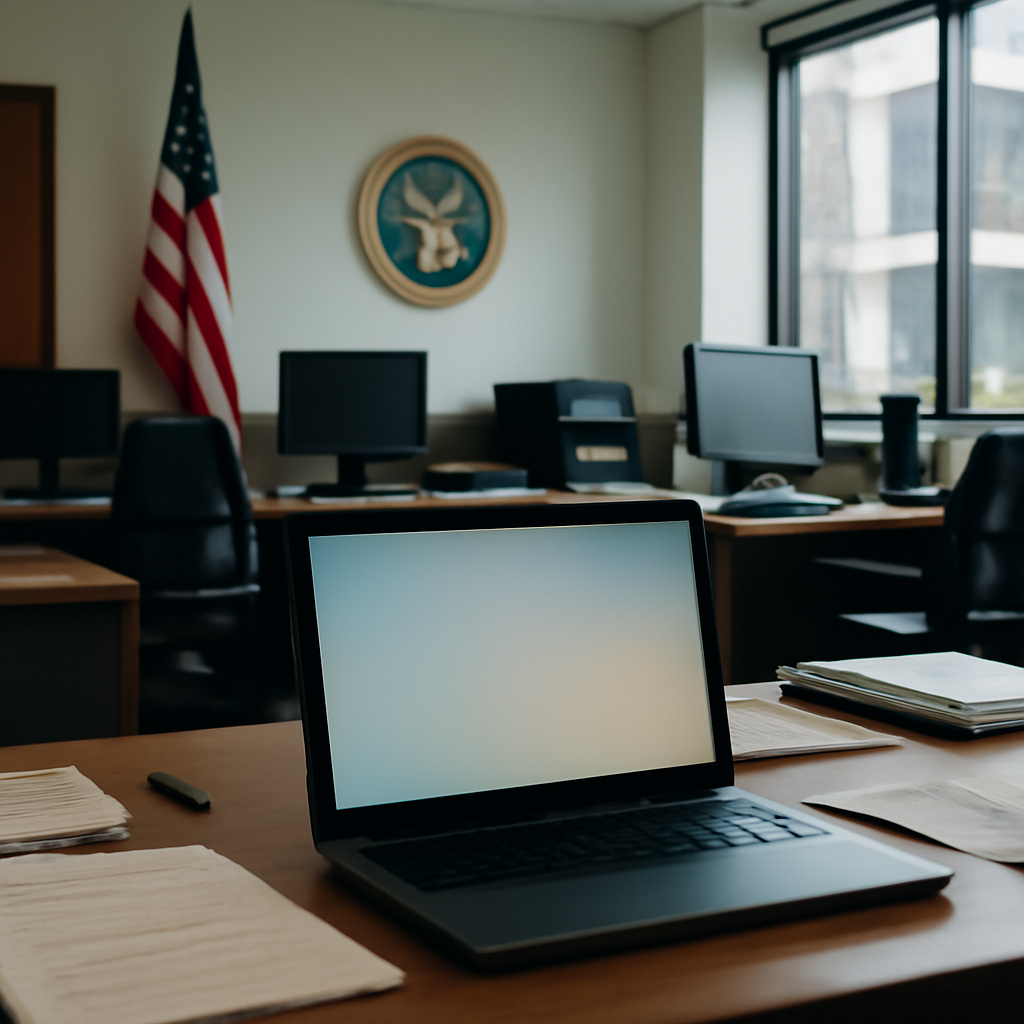
The Department of Homeland Security on Monday directed all federal civilian agencies to stop using technology products from the China-based AI lab DeepSeek and to remove any existing implementations. The order requires agencies to ditch "all DeepSeek and DeepSeek-affiliate products, and third-party products and services developed using DeepSeek implementations." A DHS spokesperson did not immediately respond to a request for comment.
Ambiguity in the phrase "developed using" and the risk of inadvertent use
The order's reach is intentionally broad, and that breadth creates operational ambiguity. It is not clear from the text whether "developed using" means ongoing access to DeepSeek models via API, or whether it extends to any software that was authored, tested, or even edited with the help of DeepSeek. The practical problem is compounded by intermediary services that route requests: OpenRouter, for example, "routes requests to the best available providers for your model," and Vercel AI Gateway selects providers in the same way by default. Agencies that rely on such gateways could find themselves using DeepSeek models unintentionally unless they explicitly constrain which providers the gateway may contact.

Your town's IT department is one person. Maybe.
Ransomware crews target small municipalities because nobody's watching. Nubivance gives Maine and New Hampshire towns a security program sized to a town budget.
Protect the town officeDefense and legislative actions preceded the DHS move
The DHS civilian directive follows a string of earlier American exclusions of DeepSeek technology. The Defense Information Systems Agency began blocking DeepSeek on the Pentagon’s IT networks in January 2025. The US Navy, NASA, and the US House of Representatives took similar steps, and various US states have also restricted the service. On February 6, 2025, Representative Darin LaHood (R-IL) and Representative Josh Gottheimer (D-NJ) introduced the No DeepSeek on Government Devices Act, arguing the lab's models "purportedly capture data on US citizens and provide it to the Chinese government." That bill did not make it out of committee.
Mobile app security reports and model vulnerabilities
Security concerns around DeepSeek's software emerged shortly after the lab released DeepSeek-R1 in early 2025. A December 2025 report on the DeekSeek mobile app for Android and iOS cited plaintext information leaks, links to servers run by Chinese tech firms, and shortcomings such as lack of SSL pinning. The reporting noted these are largely mobile-security flaws common to many apps, particularly those that integrate third-party advertising SDKs hosted outside the US. But those findings do not directly address the additional risk from capture of user text prompts and responses, or how local secrets and other sensitive information can be ingested by AI agents.
Separately, National Institute of Standards and Technology testing found DeepSeek more vulnerable to prompt injection than US models and easier to jailbreak. The reporting notes that "jailbreak guardrails often get in the way of defenders," underscoring a trade-off between usability and control.
What this means for technologists, procurement leaders, and US AI companies
- Technologists and security teams will need to map dependencies beyond direct vendor contracts: they must identify whether code, CI/CD tooling, or API gateways could route data or model calls to DeepSeek, and assess how to enforce restrictions where gateways choose providers dynamically.
- Procurement leaders and federal agencies face a verification problem. As Katie Moussouris noted, "An AI software bill of materials doesn't record which tools developers used," leaving vendors with an impractical burden to attest that nothing they rely on ever touched DeepSeek.
- US AI companies such as Anthropic may gain market advantage. The DHS directive, by excluding a class of foreign open-weight models, could limit competition from low-cost or popular Chinese models — a dynamic the reporting says "may be a boon for American AI companies" as agencies drive demand toward approved suppliers.
Enforcement and verification remain the central unresolved questions. The order removes any doubt about the federal civilian government's intent to avoid DeepSeek's technology, but it leaves agencies with the technical and contractual task of proving they are compliant. That task is made more complicated by intermediaries that select or route providers automatically, by the commonality of mobile-security weaknesses, and by software development practices that do not track which AI tools were used during creation. The directive follows earlier exclusions in the defense community but expands the scope to civilian agencies in a way that, as Moussouris said, "exceeds that requirement in ways that aren't practical."
Link to the original reporting: https://www.theregister.com/security/2026/10/20/deepseek-deep-sixed-at-all-us-federal-civilian-agencies/5304010