There are 166 "critical and single source components directly impacting delivery timelines and fleet readiness" for the M1 Abrams engine, the Army says — a short list of parts that is now constraining tank availability and prompting a direct outreach to industry.
AGT1500 subcomponent bottlenecks and the readiness impact
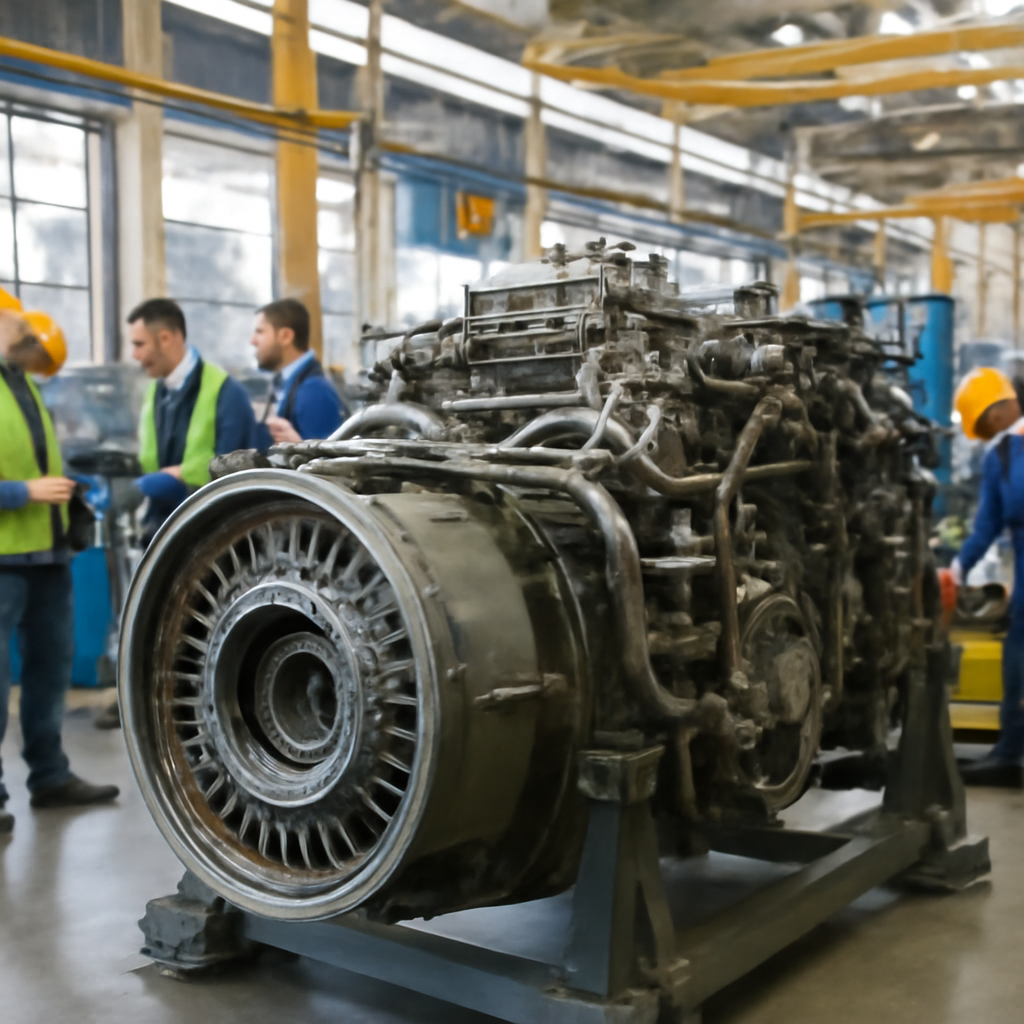
The supply chain problems center on subcomponents for the AGT1500 engine, which the Army identifies as the primary cause of tanks sitting idle. The engine is made by Honeywell Aerospace, and Army officials told Breaking Defense that delays arise at the subvendor level — sometimes stretching "months to a year," Brandon Pender, chief technology investment officer for the Army’s DEVCOM Ground Vehicle Systems Center, said in an interview. Those lapses, the service said, are directly reducing fleet readiness.
The TIGER hackathon, July 14: goals and participants
On July 14 the Army convened an industry day called the "TIGER hackathon" (TIGER standing for the Total Integrated Engine Revitalization program). The event, which officials stressed did not involve any hacking, brought together more than 40 vendors and senior leaders, including Lt. Gen. Christopher Mohan, head of Army Materiel Command. Organizers set three explicit goals: find second sources for AGT1500 subcomponents; identify companies able to apply complex advanced manufacturing to those parts; and secure suppliers of raw materials used in the components.

The cyber insurance questionnaire just landed. Now what?
SOC 2, HIPAA, insurance renewals - someone has to own security strategy. Nubivance provides fractional CISO leadership without the full-time salary.
Get a security leadArmy ownership of intellectual property and the Area of Interest solicitation
Of the 166 parts the service has flagged as critical, the Army currently owns the intellectual property for 122, Rick Harris, division chief of the Stryker and Infantry Squad Vehicle programs at Army Contracting Command–Detroit Arsenal, told Breaking Defense. Harris said the Army will post an Area of Interest (AOI) solicitation in the "next few days" listing those 122 components and inviting industry to partner with the government and Honeywell either as second-source suppliers, providers of advanced manufacturing services, or suppliers of raw materials. Harris added that, "ideally" the Army would like to gain the IP for the remaining critical components to "increase the industrial base" and "create more resiliency in the supply chain for the engine parts."
Manufacturing constraints: the impeller, vacuum forge process, and advanced-tech needs
Officials declined to identify every troublesome part, but they pointed to specific manufacturing limits. Materials for casting and molding processes have "long lead times," Pender said, and the supplier that makes the turbine impeller is not meeting its delivery schedule, Phil Labut, a logistics management specialist within the service’s Tank-automotive and Armaments Command, confirmed. Previously reported details cited Mohan as saying in March that only one U.S. company performs the "specific vacuum forge process" used for that impeller. While the Army performs much of its own 3D printing and advanced manufacturing at Rock Island Arsenal, Pender said the engine parts demand "a very deliberate, engineering intensive, almost aerospace level of quality" that will require more complex advanced manufacturing capabilities than the service typically fields in-house.
Timeline for contracts and the profile of potential vendors
Following the AOI, the Army hopes to put vendors on contract by Oct. 1 — a target Pender acknowledged would require a "perfect world" to meet. Officials said most hackathon attendees were nontraditional or commercial firms seeking to add defense work to their portfolios. Labut noted high-level backing for the effort, saying, "We have the backing all the way up our chain to Gen. Mohan to make this work. When you have that kind of brass behind this, it helps things move."
What this means for Honeywell Aerospace, Rock Island Arsenal, and Army Materiel Command
- Honeywell Aerospace: the company is the primary engine manufacturer; the Army’s solicitation aims to create second sources and advanced-manufacturing partners that would work in concert with Honeywell and its subvendors to reduce single-point failures in the supply chain.
- Rock Island Arsenal: the service's existing in-house advanced manufacturing hub will remain a piece of the response, but officials say the engine’s parts demand higher-complexity, aerospace-grade processes that exceed current in-house capabilities.
- Army Materiel Command: with Lt. Gen. Christopher Mohan's backing, the command is positioned to accelerate contracting and industrial-base adjustments if prospective vendors meet the AOI criteria and the Army can secure required IP or supplier agreements.
The Army has laid out a concrete, short-term path: publish an AOI for 122 Army-owned components within days, invite nontraditional and commercial manufacturers to bid, and seek contracts potentially by Oct. 1. The critical unanswered pivot is whether new partners can scale complex, aerospace-quality manufacturing — and whether the Army can acquire the remaining IP to broaden second-source options quickly enough to ease the months-long delays Pender described. The next milestone to watch is the AOI posting and the responses it draws from the more than 40 companies that attended the July 14 event.
Source: Breaking Defense — Army partners with industry to alleviate Abrams engine supply chain woes