"The principal objectives for this effort are to develop, produce, and sustain a missile capability at extended ranges with rapid launch and reduced time-to-target over existing effectors," the RFI published Tuesday read.
Acquisition targets: 5,000 missiles and 50 for operational assessment
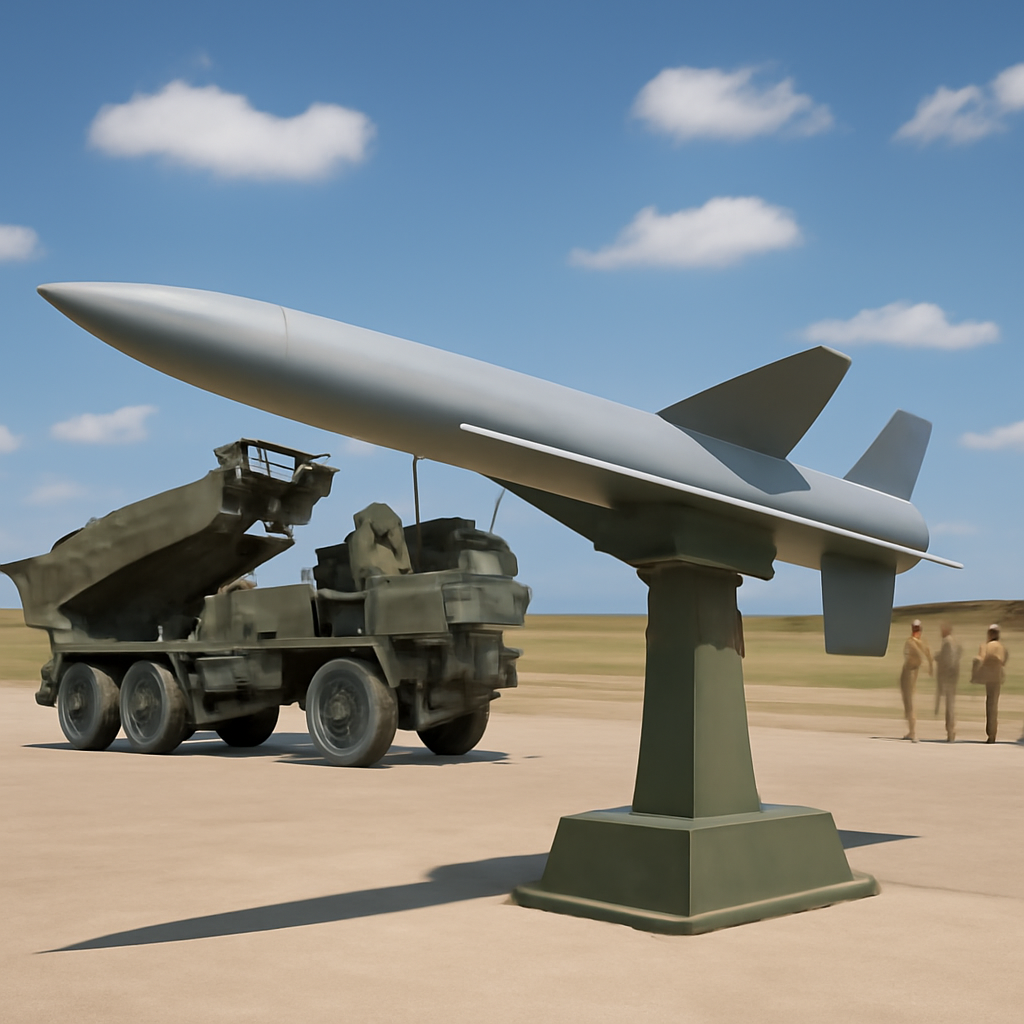
The Army's request for information (RFI) asks industry to propose a Next Generation C-sUAS Missile (NGCM) that can be produced for less than $150,000 per round. The solicitation says the service is looking to buy at least 5,000 of the missiles and hopes to acquire 50 NGCMs to be ready for operational assessments by the first quarter of fiscal 2028. Responses to the RFI are due on August 20.
Performance requirements: range, altitude, and launch speed
The NGCM is being specified to outperform current counter-drone effectors across a number of measures. The RFI states the missile must be able to engage Group 2 and 3 small unmanned aircraft systems (sUAS) — systems described in the solicitation as weighing between 21 and 1,320 pounds — and must "go faster and farther than current systems" that counter such threats. Minimum engagement parameters are cited as targeting small drones beyond 16 kilometers (9.94 miles) at altitudes of at least 6 kilometers. The Army says its ideal performance would extend to greater than 25 kilometers at altitudes above 8 kilometers. The missile must also "be capable of leaving the rail within a launch response of [less than] 5 seconds from operator initiation."

The cyber insurance questionnaire just landed. Now what?
SOC 2, HIPAA, insurance renewals - someone has to own security strategy. Nubivance provides fractional CISO leadership without the full-time salary.
Get a security leadCompatibility: Raytheon’s Coyote Launcher and multiple radars
Integration is a central requirement. Per the RFI, proposed NGCMs must fit into Raytheon’s Coyote Launcher with "minimal to no modifications." The missile must also be radar-agnostic with specific systems named in the solicitation: Patriot, AN/TPQ-53 and Sentinel A3 and A4. Those compatibility requirements are explicitly called out to enable use across existing launchers and sensor suites.
Two variants: fixed-site sensor/kinetic mix and mobile tactical mount
The Army anticipates two NGCM variants. The fixed-site version is to combine electronic warfare, radar, electro-optical/infrared sensors and "kinetic options." The second, a mobile version, is to be mountable on tactical vehicles and "provid[es] a scalable capability at the tactical edge" while using the "same baselines" as the fixed-site system. The solicitation frames the two variants as complementary — one to augment defended fixed positions, the other to accompany maneuver forces.
Engineering and timeline expectations: TRL 7 and developmental tests
The RFI sets an explicit technology-readiness objective: the missiles are "expected" to reach technology readiness level (TRL) 7 after an "initial developmental test series" that the solicitation says will conclude in the fourth quarter of FY27. The RFI further states that those tests should support "immediate deployment," signalling an acceleration from prototype toward operational use if requirements are met.
What this means for technologists, procurement leaders, and tactical units
- Technologists and systems integrators will be tasked to deliver low-cost seekers, rocket motors, guidance and fire-control components that meet demanding range and launch-speed requirements while remaining compatible with the Coyote launcher baseline.
- Procurement leaders face a volume and price challenge: the solicitation’s sub-$150,000 target and minimum buy of 5,000 rounds compress program cost and manufacturing timelines, even as the Army balances ambitions for TRL 7 and operational assessments by Q1 FY2028.
- Tactical units — the intended end users of both mobile and fixed-site variants — will see a push toward scalable, vehicle-mountable interceptors that are designed to pair with extant radar and launcher infrastructure, per the solicitation’s integration and radar-agnostic demands.
The RFI sits alongside other Army moves to reduce reliance on expensive "exquisite" interceptors for low-cost aerial threats. Earlier this summer the service launched a low-cost interceptor (LCI) program; a white paper published last month sought industry solutions for rocket motors, seekers, fire control and guidance, and a weapons system integrator to design an open systems architecture for an all-up round. Army Secretary Dan Driscoll told reporters in May that, ideally, each interceptor for the LCI program would cost less than $250,000, and a June slide indicated the Army wants all-up rounds to cost less than $1 million. The Army did not respond to questions on whether Tuesday’s RFI is related to the LCI program.
For now, the Army has set a precise, demanding brief: a counter-drone missile that is faster, farther-reaching, plug-compatible with a deployed launcher and priced far below the multimillion-dollar interceptors it seeks to complement or supplant. Industry has until August 20 to respond; the solicitation pins a rapid development and test tempo that, if met, would move scores of missiles from concept toward operational assessment within a compressed multi-year window. Whether manufacturers can meet those performance and cost thresholds while achieving TRL 7 in time remains the next, concrete measure of the program's feasibility.